Skip to main contentEngineering Courses, Mentoring & Jobs | EveryEng
Design & Analysis of High Pressure Piping – ASME B31.3 Chapter IX banner

Design & Analysis of High Pressure Piping – ASME B31.3 Chapter IX

1 enrolled

Design & Analysis of High Pressure Piping – ASME B31.3 Chapter IX banner
Live online Advanced

Design & Analysis of High Pressure Piping – ASME B31.3 Chapter IX

4(31)
1 enrolled
1880 views
₹ 20000
12 hrs
Next month
English
Anindya Bhattacharya
Anindya BhattacharyaAsset Engineer
  • 7-day money-back guarantee
  • Session recordings included
  • Certificate of completion
Volume pricing for groups of 5+

Why enroll

1. How elementary and advanced topics of Solid mechanics are applied in development of Piping and Pressure vessel codes and standards.
2. Theoretical background behind design code requirements which helps an engineer understand the strengths, weaknesses and applicability of the code requirements.
3. An insight into the newly introduced codes.
4. Bridging the gap between theoretical knowledge and code requirements.
5. University students who want to take up career in piping engineering or static equipment engineering and wants to learn about the most widely used Industrial standard.
6. Experienced engineers who want to understand the background of code rules and requirements

Is this course for you?

You should take this if

  • You work in Oil & Gas or Pharmaceutical & Healthcare
  • You're a Civil & Structural / Mechanical professional
  • You have 3+ years of hands-on experience in this field
  • You prefer live, instructor-led training with Q&A

You should skip if

  • You're new to this field with no prior experience
  • You need a different specialisation outside Civil & Structural
  • You need fully self-paced, on-demand content

Course details

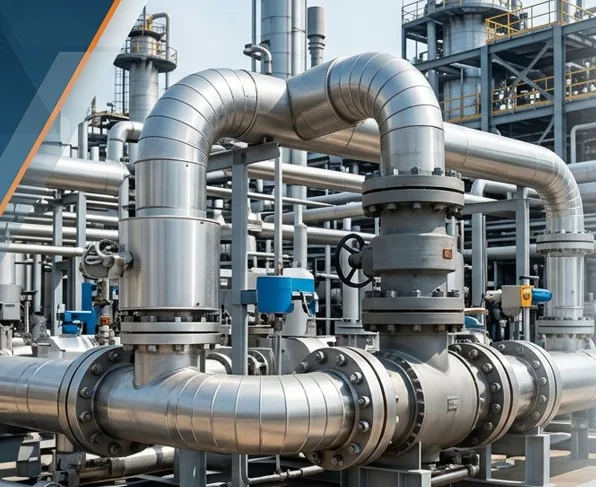
This specialized course provides an in-depth understanding of the design principles, analysis methods, and compliance requirements for high pressure piping systems in accordance with Chapter IX of the ASME B31.3 Process Piping Code. High pressure piping systems operate under severe service conditions where safety, reliability, and code compliance are critical. This course focuses on the unique requirements of Chapter IX, which addresses the additional design considerations necessary for piping systems operating at extremely high pressures.

Participants will learn the fundamental concepts of high pressure piping design including material selection, wall thickness determination, pressure containment, and stress analysis. The course also covers specialized fabrication, inspection, testing, and quality control requirements mandated by the code. Through practical examples and engineering calculations, attendees will gain the knowledge required to apply Chapter IX provisions in real engineering projects.

Course suitable for

Key topics covered

1. Governing equations and their derivations- Basics of Theory of Elasticity, Lame’s equation.

2. When are the rules of Chapter IX of B31.3 applicable? - Real life examples.

3. Piping design issues with high pressure piping- Main issues will be highlighted.

4. Allowable stresses for high pressure piping- Theoretical basis.

5. Fatigue analysis as per Chapter IX of ASME B31.3- Theoretical background.

Opportunities that await you!

Career opportunities

Training details

This is a live course that has a scheduled start date.

₹20000

₹0 Early bird

Coming in Next Month

Questions and Answers

Q: You're checking a live tie-in and search for "ASME B31.3 Chapter IX high pressure piping pressure surge response downstream" after operations reports chatter. Feed pressure to a high pressure recycle line increases 8% after a control valve trims closed faster than intended. No temperature change yet. What’s the least risky immediate engineering response consistent with Chapter IX intent?

A: A feels comfortable because MAWP hasn’t been crossed, but Chapter IX isn’t written around average comfort; it’s written around peak stress behavior where rapid transients live. C sounds operationally tidy, yet touching PSV setpoints during a turnaround without revalidation stacks risk and ignores fatigue. D borrows intuition from control theory, but choking a high pressure line raises stress intensity and reflection issues. Slowing the transient attacks the stress driver rather than arguing paperwork.