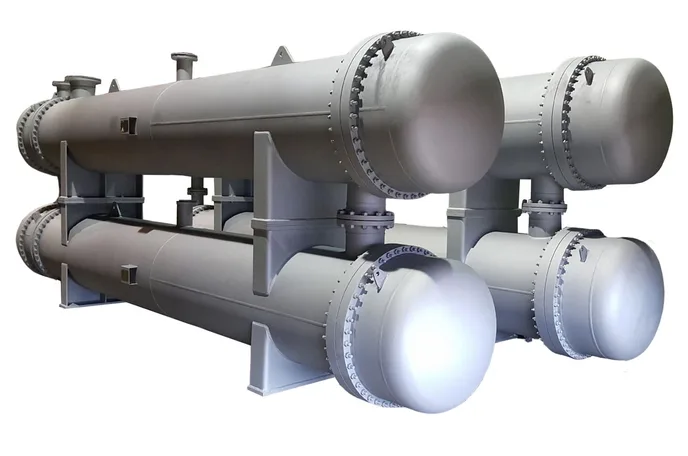
Design of Heat Exchangers using HTRI
- 7-day money-back guarantee
- Lifetime access
- Certificate of completion
Why enroll
What enrolled engineers say
Coming into this course, I had some prior exposure to the subject, mostly from reviewing vendor datasheets on oil & gas projects, but I hadn’t actually driven a full heat exchanger design myself. The HTRI-focused walkthrough helped close that gap, especially around shell-and-tube sizing, fouling factor selection, and how pressure drop limits really affect thermal performance. Those points come up a lot in energy utilities work, but they’re usually glossed over. One challenge was getting comfortable with HTRI’s iteration logic. Early runs didn’t converge the way I expected, and it took some trial and error to understand how small changes in baffle spacing or tube layout ripple through the results. That part felt realistic, because that’s exactly what happens when reviewing exchangers tied into packaged systems. The most practical takeaway was learning how to sanity-check vendor proposals against ASME and TEMA assumptions instead of just accepting the summary sheet. Material selection discussions were also relevant for chemical and pharmaceutical services where cleanliness and fouling risk matter. The content translated directly to a live revamp study I’m on now, and I can see this being useful in long-term project work.
At first glance, the topics looked familiar, but the depth surprised me. The HTRI walkthroughs went beyond button-clicking and forced a closer look at assumptions around fouling factors and allowable pressure drop, which is where designs usually get shaky in oilgas projects. The discussion on shell-and-tube edge cases, like low Reynolds number service and maldistribution, lined up well with issues seen on brownfield revamps. One challenge was reconciling HTRI outputs with typical vendor datasheets. In energyutilities work, vendors often optimize for surface area differently than what the software flags as “ideal,” and the course made that mismatch explicit rather than glossing over it. Material selection examples were also relevant, especially when comparing carbon steel versus SS options for mildly corrosive chemicalpharmaceutical services where lifecycle cost matters more than first cost. What stuck practically was the emphasis on system-level implications—checking exchanger pressure drop against pump curves and upstream control valves instead of treating the exchanger in isolation. That’s often missed in packaged systems. The treatment of TEMA classes versus actual operating and maintenance constraints felt realistic, not academic. The content felt aligned with practical engineering demands.
Initially, I wasn’t sure what to expect from this course. After years working on oil & gas and energy utilities projects, most heat exchanger discussions tend to stay either too academic or too vendor-driven. This one sat somewhere more useful in between. The HTRI walkthroughs around shell-and-tube sizing, fouling resistance, and allowable pressure drop were close to what shows up on real FEED and EPC jobs. One challenge was reconciling HTRI default fouling factors with project specs—especially for dirty crude services versus what vendors typically propose. The course forced that discussion instead of glossing over it, which mirrors industry practice better than most training. Coverage of ASME and TEMA requirements was solid, but more importantly, it highlighted edge cases like two-phase services and air-cooled exchangers in high-ambient power plant layouts, where thermal margins quickly disappear. Those system-level implications on pump sizing, control valve authority, and long-term operability were called out clearly. A practical takeaway was learning to run quick sensitivity cases in HTRI to stress-test vendor designs rather than accepting datasheets at face value. Compared to typical chemical/pharmaceutical exchanger packages, the focus here was more on maintainability and lifecycle risk. Overall, it felt grounded in real engineering practice.
Your instructor
Shanmugam V
Pr Engineer
Lead / Senior Mechanical Engineer/Static Equipment Engineer
Is this course for you?
You should take this if
- You work in Energy & Utilities or Oil & Gas Upstream
- You're a Mechanical Engineering professional
- You have 3+ years of hands-on experience in this field
- You prefer self-paced learning you can revisit
You should skip if
- You're new to this field with no prior experience
- You need a different specialisation outside Mechanical Engineering
- You need live interaction with an instructor
Course details
Course suitable for
Key topics covered
Course content
The course is readily available, allowing learners to start and complete it at their own pace.
- Introduction & Heat Exchanger Nomenclature22 min
- Heat Exchanger API 66117 min
- Shell and tube Heat exchanger68 min
- Heat Exchanger Types83 min
- Condensate Trim Heater85 min
- Heat Exchanger Flow Fraction49 min
- Shell & Tube Heat Exchanger93 min
- Logarithmic Mean Temperature Differences69 min