Skip to main contentEngineering Courses, Mentoring & Jobs | EveryEng
Basics of Geometric Dimensioning and Tolerancing banner

Basics of Geometric Dimensioning and Tolerancing

Basics of Geometric Dimensioning and Tolerancing banner
Live online Beginner

Basics of Geometric Dimensioning and Tolerancing

4(1579)
2053 views
COMPLETED
10 hrs
Next month
English
Team EveryEng
Team EveryEngMechanical Engineering
  • 7-day money-back guarantee
  • Session recordings included
  • Certificate of completion
Volume pricing for groups of 5+

Why enroll

Unlock precision engineering with expertise in Geometric Dimensioning and Tolerancing (GD&T)! By mastering this fundamental skill, you'll become a sought-after professional in industries like aerospace, automotive, and manufacturing. With GD&T knowledge, you'll ensure design accuracy, reduce errors, and improve product quality, qualifying you for roles like Design Engineer, Quality Engineer, or Manufacturing Engineer. Top companies like Boeing, NASA, or Ford will seek your expertise to drive innovation, efficiency, and precision. This course will give you the competitive edge to advance your career and take on leadership roles in precision engineering.

Is this course for you?

You should take this if

  • You work in Aerospace or Automotive
  • You're a Mechanical Engineering / Piping & Layout Engineering professional
  • You prefer live, instructor-led training with Q&A

You should skip if

  • You need a different specialisation outside Mechanical Engineering
  • You need fully self-paced, on-demand content

Course details

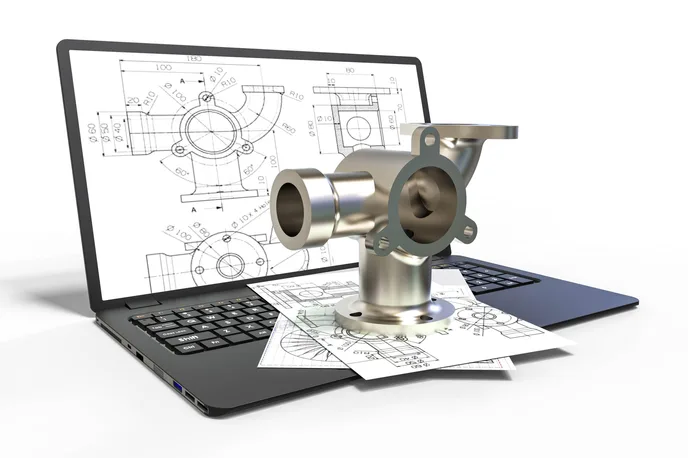
Geometric Dimensioning and Tolerancing, commonly abbreviated as GD&T, is a standardized system used in engineering drawings to define the geometry and allowable variation of parts and assemblies. It provides a clear and precise way to communicate design intent between designers, engineers, and manufacturers. GD&T uses a set of symbols, rules, and conventions to control the form, orientation, location, and profile of features on a component. This system ensures that parts fit together and function correctly even when minor manufacturing variations occur. By clearly specifying tolerances, GD&T helps reduce ambiguity that may arise from traditional dimensioning methods. It also improves product quality and consistency during manufacturing and inspection. Engineers use GD&T to optimize functionality while avoiding unnecessary tight tolerances that increase production cost. The system is widely applied in industries such as automotive, aerospace, and mechanical manufacturing. GD&T also supports modern inspection techniques using coordinate measuring machines (CMM) and other precision tools. Overall, it improves communication, reduces manufacturing errors, and ensures reliable product performance.

Course suitable for

Key topics covered

• Course Overview

• What is GD&T?

• Basic Terminology +Surface Form

• Straightness (Surface)

• Flatness (Surface)

• Circularity

• Cylindricity +Surface Profile

• Surface Profile

• Profile of a Line +Surface Orientation

• Surface Parallelism

• Surface Perpendicularity

• Surface Angularity + Runout Controls

• Circular Runout

• Total Runout +Derived Element Controls

• Straightness Derived Median Line (DML)

• Flatness Derived Median Plane (DMP)

• Concentricity

• Symmetry

Opportunities that await you!

Career opportunities

Training details

This is a live course that has a scheduled start date.

COMPLETED

Coming in Next Month

Questions and Answers