
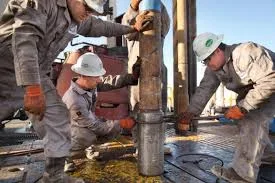
Functions of Drilling Fluids
Cohort starts 21 Mar
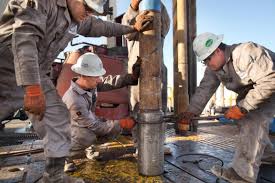
Functions of Drilling Fluids

- Session recordings included
- Certificate of completion
- Foundational Learning
- Access to Study Materials
Why enroll
Is this course for you?
You should take this if
- You work in Oil & Gas
- You're a Chemical & Process / Geoscience professional
- You prefer live, instructor-led training with Q&A
You should skip if
- You need a different specialisation outside Chemical & Process
- You need fully self-paced, on-demand content
Course details
Course suitable for
Key topics covered
Opportunities that await you!
Career opportunities
Training details
This is a live course that has a scheduled start date.
Live session
Starts
Sat, Mar 21, 2026
Duration
1 hour per day
Our Alumni Work At
Why people choose EveryEng
Industry-aligned courses, expert training, hands-on learning, recognized certifications, and job opportunities-all in a flexible and supportive environment.
What learners say about this course

Coming into this course, I had some prior exposure to the subject from field work, but the material helped tighten a few gaps that tend to get glossed over on the rig. The sections on shale shakers and hydrocyclones were especially relevant, with a clear explanation of cut point versus flow rate and how that impacts low-gravity solids buildup and overall mud rheology. Centrifuge operation was also covered at a practical level, including when it actually makes sense to run one versus just increasing dilution, which mirrors real industry tradeoffs. One challenge was mentally reconciling the “ideal” solids control setup with edge cases like high ROP intervals where shaker screens plug quickly and crews are tempted to downsize screens just to keep circulating. The course addressed that tension reasonably well and tied it back to downstream impacts like ECD and mud weight creep. A practical takeaway was being more disciplined about tracking particle size distribution trends instead of reacting only when viscosity spikes. That system-level view—how poor solids control drives chemical costs and drilling risk—felt aligned with practical engineering demands.

This course turned out to be more technical than I anticipated. The focus on solids control went beyond definitions and actually broke down how shale shakers, desanders, and centrifuges impact drilling fluid performance on a live rig. As someone working on land rigs, the refresher on how fine solids affect rheology and mud weight filled a gap that usually gets glossed over in day-to-day operations. One challenge was connecting the theory to mixed equipment setups, since not every rig has the ideal solids control train. The troubleshooting examples around poor shaker screens and bypassed flow helped bridge that. It was useful to see how bad solids control ties directly to higher dilution rates, lower ROP, and avoidable costs—things that show up quickly in daily drilling reports. A practical takeaway was the simple checklist for optimizing shaker performance before jumping to chemical treatments. That’s something that can be applied immediately during rig visits or morning meetings with the mud engineer. The content felt realistic, especially in how it acknowledged operational constraints instead of assuming perfect conditions. Overall, it felt grounded in real engineering practice.

This course turned out to be more technical than I anticipated. The sections on shale shakers and downstream equipment like desanders and centrifuges were handled with enough detail to be useful, not just textbook definitions. It tied solids control directly to drilling fluid properties like rheology and low-gravity solids, which is often glossed over in beginner material. One challenge was mentally mapping the “ideal” equipment sequence to real rig conditions. In practice, screen availability, shaker capacity, and variable ROP don’t line up as neatly as the diagrams. The discussion around cuttings size distribution and why bypassing shakers creates system-level issues downstream helped bridge that gap. It also highlighted edge cases, like over-grinding solids with centrifuges and how that can quietly increase mud costs and HTHP filtration problems. A practical takeaway was being more deliberate with shaker screen selection instead of defaulting to the finest screen possible. Matching screen size to formation and flow rate can reduce overload and improve overall removal efficiency. Compared to common industry practice, this course did a better job explaining the “why” behind decisions rather than just rules of thumb. It definitely strengthened my technical clarity.
