
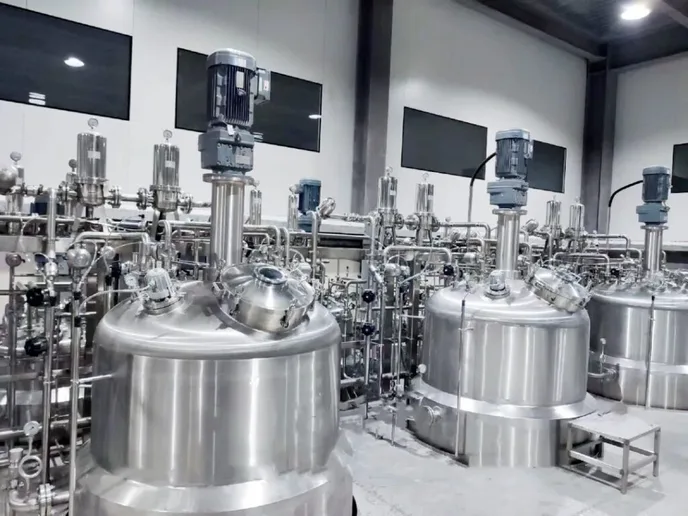
Industrial Biotechnology & Fermentation
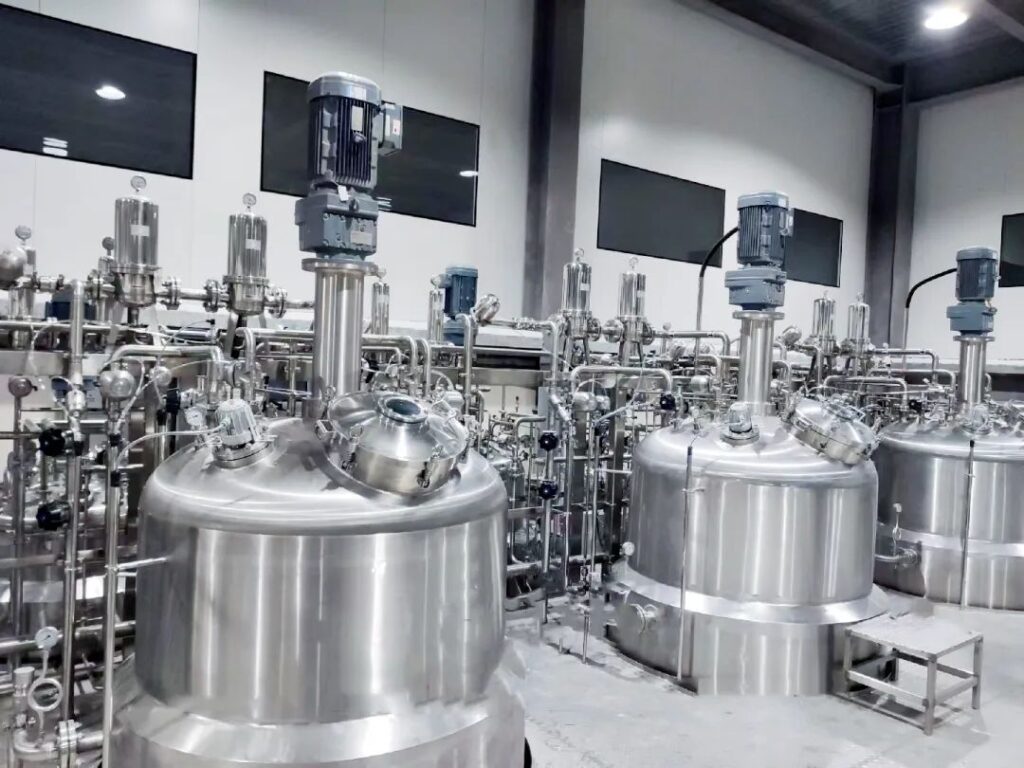
Industrial Biotechnology & Fermentation
- Session recordings included
- Certificate of completion
- Foundational Learning
- Access to Study Materials
Why enroll
Is this course for you?
You should take this if
- You work in Medical Instruments or Pharmaceutical & Healthcare
- You're a Chemistry & Chemical Science professional
- You want to build skills in Bio Informatics, Systems and signal processing
- You prefer live, instructor-led training with Q&A
You should skip if
- You need a different specialisation outside Chemistry & Chemical Science
- You need fully self-paced, on-demand content
Course details
Course suitable for
Key topics covered
Opportunities that await you!
Skills & tools you'll gain
Career opportunities
Training details
This is a live course that has a scheduled start date.
Our Alumni Work At
Why people choose EveryEng
Industry-aligned courses, expert training, hands-on learning, recognized certifications, and job opportunities-all in a flexible and supportive environment.
What learners say about this course

Initially, I wasn’t sure what to expect from this course. The material stayed fairly grounded, especially when walking through open-loop versus closed-loop control beyond the textbook definitions. Examples tied well to things seen in chemical and pharmaceutical plants, like temperature control on a batch reactor and level control on a distillation column, rather than abstract blocks alone. There was also enough overlap with oil & gas and energy utilities to be useful, such as discussing pressure control on separators and basic boiler control logic. One challenge was mentally translating the simplified examples to real systems with dead time, sensor drift, and valve stiction. That gap is where junior engineers usually struggle, and it would have helped to explicitly call out those edge cases earlier. Still, the discussion on why open-loop control occasionally makes sense (maintenance modes, analyzer-based control) matched actual industry practice better than most courses. A practical takeaway was being more systematic about identifying the true process variable and disturbance before defaulting to a PID loop. Thinking at the system level—how one loop affects upstream and downstream units—was reinforced throughout. The content felt aligned with practical engineering demands.

This course turned out to be more technical than I anticipated. The treatment of open- and closed-loop control went beyond block diagrams and actually tied into situations seen in chemical and oil & gas facilities. Examples around distillation column temperature control and refinery feed flow control felt familiar, especially when discussing interactions between loops rather than treating them in isolation. One challenge was translating the clean theoretical models into messy plant realities. Dead time, sensor drift, and valve stiction were touched on, but it still took effort to mentally map those concepts to something like boiler drum level control in energy utilities, where safety margins dominate tuning decisions. That gap is real in industry, and it showed up here. What worked well was the emphasis on understanding process behavior before jumping to controllers. A practical takeaway was the reminder to question whether a loop even needs to be closed, particularly for slow-moving pharmaceutical batch processes where manual intervention can be more robust. Compared with common industry practices, the course leaned more analytical than procedural, which is useful for system-level thinking. The content felt aligned with practical engineering demands.

This course turned out to be more technical than I anticipated. The coverage of open-loop versus closed-loop control was straightforward, but the real value came from how those ideas were tied to actual industrial examples. The sections on PID control and feedback loops lined up well with issues seen on chemical and pharmaceutical projects, especially around reactor temperature control and maintaining consistent product quality. Examples around distillation column control also felt familiar from oil and gas work, where small tuning errors can ripple through the whole unit. One challenge was mentally translating the clean block diagrams into what actually happens in a live DCS environment, with noisy signals and slow valves. The course didn’t hide that gap, which was helpful, but it did take some effort to connect theory to practice. A practical takeaway was a clearer approach to choosing control strategies and tuning priorities, especially balancing stability versus responsiveness. That’s already been useful on an energy utilities project dealing with boiler feedwater control. Overall, it felt grounded in real engineering practice.
Initially, I wasn’t sure what to expect from this course. Coming from oil & gas and energy utilities, QC tools are often mentioned but rarely taught in a structured way. The walkthrough of the seven basic tools—especially Pareto charts, cause-and-effect diagrams, and control charts—lined up well with issues seen in gas compression reliability and power plant outage analysis. One challenge was translating the examples into messy, real field data. In utilities, process data from SCADA systems isn’t always clean or normally distributed, which makes classic SPC limits tricky. The course touched on this only lightly, so some judgment is still needed when applying control charts to transient conditions like startups or load changes. A practical takeaway was how to combine a Pareto analysis with a fishbone diagram to avoid jumping straight to conclusions. That approach is useful when dealing with recurring pipeline maintenance defects or transformer failures, where multiple contributing factors interact at the system level. Compared with typical industry practice, which often jumps straight to formal RCA templates, this course reinforced the fundamentals first. Overall, it felt grounded in real engineering practice.
