<link href="https://fonts.googleapis.com/css2?family=Caveat:wght@500;700&family=JetBrains+Mono:wght@400;500;600&display=swap" rel="stylesheet" /> Skip to main contentEngineering Courses, Mentoring & Jobs | EveryEng
Instrumentation: Wires and Cables in Electrical Systems banner

Instrumentation: Wires and Cables in Electrical Systems

Instrumentation: Wires and Cables in Electrical Systems banner
Self-paced Beginner

Instrumentation: Wires and Cables in Electrical Systems

4(34)
1 enrolled
1142 views
₹ 1499
90 min
Anytime
English
1142 views
Sawrabh Raj
Sawrabh RajSr Instrumentation Design Engineer, Global Trainer- Instrumentation Design
  • 7-day money-back guarantee
  • Lifetime access
  • Certificate of completion
Volume pricing for groups of 5+

Why enroll

Participants join this course to gain clear, practical knowledge of wires, cables, and electrical connections. It helps them confidently read drawings, understand specifications, and organize junction boxes. The course equips them to create accurate cable and drum schedules for real projects. Overall, it builds skills that are immediately useful in electrical installation and planning.

Is this course for you?

You should take this if

  • You work in Oil & Gas Upstream
  • You're a Instrumentation Engineering professional
  • You prefer self-paced learning you can revisit

You should skip if

  • You need a different specialisation outside Instrumentation Engineering
  • You need live interaction with an instructor

Course details

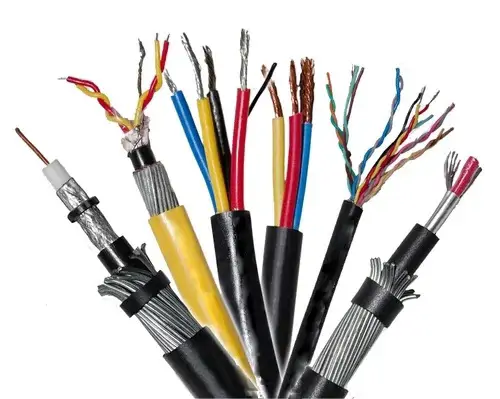
This course is designed to give participants a solid understanding of electrical wires and cables. You will learn about the different types of wires, their construction, and how each type is used in practical applications. The course covers the specifications of wires and cables, helping you identify the right material for different electrical projects. Participants will also gain skills in reading and interpreting interconnection drawings, including how junction boxes (JB) are grouped and organized. You will learn to prepare and understand cable schedules and drum schedules, which are essential for planning and installation. The course uses simple explanations and practical examples to make complex concepts easy to grasp. By the end, you will be able to handle wiring documentation, plan installations, and ensure that all electrical connections are properly organized. It is ideal for beginners as well as professionals who want to strengthen their knowledge in electrical wiring and cabling. Hands-on exercises and real-world examples make the learning process engaging and practical. Overall, this course equips you with the foundational knowledge required for effective electrical installation and documentation.

Course suitable for

Key topics covered

  • What is a wire and cable?

  • Types of Cables

  • Fire Resistance & Flame Retardant cables

  • Intrinsic Safe (IS) & Non-Intrinsic Safe (NIS)

  • Armoured/ Non Armoured Cables

  • Construction of Instrumentation cables

  • Fiber Optic Cables

  • Specification of Wires and Cables

  • Foundation Fieldbus Topology

  • Conventional System (HART)

  • HART vs Foundation Fieldbus

  • which is good HART or Foundation Fieldbus?

  • Field Instrument connection list

  • Cable Schedule/ Drum Schedule

Course content

The course is readily available, allowing learners to start and complete it at their own pace.

1 lectures1 hr 30 min
  1. Instrumentation Cables and Wires
    90 min

Opportunities that await you!

Career opportunities

₹1499

Access anytime

Questions and Answers

A: Leaving this unchallenged risks ground loop currents that show up as drifting AI values, which then fail the ITP trend check and stall handover. Single-point bonding breaks the loop while still controlling capacitive pickup, and unless the transmitter vendor has specified otherwise, that's the defensible position under audit.

A: Getting this wrong can push the transmitter out of compliance at high load, leading to nuisance HH alarms during SAT. Using round-trip length and the actual maximum loop current keeps the loop within the transmitter's compliance window without inventing extra margins that aren't specified.

A: Ignoring this leads to false trips and an operator workaround that HSE will question. High dI/dt from motor starts couples capacitively into parallel signal runs, creating short spikes that vanish once the transient is gone; the other options don't line up with the timing and polarity of the disturbance.

A: Letting this slide risks a non-conformance that delays energization under audit scrutiny. Halting and forcing reconciliation keeps configuration control intact and avoids field changes that would otherwise trigger a late MOC with schedule impact.