<link href="https://fonts.googleapis.com/css2?family=Caveat:wght@500;700&family=JetBrains+Mono:wght@400;500;600&display=swap" rel="stylesheet" /> Skip to main contentEngineering Courses, Mentoring & Jobs | EveryEng
Introduction to Processes & Best Practices Of 3D Printing banner
Preview this course

Introduction to Processes & Best Practices Of 3D Printing

Introduction to Processes & Best Practices Of 3D Printing banner
Preview this course
Self-paced Beginner

Introduction to Processes & Best Practices Of 3D Printing

4(4)
1061 views
₹ 349
39 min
Anytime
English
1061 views
J Aatish Rao
J Aatish RaoMechanical Engineering Professional
  • 7-day money-back guarantee
  • Lifetime access
  • Certificate of completion
Volume pricing for groups of 5+

Why enroll

Learn the basics of 3D printing in this beginner-friendly course and understand how modern products are created using additive manufacturing.
You’ll explore different 3D printing technologies, materials, and the software used to design models.The course also teaches simple best practices to help you create strong, high-quality prints.With practical guidance and small projects, you’ll gain the confidence to turn your ideas into real 3D objects.

Is this course for you?

You should take this if

  • You work in Manufacturing & Industrial
  • You're a Additive Manufacturing & 3D Printing / Manufacturing Engineering professional
  • You prefer self-paced learning you can revisit

You should skip if

  • You need a different specialisation outside Additive Manufacturing & 3D Printing
  • You need live interaction with an instructor

Course details

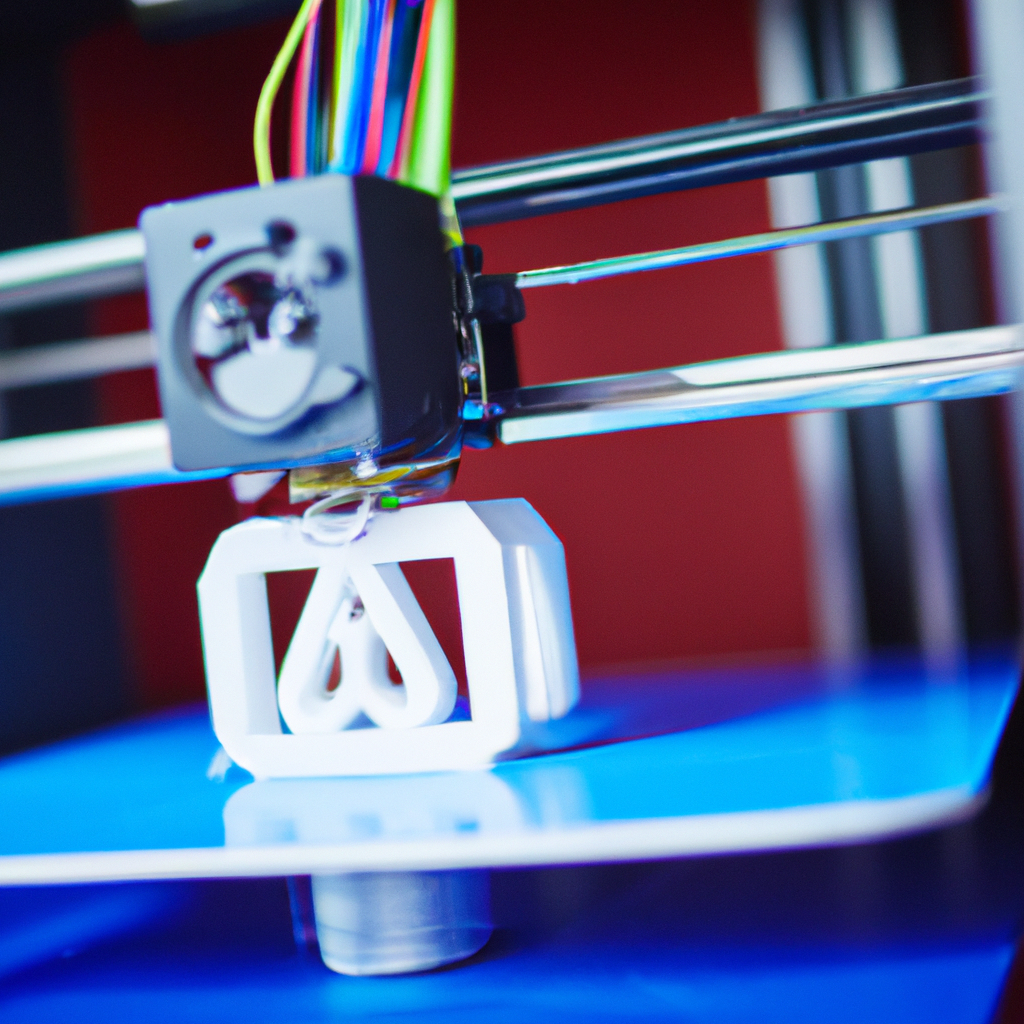
3D printing, also called additive manufacturing, is a modern technology that creates objects by building them layer by layer using digital designs. Unlike traditional manufacturing methods that cut or shape material from a larger block, 3D printing adds material gradually to form the final product. The idea became possible because of advances in computers and digital design technologies that started developing in the late 20th century. Many experts believe that 3D printing has the potential to transform manufacturing in the future. It can change how products are designed, produced, and delivered across many industries. The basic process involves creating a digital 3D model and then printing it layer by layer using a special machine. There are several types of 3D printing processes, each using different materials and techniques. Materials such as plastics, metals, and resins are commonly used. Today, 3D printing is used in areas like healthcare, aerospace, automotive, and product design. Because of its flexibility and innovation, it is becoming an important technology for students and beginners to learn about.

Course suitable for

Key topics covered

  • General explanation of 3D Printing.

  • Various 3D printing processes like SLA, DLP, FDM etc.

  • Applications of 3D printing in present era.

  • 3D Printing procedure & material

  • Inkjet - Binder Jetting

  • Inkjet - Material Jetting

  • Selective Deposition Lamination (SDL)

  • EBM - Electron Beam Melting


Course content

The course is readily available, allowing learners to start and complete it at their own pace.

12 lectures39 min
  1. General Explanation of 3D Printing
    6 min
  2. 3D printing procedure
    2 min
  3. Stereolithography
    3 min
  4. Digital Light Processing - DLP
    2 min
  5. Laser Sintering
    2 min
  6. Extrusion / FDM / FFF
    2 min
  7. Inkjet - Binder Jetting
    2 min
  8. Inkjet - Material Jetting
    1 min
  9. Selective Deposition Lamination (SDL)
    1 min
  10. EBM - Electron Beam Melting
    1 min
  11. 3D Printing Materials
    6 min
  12. 3D printing applications
    11 min

Opportunities that await you!

Career opportunities

₹349

Access anytime

Questions and Answers

A: Principle: Drawing symbols govern acceptance unless explicitly modified by process notes. Here, 'AS-BUILT' removes any assumption of machining or polishing, so inspection happens on the printed surface as-is. Option A traps people who know subtractive drawing rules but incorrectly import them into additive documentation.

A: Principle: Polymers fail by the mechanism most aligned with temperature and sustained stress. At 120°C with load, ABS trends toward thermal oxidation and creep long before chemical attack dominates. Option D catches engineers familiar with nylon behavior who forget ABS responds differently.

A: Principle: Functional safety prefers independent verification over inferred conditions. Without the sensor datasheet, you need an external measurement to confirm oxygen is below the powder ignition threshold. Option A traps those who trust automation without validating the sensing chain.

A: Principle: Profile tolerances can constrain translation and rotation when referenced correctly. Here, A and B are sufficient to fully define the functional surfaces being controlled. Option D appeals to engineers who expect three datums by habit rather than by constraint analysis.