
PSV & PRV – HIGH ADVANCED MASTERCOURSE
PSV & PRV – HIGH ADVANCED MASTERCOURSE

- Session recordings included
- Certificate of completion
- Anytime Learning
- Learn from Industry Expert
Why enroll
Complete calculation templates (Excel)
Real plant PSV datasheets
Relief scenario checklist
API 521 interpretation notes
Interview Q&A pack
Real failure photos & drawings
Your instructor
Bhushan Garde
Consultant
India
Is this course for you?
You should take this if
- You work in Energy & Utilities or Oil & Gas Upstream
- You're a Mechanical Engineering / Chemical & Process professional
- You have 3+ years of hands-on experience in this field
- You prefer live, instructor-led training with Q&A
You should skip if
- You're new to this field with no prior experience
- You need a different specialisation outside Mechanical Engineering
- You need fully self-paced, on-demand content
Course details
PSV & PRV – HIGH ADVANCED MASTERCOURSE is an intensive, industry-focused training program designed for engineers, technicians, plant professionals, inspectors, maintenance specialists, and safety personnel who want to gain deep technical mastery in Pressure Safety Valves (PSV) and Pressure Relief Valves (PRV) systems used across oil & gas, petrochemical, refinery, power, pharmaceutical, and process industries. This highly advanced mastercourse provides comprehensive knowledge starting from the fundamental principles of pressure protection and overpressure scenarios to complex engineering calculations, valve selection methodologies, international standards compliance, troubleshooting techniques, performance optimization, and real-world industrial applications. Participants will develop expertise in valve design concepts, operating mechanisms, set pressure calculations, sizing procedures, API and ASME code requirements, inlet and outlet pressure considerations, back pressure effects, thermal relief systems, rupture disk integration, flare system interactions, installation best practices, inspection procedures, testing methodologies, calibration techniques, failure analysis, maintenance strategies, and root cause investigation of operational issues. The course also covers advanced topics such as balanced bellows valves, pilot-operated relief valves, critical service applications, multiphase relieving conditions, fire case scenarios, dynamic simulation concepts, risk-based safety management, reliability improvement, and shutdown prevention strategies. Through practical case studies, engineering examples, troubleshooting workshops, and real plant scenarios, learners will gain the confidence to handle complex PSV/PRV challenges while ensuring operational safety, regulatory compliance, equipment integrity, and process reliability. By the end of this mastercourse, participants will possess high-level technical competence and practical industry skills required to inspect, evaluate, select, operate, maintain, and optimize PSV and PRV systems according to global engineering standards and best industrial practices.
Course suitable for
Key topics covered
MODULE 1 – PRESSURE RELIEF FUNDAMENTALS (Deep, Not Basic)
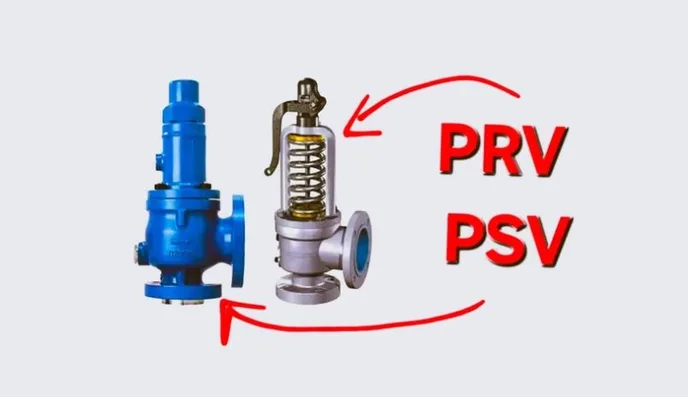
1. PSV vs PRV vs SRV vs RV – REAL differences
· PSV (ASME legal definition)
· PRV (API definition)
· SRV (Steam-specific behaviour)
· Thermal relief valve (often misunderstood)
2. Why PSV is a LEGAL SAFETY DEVICE, not equipment
· PSV = last line of defense
· Why you cannot oversize / undersize randomly
· PSV failure = criminal liability (real incidents)
MODULE 2 – PRESSURE SYSTEM & OVERPRESSURE PHILOSOPHY
1. What actually causes overpressure?
· Blocked outlet
· Control valve failure
· External fire
· Thermal expansion
· Runaway reaction
· Utility failure
· Tube rupture (heat exchangers)
2. MAWP, Design Pressure & PSV set pressure
· Common mistakes in MAWP interpretation
· 10% / 21% / accumulation philosophy
· Multiple PSV on same equipment
MODULE 3 – PSV DESIGN CODES (VERY DEEP)
Mandatory Codes:
· ASME Section VIII Div 1 & Div 2
· API 520 Part 1 & 2
· API 521 (MOST IMPORTANT)
· API 526
· ISO 4126
· PED (Europe)
Advanced Topics:
· Why API 521 is more important than 520
· Code hierarchy conflicts (ASME vs API)
· Client vs statutory authority conflicts
MODULE 4 – RELIEF SCENARIO DEVELOPMENT (CORE OF COURSE)
This is where 90% engineers fail.
Step-by-step scenario building:
· Identify all credible scenarios
· Screen non-credible cases
· Worst-case selection logic
· Single vs multiple contingencies
· Fire case vs non-fire case selection
Real plant examples included
MODULE 5 – PSV SIZING CALCULATIONS (ULTRA TECHNICAL)
1. Gas / Vapor PSV sizing
· Critical vs subcritical flow
· Sonic choking concept
· Back pressure correction
· Superheat correction
· Molecular weight impact
2. Liquid PSV sizing
· Incompressible flow logic
· Flashing vs non-flashing
· Two-phase mistakes
3. Two-phase relief (MOST MISUNDERSTOOD)
· Homogeneous Equilibrium Model (HEM)
· Why most software gives wrong answers
· Conservative vs realistic sizing
Manual calculations + software comparison
MODULE 6 – BACK PRESSURE & DISCHARGE SYSTEM DESIGN
Types of back pressure:
· Superimposed
· Built-up
· Variable back pressure
Impact on:
· Conventional PSV
· Bellows PSV
· Pilot operated PSV
Relief header design:
· PSV discharge line sizing
· Reaction force calculation
· Tail pipe vibration failures
· API 521 piping limits
MODULE 7 – PSV TYPES & INTERNAL MECHANICS
PSV types:
· Conventional
· Balanced bellows
· Pilot operated
· Low-pressure relief valve
· Rupture disk + PSV combination
Internal parts understanding:
· Nozzle
· Disc
· Spring
· Blowdown ring
· Seat tightness classes
MODULE 8 – FIRE CASE DESIGN (ADVANCED)
The most dangerous scenario.
· API 521 fire heat input equations
· Wetted area calculation logic
· Pool fire vs jet fire
· Insulation credit (when allowed)
· Fireproofing myths
Real refinery fire case study
MODULE 9 – PSV INSTALLATION PHILOSOPHY (REAL PLANT)
Inlet piping rules:
· 3% pressure drop myth vs reality
· Line length vs diameter tradeoff
· Strainers – when NOT allowed
Outlet piping rules:
· Drainage
· Liquid hammer risk
· Noise & vibration control
MODULE 10 – PSV + RUPTURE DISK SYSTEMS
Why rupture disk?
· Corrosive service
· Fouling service
· Zero leakage requirement
Design mistakes:
· Wrong disk location
· Wrong burst tolerance
· Reverse buckling selection errors
MODULE 11 – HAZOP, SIL & PSV LINK
· PSV role in LOPA
· PSV is NOT a SIL device (big myth)
· How PSV credits are given in HAZOP
· Real HAZOP deviation examples
MODULE 12 – PSV FAILURES & REAL ACCIDENTS
Case studies:
· Texas City refinery
· Chemical reactor rupture
· Tail pipe failure causing explosion
· Pilot PSV malfunction incidents Lessons learned for designers
MODULE 13 – SOFTWARE vs HAND CALCULATION
Covered tools:
· Aspen Relief Sizing
· HYSYS
· Vendor software
Truth:
· Why software blindly trusted engineers are dangerous
· Validation methodology
MODULE 14 – PSV DATASHEET & VENDOR ENGINEERING
· PSV datasheet line-by-line explanation
· Common vendor manipulation tricks
· How to technically challenge vendors
· FAT & SAT philosophy
MODULE 15 – INTERVIEW + LEAD ENGINEER LEVEL QUESTIONS
· Why PSV chatter happens?
· Can two PSV share one inlet?
· Can PSV discharge to atmosphere?
How to select pilot PSV for variable back pressure?
Opportunities that await you!
Career opportunities
Training details
This is a live course that has a scheduled start date.
