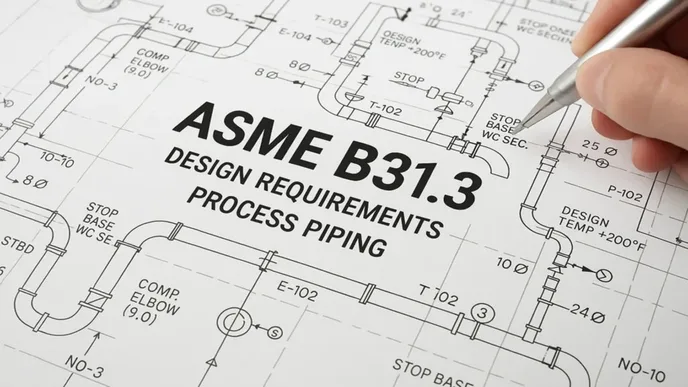
This course is designed to give the participants a thorough understanding of Process Piping Code, ASME B 31.3. and its practical use as illustrated with numerous case studies. It offers detailed insight pertaining to design, manufacture and inspection of the Piping systems typically used in Petroleum Industries, Refineries, Petrochemical plants etc. The course emphasizes understanding of ‘stated’ and ‘implied’ requirements (i.e. content and intent) of the code.
Important code requirements will be explained in a simple, straight forward manner, including the Short-cut methods in designing of Pipes, Pipe fitting and Flanges. It further explains the fabrication, assembly, welding, erection, inspection and testing of Piping systems. The participants would be explained in detail the mechanics of adopting and applying the code rules for day-to-day use in their professional work. The course is designed such that no previous background in ASME code is necessary. How ever, those familiar with the code will find the course immensely useful as regards understanding the code by “letter and spirit “and gaining a thorough systematic practical insight of the code.
The course is divided into following areas: What is this Code emphasize upon, Introductions to fundamentals of Pipe design, Introduction to various applications of various Steels, Selection of appropriate material for intended application, How to Fabricate, what are Construction precautions and How to Test the Piping System, etc.
Attendees will come away from this course with a clear understanding of the ‘content and ‘intent’ of the various code rules with systematic step-wise approach for design of Process piping systems.
Upon successful completion of this course, participants will be able to:
Appreciate the meanings of different technical terms and concepts used in ASME B31.3 Code.
Choose the right engineering models and materials for intended application and carry out design calculations including the design optimization.
Be able to understand limitations imposed by this code on material for construction for pressure components.
Set the rules for correct fabrication erection, inspection and testing, including the NDT requirements.
Correctly review and understand Data sheets, lay-out drawings, Piping Isometrics and the. Material Takeoff.