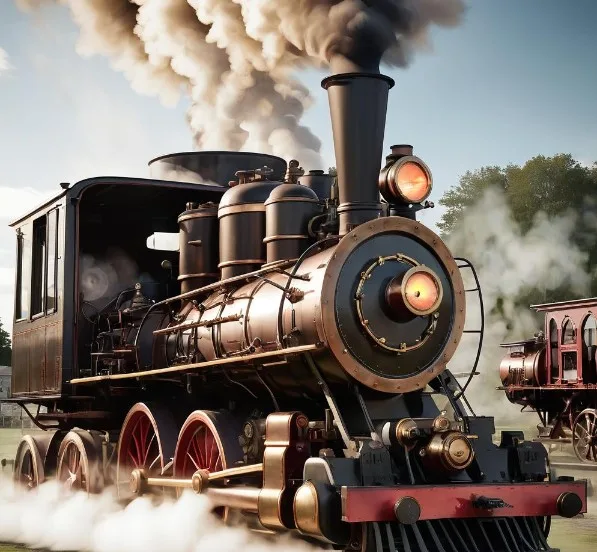
Vapour Power Cycle In Engineering Thermodynamics by PK Nag (Chapter 12)
Vapour Power Cycle In Engineering Thermodynamics by PK Nag (Chapter 12)

- 7-day money-back guarantee
- Lifetime access
- Certificate of completion
Why enroll
What enrolled engineers say
At first glance, the topics looked familiar, but the depth surprised me. The walkthrough of the Rankine cycle stages forced a more disciplined way of thinking than what day‑to‑day shortcuts usually allow. Coming from HVACR work, the treatment of boilers, condensers, and heat exchangers helped connect vapor power concepts directly to large chiller plants and cooling towers I’ve worked on. The discussion around isentropic efficiency and real turbine losses also clicked with my aerospace background, especially when comparing Rankine behavior to gas turbine expansion in Brayton cycles. One challenge was staying consistent with steam tables and T‑s diagrams. It’s easy to lose track of state points when pressures and qualities change, and that tripped me up early on. Working through the examples slowly fixed that gap. A practical takeaway was gaining confidence in estimating cycle efficiency impacts when condenser pressure creeps up or superheat is limited. That’s immediately useful for evaluating waste heat recovery options and understanding why certain HVACR systems underperform in hot ambient conditions. The course filled a missing link between textbook thermodynamics and real equipment decisions. It definitely strengthened my technical clarity.
Coming into this course, I had some prior exposure to the subject from power plant reviews, but PK Nag’s Chapter 12 helped close a few gaps. The walkthrough of the Rankine cycle stages, especially tying isentropic efficiency of the turbine to real losses, made things click better than before. Concepts like condenser pressure effects and boiler superheat weren’t just equations; they were linked to why plants struggle in hot climates, which overlaps a lot with HVACR topics like condenser heat rejection and cooling tower performance. One challenge was keeping track of all the state points on T–s and h–s diagrams. Flipping between steam tables and diagrams took time, and a couple of example problems forced a redo before the numbers lined up. Still, that struggle paid off. A useful takeaway was learning how small changes in condenser pressure or adding reheat can noticeably improve cycle efficiency. That’s directly applicable to a waste-heat Rankine bottoming cycle study we’re exploring on an aerospace turbine test rig, and it also mirrors refrigeration cycle tradeoffs in HVACR systems. Overall, the content felt aligned with practical engineering demands.
At first glance, the topics looked familiar, but the depth surprised me. Chapter 12 walks through the Rankine cycle cleanly, yet it doesn’t shy away from where theory rubs against reality. The discussion on turbine expansion and moisture content at the exhaust connected well with aerospace turbomachinery concerns, especially blade erosion edge cases that don’t show up in ideal T–s plots. On the HVACR side, the condenser treatment felt close to what’s seen in large chilled water plants, where cooling tower approach temperature quietly sets the lower bound on cycle efficiency. One challenge was reconciling the textbook isentropic assumptions with real plant data. In practice, pump work, pressure drops in the boiler, and condenser vacuum limitations shift everything, and it took a bit of effort to map PK Nag’s diagrams to how DCS tags look in an operating unit. A practical takeaway was how sensitive overall efficiency is to condenser pressure. That single parameter drives turbine sizing, heat rejection load, and even water consumption—system-level implications that mirror industry trade-offs. Compared with modern combined-cycle practices, the material is basic, but the foundations are solid. The content felt aligned with practical engineering demands.
Your instructor
Saurabh Kumar Gupta
Content Manager
Mechanical Engineer
Is this course for you?
You should take this if
- You work in Energy & Utilities
- You're a Mechanical Engineering / Power Plant Engineering professional
- You prefer self-paced learning you can revisit
You should skip if
- You need a different specialisation outside Mechanical Engineering
- You need live interaction with an instructor
Course details
Course suitable for
Key topics covered
Course content
The course is readily available, allowing learners to start and complete it at their own pace.
- Ideal Rankine Cycle40 min
- Actual Rankine Cycle30 min
- Specific Steam Consumption9 min
- Reheat Rankine Cycle | Reheat Cycle | Reheating30 min
- Regeneration Rankine Cycle | Feed Water Heater | Regenerators42 min
- Power Plant Efficiency | Overall Efficiency14 min
- PK Nag Solved Example44 min
- Numerical On Regeneration Rankine Cycle28 min
- PK NAG Problem38 min
- Numerical16 min
Opportunities that await you!
Career opportunities
Course Attachments
Why people choose EveryEng
Industry-aligned courses, expert training, hands-on learning, recognized certifications, and job opportunities-all in a flexible and supportive environment.


 Aug 29, 2026