

Article details
Modern architectural and structural engineering focuses heavily on high-density urban developments, lightweight materials, and tall building profiles. While these advancements maximize space and structural efficiency, they also introduce significant acoustic and dynamic vulnerabilities.
Uncontrolled noise from external traffic, internal mechanical systems (HVAC), and foot traffic, alongside low-frequency vibrations from elevators, pumps, and nearby transit lines, can severely degrade human comfort, productivity, and health. To meet stringent building codes and ensure long-term structural serviceability, civil and structural engineers integrate specialized acoustic and vibration mitigation strategies directly into the building's design phase.
2. Technical Mechanisms: Sound Transmission and Vibration Paths
Controlling acoustic and dynamic disturbances requires understanding how energy travels through a building's structural framework and interior air volumes.
A. Airborne vs. Structure-Borne Noise
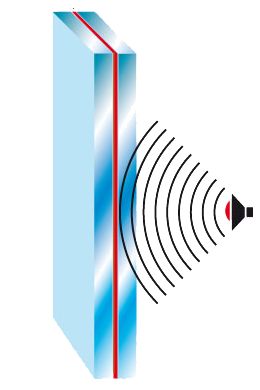
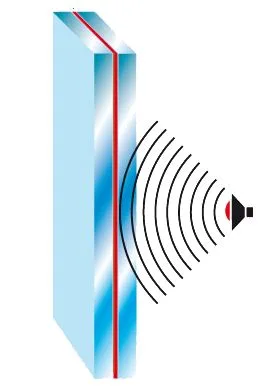
Airborne Noise: Sound waves generated in the air (e.g., speech, music, outdoor traffic) that travel through the atmosphere and attempt to penetrate building envelopes or partition walls.
Structure-Borne Noise and Vibration: Mechanical energy transmitted directly through the solid structural framework of a building (e.g., a chiller vibrating against a concrete floor slab, or heel impacts on upper-story timber/concrete decks). This vibration radiates as audible low-frequency rumbling in rooms below.
B. Resonance and Transmission Loss
When excitation frequencies from equipment match the natural frequency of structural components, resonance occurs, drastically amplifying vibration amplitudes. Acoustic insulation relies on maximizing Transmission Loss (TL) through mass, decoupling, and damping.
3. Engineering Mitigation Strategies
To suppress noise and vibration, engineers apply multi-layered structural interventions across three primary domains:
A. Mechanical Vibration Isolation
Heavy mechanical equipment—such as chillers, cooling towers, pumps, and emergency generators—are primary sources of building vibration.
Spring and Elastomeric Isolators: Placing high-deflection steel springs or neoprene elastomeric pads beneath equipment skids prevents dynamic forces from transmitting into structural slabs.
Inertia Blocks: Mounting heavy pumps on massive concrete inertia bases lowers the center of gravity, reducing equipment amplitude and dampening machine-induced vibrations.
Flexible Connectors: Installing flexible bellows and rubber expansion joints on all piping and ductwork connected to rotating equipment stops vibration from traveling along fluid lines.
B. Architectural and Structural Acoustic Control
Floating Floors: To prevent impact noise (such as footsteps or dropped objects) from traveling through floor slabs, a resilient acoustic underlayment (e.g., high-density mineral wool or specialized rubber mats) is placed beneath a secondary floating concrete screed or engineered timber deck, completely decoupling the walking surface from the structural slab.
Decoupled Wall Assemblies (Resilient Channels): Using staggered studs or resilient metal furring channels in partition walls breaks the continuous solid bridge between drywall sheets, preventing sound waves from transferring directly across the wall cavity.
Acoustic Rating Metrics: Designing assemblies to meet high Sound Transmission Class (STC) ratings for airborne noise and Impact Insulation Class (IIC) ratings for footfall vibration.
4. Practical Applications in Complex Infrastructure
Applying noise and vibration control principles varies by building occupancy and functional demands:
A. Multi-Family Residential and Hotels
Multi-story residential towers require rigorous acoustic isolation between adjacent apartments. Designers specify mass-law concrete party walls, floating floor assemblies, and plumbing stack acoustic wrappings to eliminate cross-unit noise transmission and ensure privacy.
B. Commercial High-Rises with Rooftop Mechanical Plant Rooms
Rooftop chillers and air-handling units generate intense vibrations that can travel down entire high-rise structures. Structural engineers deploy tuned spring isolators, structural acoustic breaks, and heavy housekeeping pads to absorb dynamic forces before they reach occupied office floors below.
Conclusion
Controlling noise and vibration in buildings is a critical discipline combining structural dynamics, materials science, and acoustic engineering. By implementing mechanical vibration isolators, decoupling structural paths with resilient layers, and engineering high-mass or multi-layered architectural partitions, civil engineers can transform noisy, vibration-prone structures into quiet, comfortable, and structurally harmonious indoor environments.
