

Article details
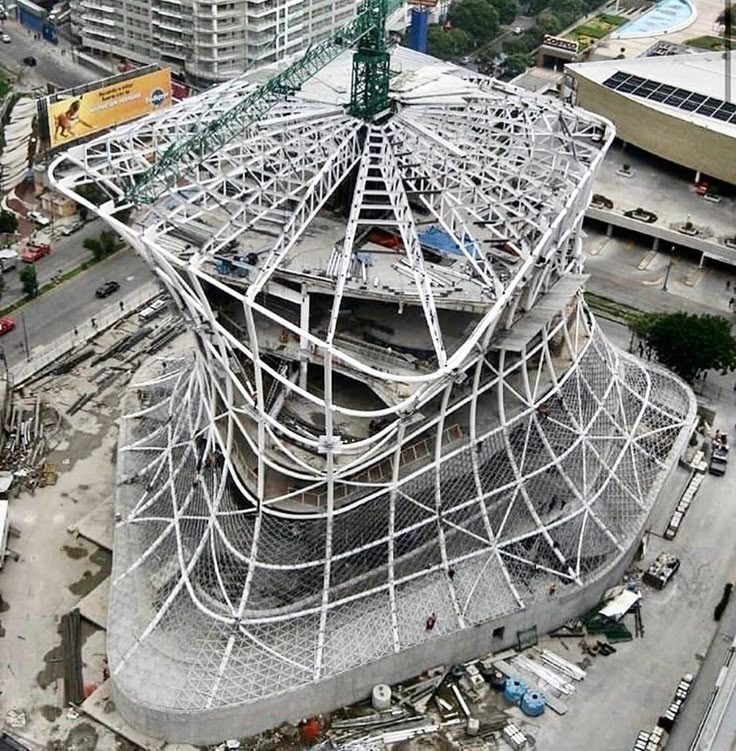
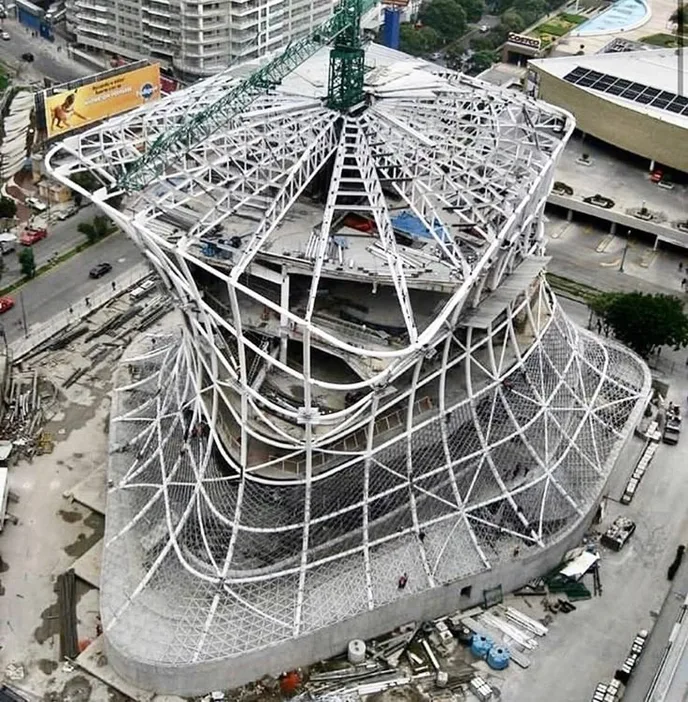
As architectural ambitions push building heights to new extremes, traditional interior core-wall systems face severe efficiency limits under lateral wind and seismic loads. To counteract massive overturning moments and lateral shear, structural engineers have increasingly turned toward perimeter-based structural networks—specifically Diagrid (diagonal grid) and Hexagrid systems.
These structural exoskeletons derive their extraordinary stiffness and load-bearing efficiency from geometric triangulation and polygon configuration. By shifting primary lateral-resistance to the building perimeter, these systems eliminate the need for traditional exterior columns and minimize interior framing obstructions.
To evaluate and optimize these complex geometries, structural engineers rely on advanced finite element software such as CSI SAP2000, utilizing three-dimensional frame analysis to model axial behavior, node connectivity, and dynamic response.
2. Structural Mechanics: Diagrid vs. Hexagrid Systems
While both systems rely primarily on axial action (tension and compression) rather than bending to resist lateral forces, their underlying geometric configurations create distinct mechanical behaviors.
A. Diagrid Systems (Triangular Configuration)
Geometric Layout: Composed of intersecting diagonal members forming repeating triangular modules across multiple stories (typically 2 to 6 stories per module).
Load Mechanism: Diagrids efficiently handle both gravity loads and lateral loads. The diagonal members function in axial tension or compression, significantly reducing the shear lag phenomenon common in traditional framed tubes.
B. Hexagrid Systems (Hexagonal Configuration)
Geometric Layout: Formed by interlocking hexagonal units, combining inclined struts with short horizontal segments.
Load Mechanism: The hexagonal mesh provides multi-directional load redistribution paths. Because the geometry includes horizontal components, it distributes stress concentrations more evenly across complex node intersections, offering superior redundancy and structural damping under seismic excitation.
3. SAP2000 Modeling Workflow for Diagrids and Hexagrids
Simulating complex diagrid and hexagrid structures in SAP2000 requires a structured finite element modeling (FEM) approach to capture geometric non-linearity and joint behavior accurately.
A. Geometry Generation and Section Assignment
Coordinate Generation: Utilize cylindrical or rectangular coordinate grids in SAP2000 to map out perimeter node coordinates across building heights.
Frame Elements: Draw structural members using Frame Elements assigned to Circular Hollow Sections (CHS) or structural steel pipe sections, which offer uniform cross-sectional resistance in all directions.
Joint Connectivity: At intersection nodes (where multiple diagonals meet), assign Fully Fixed or rigid joint offsets to accurately represent gusset plate connections and prevent artificial localized soft-story mechanisms.
B. Loading and Analysis Execution
Static Lateral Loads: Apply wind load patterns as surface pressure coefficients calculated along the exterior facade meshes.
Dynamic Seismic Analysis: Perform a Response Spectrum Analysis (RSA) based on local seismic design codes, scaling base shear to match equivalent lateral force procedures.
P-Delta Analysis: Because tall diagrid/hexagrid towers are slender, enable P-Delta geometric non-linear analysis in SAP2000 to account for secondary overturning moments under gravity loads.
4. Comparative Performance Analysis
Engineering Parameter | Diagrid System (Triangular) | Hexagrid System (Hexagonal) |
Lateral Stiffness | Extremely High (Direct diagonal load transfer) | High (Slightly more flexible due to horizontal segments) |
Node Complexity | Moderate (3 to 4 members meeting per node) | High (Complex multi-member welded node clusters) |
Material Efficiency | Outstanding (Minimum steel weight per unit floor area) | Very Good (Slightly higher steel tonnage due to node density) |
Architectural Integration | Pronounced diagonal facade aesthetic | Honeycomb grid pattern, highly customizable fenestration |
Seismic Energy Dissipation | Efficient axial force transmission | Superior redundancy and multi-path load distribution |
Conclusion
Both diagrid and hexagrid systems represent the pinnacle of modern structural efficiency for tall building design. While diagrids offer maximum lateral stiffness and material economy through pure triangular geometry, hexagrids provide exceptional structural redundancy and architectural flexibility. Utilizing SAP2000 enables structural engineers to accurately model these complex exoskeletons, optimize section sizes, and ensure safety against complex wind and seismic forces.
