

Article details
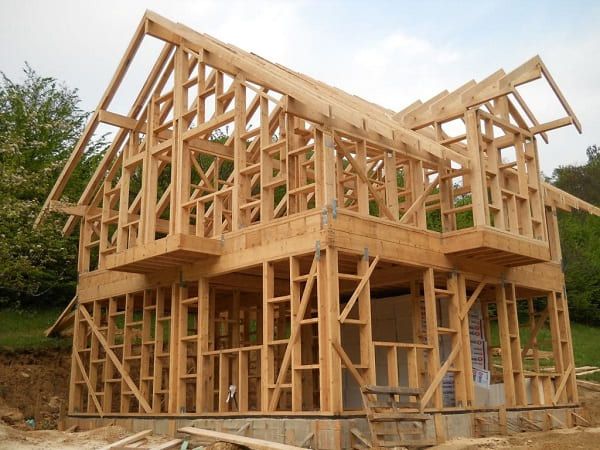
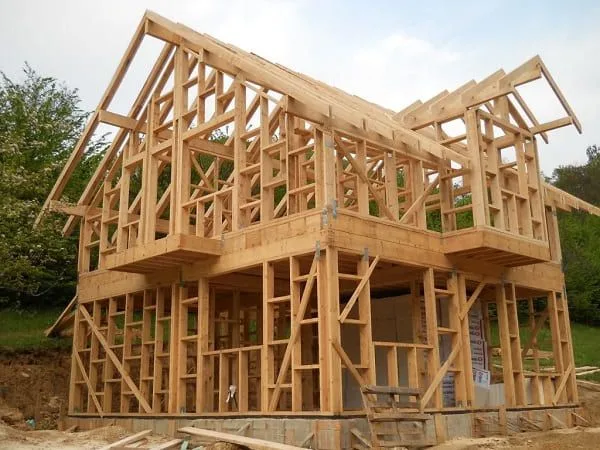
For centuries, timber was primarily restricted to low-rise residential housing, light-frame construction, and temporary formwork due to its inherent susceptibility to fire, moisture, and structural span limitations. Modern high-rise and commercial construction instead came to be dominated by reinforced concrete and structural steel.
However, the global push toward net-zero carbon construction has sparked a major renaissance in heavy timber design. The emergence of modern Mass Timber technologies—specifically Cross-Laminated Timber (CLT) and Glue-Laminated Timber (Glulam)—has transformed wood into an engineered, high-performance structural material. Today, mass timber enables the rapid erection of multi-story commercial and residential buildings that sequester carbon, cut project schedules, and offer exceptional seismic and fire performance.
2. Mass Timber Engineering and Structural Composites
Unlike traditional dimensional lumber, engineered mass timber components are manufactured by bonding multiple layers of dried wood together under high pressure using high-strength, structural adhesives.
A. Cross-Laminated Timber (CLT)
CLT consists of odd-numbered layers of solid-sawn lumber (typically 3, 5, or 7 layers) laid flat and glued at right angles ($90^\circ$) to adjacent layers.
Bi-Directional Strength: The alternating grain direction gives CLT panels two-way structural strength, making them ideal for structural floor slabs, load-bearing walls, and roof decks.
Dimensional Stability: The cross-lamination prevents wood swelling and shrinkage across its width and length in response to humidity fluctuations.
B. Glue-Laminated Timber (Glulam)
Glulam is manufactured by laminating timber boards with the grain running parallel to the longitudinal axis. This configuration optimizes bending and axial load capacity, making Glulam ideal for structural columns, long-span roof trusses, and primary floor beams.
3. Structural Mechanics, Fire Dynamics, and Seismic Performance
Mass timber structures perform exceptionally well when subjected to severe thermal and dynamic loads, dispelling long-held safety concerns.
A. Fire Dynamics and the Self-Insulating Char Effect
Unlike light-frame wood that burns rapidly, thick mass timber panels exhibit a highly predictable charring rate (typically $0.6\text{ to }0.7\text{ mm/min}$):
Char Layer Formation: When exposed to high heat, the outer layer chars, creating an oxygen-deprived, highly insulating barrier.
Core Capacity Retention: This protective char layer insulates the unburnt inner timber core, maintaining structural load capacity, stiffness, and elastic modulus for up to 2 to 3 hours under severe fire exposure.
B. Seismic Performance and High Strength-to-Weight Ratio
Because wood is roughly 4 to 5 times lighter than concrete, mass timber structures experience substantially lower inertial forces during earthquake ground motions.
Seismic energy is safely absorbed and dissipated through ductility in engineered metallic connectors, hold-downs, and energy-dissipating dampening joints, rather than causing brittle failure in structural members.
4. Sustainability and Construction Efficiency
Integrating mass timber into building design offers significant environmental and speed-of-construction benefits:
Carbon Sequestration: Trees absorb carbon dioxide during their growth cycle. When harvested sustainably and transformed into mass timber products, the embodied carbon remains trapped inside the building framework for decades, converting buildings into net-positive carbon sinks.
Off-Site Prefabrication and Rapid Speed of Erection: CLT panels and Glulam elements are computer-milled (CNC) in off-site factories with millimeter precision. On site, crane-assisted assembly requires minimal labor, generates zero noise and dust, and shortens structural framing schedules by up to 30–50% compared to traditional poured-in-place concrete.
Conclusion
Mass timber construction represents a paradigm shift in modern structural engineering. By harnessing Cross-Laminated Timber and Glulam, civil engineers can build resilient, light-weight, fire-safe, and visually striking multi-story structures. Above all, mass timber offers a proven path to decarbonizing the global building sector while accelerating modern off-site construction schedules.
