

Article details
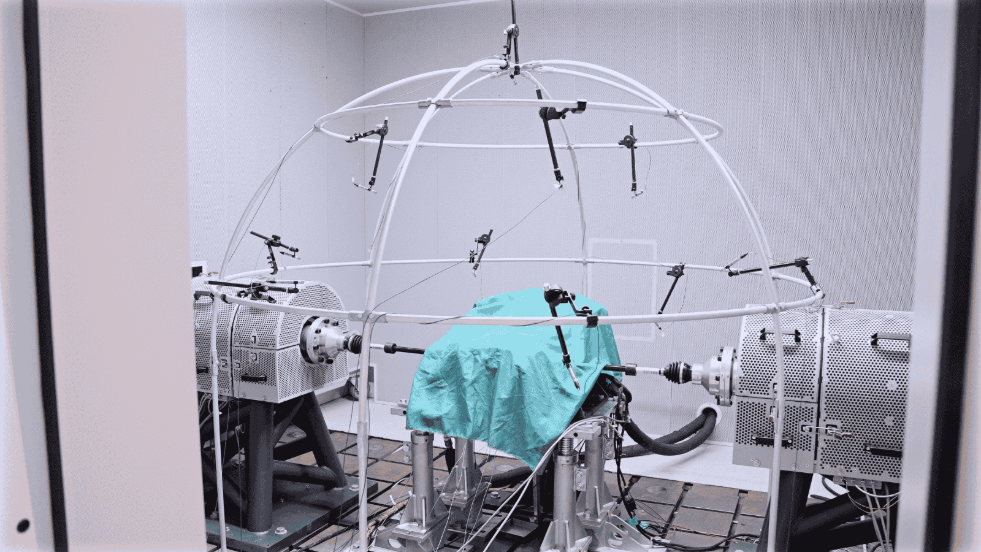
NVH testing—noise, vibration and harshness testing—is a key discipline in vehicle validation. It focuses on how a vehicle sounds, vibrates and feels during operation, and how these factors affect comfort, perceived quality and durability.
In modern automotive development, especially with electric and hybrid vehicles, NVH performance has become a critical differentiator. As traditional engine noise is reduced or eliminated, previously masked sounds and vibrations become more noticeable, requiring more detailed analysis and validation.
What does NVH mean?
NVH stands for Noise, Vibration and Harshness. It describes the study and control of unwanted sound and vibration generated by a vehicle or its subsystems, and how these are transmitted to the driver and passengers.
- Noise: Audible sound such as tonal noise, broadband noise or impulsive events.
- Vibration: Mechanical oscillations transmitted through structures, mounts or interfaces.
- Harshness: The subjective perception of discomfort caused by noise and vibration.
Why NVH testing is important in vehicle validation
NVH testing helps manufacturers identify, quantify and mitigate sources of unwanted noise and vibration before production. Poor NVH performance can lead to reduced customer satisfaction, warranty claims and costly late-stage design changes.
In electric vehicles, NVH testing is even more demanding. Without combustion engine noise, high-frequency motor orders, inverter switching effects, gear mesh behavior and bearing noise become clearly audible, requiring advanced measurement and correlation techniques.
Typical applications of NVH testing
NVH testing is applied across a wide range of vehicle types and development stages, including:
- Passenger cars and SUVs
- Commercial vehicles, buses and trucks
- Off-highway and industrial vehicles
- Hybrid and battery-electric vehicles
- Internal combustion engine vehicles
Components commonly evaluated in NVH programs
An NVH test program typically covers multiple systems and interfaces that can generate or transmit noise and vibration, such as:
- Electric or combustion powertrain
- Transmission and driveline
- Suspension and steering systems
- Brakes and wheel-end components
- Mounts, bushings and isolators
- Body structure and trim interfaces
When to start NVH testing
Best practice is to begin NVH testing early in the development cycle. Initial assessments during concept and prototype phases allow issues to be identified when design changes are still feasible. Testing then continues through design verification and pre-production sign-off to ensure compliance with targets and customer expectations.


 Aug 29, 2026