

Article details
Product Cost Engineering: Driving Profitability Through Smart Manufacturing Decisions
In today’s highly competitive manufacturing environment, organizations are constantly under pressure to reduce costs, improve efficiency, and maintain product quality. One of the most critical functions that supports these objectives is Product Cost Engineering. It plays a vital role in helping companies understand the true cost of a product throughout its lifecycle while enabling strategic decisions related to design, sourcing, manufacturing, and pricing.
Product Cost Engineering is not just about calculating numbers; it is a multidisciplinary approach that combines engineering knowledge, manufacturing expertise, commercial understanding, and analytical skills to optimize product costs without compromising quality, functionality, or customer expectations.
What is Product Cost Engineering?
Product Cost Engineering is the process of analyzing, estimating, and optimizing the total cost involved in manufacturing a product. It includes evaluating raw materials, manufacturing processes, labor, tooling, logistics, overheads, and assembly costs.
The primary goal is to identify opportunities for cost reduction while ensuring that the product continues to meet technical specifications, quality standards, and performance requirements.
Cost engineers work closely with design teams, procurement departments, suppliers, manufacturing engineers, and management to provide detailed cost breakdowns and support strategic decision-making.
Importance of Product Cost Engineering
In manufacturing industries such as automotive, aerospace, heavy engineering, consumer products, and industrial equipment, even a small reduction in product cost can result in significant savings when products are manufactured in large volumes.
Product Cost Engineering helps organizations in several ways:
1. Improved Profitability
Accurate cost estimation enables businesses to maintain healthy profit margins and competitive pricing. Companies can identify expensive processes, unnecessary design complexities, or material wastage that increase production costs.
2. Better Product Design Decisions
Around 70–80% of a product’s cost is determined during the design phase. Cost engineers work alongside product designers to ensure that products are designed for manufacturability, assembly, and cost efficiency.
3. Supplier Cost Validation
Cost engineering helps organizations evaluate supplier quotations and verify whether the quoted prices are reasonable based on material costs, process requirements, and market standards.
4. Competitive Benchmarking
Companies use cost engineering to benchmark competitor products and understand how competing manufacturers achieve lower production costs or higher efficiency.
5. Strategic Sourcing Support
By understanding process costs and material utilization, organizations can make informed sourcing decisions and negotiate better contracts with suppliers.
Key Components of Product Cost Engineering
Material Cost Analysis
Material cost is one of the largest contributors to product cost. Cost engineers analyze:
Material type and grade
Material utilization
Scrap generation
Weight optimization
Market price fluctuations
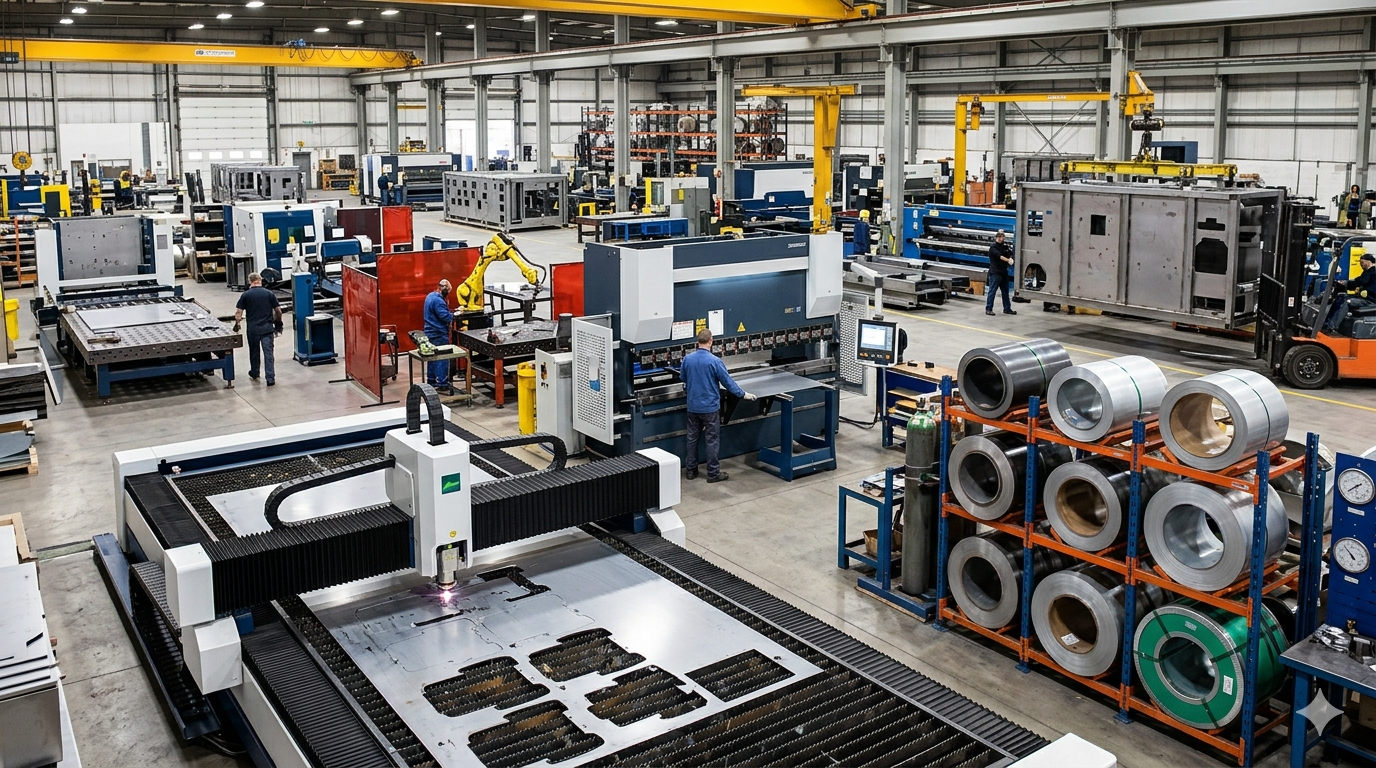
For example, in sheet metal manufacturing, optimizing blank size and reducing scrap percentage can significantly lower material costs.
Manufacturing Process Analysis
Every manufacturing process adds cost to the product. Cost engineers study processes such as:
Cutting
Bending
Machining
Welding
Casting
Forging
Surface treatment
Assembly
The goal is to determine the most cost-effective manufacturing route while maintaining required quality standards.
Labor Cost Estimation
Labor cost includes machine operator time, assembly labor, inspection time, and setup activities. Time studies and process cycle analysis help estimate labor costs accurately.
Tooling and Equipment Cost
Manufacturing often requires dies, molds, jigs, fixtures, and Special Purpose Machines (SPMs). Cost engineers evaluate tooling investment and amortization costs across production volumes.
Overhead Cost Allocation
Indirect costs such as electricity, maintenance, quality control, factory administration, and logistics are also considered in product cost calculations.
Zero-Based Costing (ZBC)
One of the most effective methods used in Product Cost Engineering is Zero-Based Costing (ZBC). In this approach, the product cost is calculated from scratch based on actual manufacturing processes and resource consumption instead of relying solely on supplier quotations or historical pricing.
ZBC provides:
Detailed transparency
Accurate cost benchmarking
Better negotiation capability
Identification of hidden cost drivers
This method is widely used in automotive and manufacturing industries to validate supplier pricing and reduce procurement costs.
Design for Manufacturability (DFM)
A major focus area in Product Cost Engineering is Design for Manufacturability (DFM). DFM aims to simplify product design so it can be manufactured easily, quickly, and economically.
Examples of DFM improvements include:
Reducing part count
Simplifying welding operations
Using standard components
Optimizing tolerances
Minimizing machining requirements
Improving assembly accessibility
Even small design modifications can lead to major savings in production cost and manufacturing time.
Role of Automation in Cost Engineering
Modern manufacturing increasingly relies on automation to improve productivity and reduce manual intervention. Product Cost Engineers evaluate opportunities for automation such as:
Robotic welding
CNC automation
Conveyor systems
Vision inspection systems
Automated material handling
Smart assembly systems
Automation can reduce cycle time, improve consistency, minimize rework, and lower long-term labor costs.
However, automation decisions must be carefully evaluated based on production volume, investment cost, and return on investment (ROI).
Challenges in Product Cost Engineering
Despite its importance, Product Cost Engineering involves several challenges:
Frequent Material Price Changes
Raw material prices fluctuate due to global market conditions, affecting cost calculations and profitability.
Complex Manufacturing Processes
Products involving multiple manufacturing stages require deep technical understanding and accurate process mapping.
Data Accuracy
Incorrect assumptions regarding cycle times, material utilization, or labor efficiency can lead to inaccurate cost estimates.
Balancing Cost and Quality
Reducing costs should never compromise product safety, reliability, or customer expectations.
Supplier Variability
Different suppliers may use different manufacturing methods, machine capabilities, and efficiency levels, making cost comparison challenging.
Skills Required for a Product Cost Engineer
A successful Product Cost Engineer requires a combination of technical and analytical skills, including:
Manufacturing process knowledge
Cost estimation techniques
Engineering drawing interpretation
Material science understanding
Analytical thinking
Excel and costing software proficiency
Negotiation support capability
Communication and teamwork
Value engineering expertise
Knowledge of sheet metal fabrication, machining, welding, casting, and assembly processes is especially valuable in manufacturing industries.
Future of Product Cost Engineering
The future of Product Cost Engineering is evolving rapidly with digital transformation and Industry 4.0 technologies.
Advanced technologies such as:
Artificial Intelligence (AI)
Digital manufacturing
Data analytics
Predictive costing
Simulation tools
ERP integration
IoT-enabled manufacturing
are improving cost transparency and enabling real-time decision-making.
Sustainability and carbon reduction initiatives are also becoming important factors in cost engineering. Companies now evaluate not only financial cost but also environmental impact and energy efficiency.
As industries move toward smart manufacturing and global competition intensifies, Product Cost Engineering will continue to play a strategic role in ensuring business sustainability and operational excellence.


 Oct 2, 2026