

Article details
In structural engineering, satisfying ultimate strength requirements (ensuring a bridge or building does not collapse under peak loads) is only half the design mandate. Engineers must also satisfy Serviceability Limit States (SLS)—controlling structural deflections, rotations, and vibrations under everyday operating conditions.
When dealing with simple, prismatic beams, classical calculus-based methods like the double-integration method work well. However, when analyzing complex multi-span trusses, high-rise frames, or continuous curved girders, differential equations quickly become intractable. To solve complex deflections with mathematical elegance and precision, structural engineers rely on Energy Methods, anchored by the Principle of Virtual Work.
1. The Limitation of Geometric Methods in Complex Structures
Traditional geometric approaches (such as moment-area theorems or double integration) relate bending moments directly to the curvature of an elastic curve. While intuitive for single spans, these methods break down when applied to:
Statically Indeterminate Trusses: Where member forces depend on axial stiffness rather than static equilibrium alone.
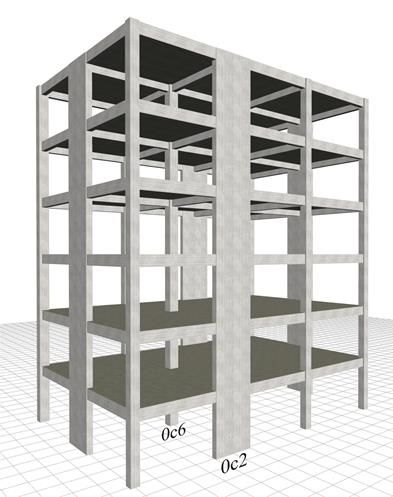
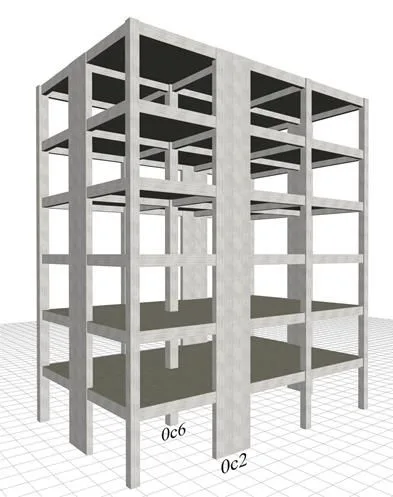
Irregular 3D Frameworks: Where compound angles, varying cross-sections, and multiple joint connections make geometric slope-deflection mapping excessively tedious.
Energy methods bypass geometric curve-fitting entirely, substituting conservation of energy principles to relate external loads directly to internal strain energy.
2. The Principle of Virtual Work (The Unit Load Method)
The Principle of Virtual Work (PVW), rooted in the work of Johann Bernoulli, states that if a deformable body in equilibrium is subjected to a system of virtual (imaginary) forces consistent with the external constraints, the total external virtual work done equals the total internal virtual strain energy stored within the system.
For structural deflection, engineers use a specialized subset of PVW known as the Method of Virtual Work (or Unit Load Method):
The Real System: Apply the actual service loads to the structure and calculate the resulting internal bending moments (M), axial forces (N), or shear forces (V).
The Virtual System: Remove all real loads and apply a single virtual unit load ($P = 1$) acting at the exact point and in the exact direction where the deflection ($\Delta$) or rotation ($\theta$) is desired. Calculate the internal virtual forces ($m$, $n$, $v$).
The Work Equation: Equate external virtual work to internal virtual strain energy:
Where EI is flexural rigidity, AE is axial rigidity, and L is member length.
3. Castigliano’s Second Theorem: Energy Derivatives
Another powerful energy-based technique is Castigliano’s Second Theorem, which states:
This method is exceptionally useful for complex pin-jointed trusses and statically indeterminate frames. By expressing total strain energy as a function of applied loads, engineers can compute deflections simply by taking partial derivatives, avoiding complex integrations altogether.
4. Double Integration vs. Virtual Work Methods At A Glance
5. Practical Engineering Applications
Engineers apply virtual work and energy methods across critical civil engineering tasks:
Pre-Cambering Long-Span Bridge Girders: Calculating exact dead-load deflections so steel fabricators can pre-curve girders upward, ensuring the bridge deck remains perfectly flat once fully loaded.
Truss Deflection Control: Determining precise vertical settlements at the mid-span of industrial steel roof trusses to prevent glazing or roof cladding failure.
Settlement Analysis: Evaluating how structural frames respond when individual column foundations experience differential subgrade settlement.
Conclusion
Virtual work and energy methods represent a profound shift in structural mechanics—moving away from complex geometric curve-fitting and toward the universal laws of energy conservation. By mastering the Unit Load Method and Castigliano’s theorems, structural engineers gain the analytical precision needed to calculate deflections accurately across the most complex civil engineering structures.
