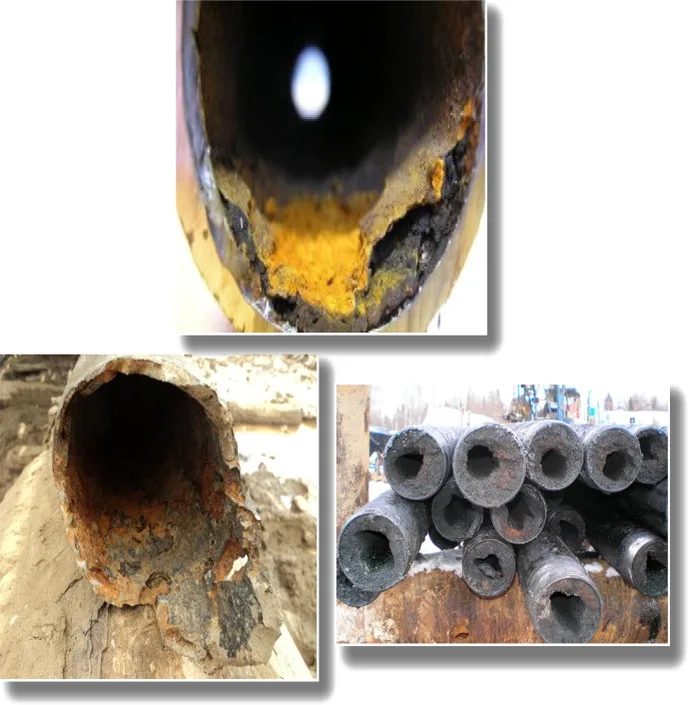
Corrosion Mechanism and Evaluation in Oil and Gas Industry
Corrosion Mechanism and Evaluation in Oil and Gas Industry

- 7-day money-back guarantee
- Session recordings included
- Certificate of completion
Why enroll
What enrolled engineers say
Coming into this course, I had some prior exposure to the subject from pipeline integrity work and offshore tiebacks. The material went deeper than expected on CO₂ corrosion and H₂S sour service, especially how water chemistry and partial pressure swing the dominant mechanism. The discussion on pitting versus general wall loss lined up well with what’s typically seen in carbon steel flowlines, but it was useful to see the electrochemical side spelled out rather than just relying on rules of thumb. One challenge was keeping all the mitigation options straight at a system level. In the field, cathodic protection, coatings, and chemical inhibition are often treated independently, while the course tried to show how they interact. That took a bit of mental rewiring, particularly for mixed-metal systems where galvanic corrosion shows up as an edge case during brownfield modifications. The sections on corrosion monitoring were practical. Comparing corrosion coupons with ultrasonic testing helped clarify when each makes sense, and why relying on a single data source can be misleading. A concrete takeaway is being more deliberate about aligning inspection intervals with actual corrosion rates instead of fixed schedules. That’s closer to best practice than what still happens on many assets. I can see this being useful in long-term project work.
Coming into this course, I had some prior exposure to the subject from pipeline integrity and production operations, so the bar was fairly high. The sections on CO₂ corrosion and H₂S sour service stood out, especially how localized pitting and stress corrosion cracking can behave very differently than the textbook uniform loss we often assume in early design. That aligned well with what’s seen in aging flowlines versus new builds. One challenge was keeping track of how many variables interact at once—water chemistry, temperature, and flow regime—when evaluating corrosion risk. In the field, those inputs are rarely clean or stable, and the course didn’t shy away from that reality. The discussion on cathodic protection limitations in complex facilities, compared to how CP is sometimes over-trusted in industry, was useful and a bit overdue. A practical takeaway was tying inspection data like UT readings and corrosion coupons back into material selection and inhibitor strategy, instead of treating monitoring as a box-checking exercise. The edge cases around mixed metallurgy and galvanic effects were particularly relevant at the system level, where small decisions ripple into long-term reliability and safety. Overall, it felt grounded in real engineering practice.
Your instructor
Mohammad Al Jawhar
Petroleum & Asset Integrity Engineer
Asset Integrity/ Sr Petroleum Engineer
Is this course for you?
You should take this if
- You work in Oil & Gas Upstream
- You're a Chemical & Process / Petroleum Technology professional
- You have 3+ years of hands-on experience in this field
- You prefer live, instructor-led training with Q&A
You should skip if
- You're new to this field with no prior experience
- You need a different specialisation outside Chemical & Process
- You need fully self-paced, on-demand content
Course details
Course suitable for
Key topics covered
Opportunities that await you!
Career opportunities
Training details
This is a live course that has a scheduled start date.
Why people choose EveryEng
Industry-aligned courses, expert training, hands-on learning, recognized certifications, and job opportunities-all in a flexible and supportive environment.


 Aug 29, 2026