<link href="https://fonts.googleapis.com/css2?family=Caveat:wght@500;700&family=JetBrains+Mono:wght@400;500;600&display=swap" rel="stylesheet" /> Skip to main contentEngineering Courses, Mentoring & Jobs | EveryEng
Design of Vehicle-body for Best NVH refinements banner

Design of Vehicle-body for Best NVH refinements

Design of Vehicle-body for Best NVH refinements banner
Self-paced Intermediate

Design of Vehicle-body for Best NVH refinements

4(115)
939 views
₹ 699
154 min
Anytime
English
939 views
MILIND AMBARDEKAR
MILIND AMBARDEKARConsultant
  • 7-day money-back guarantee
  • Lifetime access
  • Certificate of completion
Volume pricing for groups of 5+

Why enroll

The course helps engineers and students understand techniques to reduce noise, control vibrations, and improve structural stiffness in automotive body systems. By learning practical NVH design methods used in the industry, participants can develop skills that help create quieter, smoother, and higher-quality vehicles, while also enhancing their career opportunities in automotive design and development.

Is this course for you?

You should take this if

  • You work in Automotive
  • You're a Noise & Vibration Engineering / Mechanical Engineering professional
  • You have some foundational knowledge in the subject
  • You prefer self-paced learning you can revisit

You should skip if

  • You're looking for an introductory overview course
  • You need a different specialisation outside Noise & Vibration Engineering
  • You need live interaction with an instructor

Course details

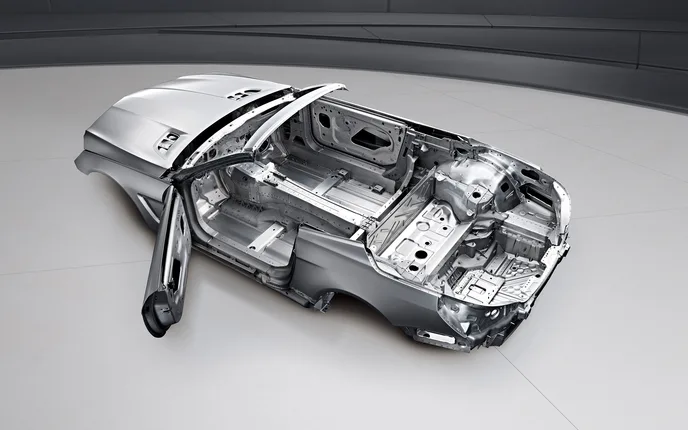
A vehicle’s body structure plays a crucial role in NVH refinement, influencing everything from road noise isolation to wind noise control. This course covers body dynamic stiffness targets, powertrain-induced excitations, and structural-acoustic modal interactions to minimize unwanted vibrations and noise.

Participants will explore CAE-based virtual validation, physical testing, and optimization techniques for balancing NVH performance with cost and weight constraints.

Key areas include BSR (Buzz, Squeak & Rattle) countermeasures, trimmed-body acoustic insulation, and surface damping treatments. The course also delves into Six Sigma methodologies to ensure production consistency in achieving NVH targets.

Course suitable for

Key topics covered

1. Body Dynamic Stiffness targets for minimum structure-borne noise

2. Power-train excitations and structural & acoustic modal performance of Vehicle-Body

3. Road noise countermeasures thru’ Body and Isolators designs

4. CAE and physical validation

5. Countermeasures against BSR (buzz squeak rattle), Door/ Tail gate closing impacts

6. Acoustic Insulation of Trimmed Bodies for in-cab quietness; surface damping treaments

7. Wind noise ingress control

8. Design for Six Sigma applied for production consistencies

9. Optimization of Vehicle NVH versus Cost/ weight additions

Course content

The course is readily available, allowing learners to start and complete it at their own pace.

3 lectures2 hr 34 min
  1. Lecture -1
    41 min
  2. Lecture -2
    64 min
  3. Lecture-3
    49 min

Opportunities that await you!

Career opportunities

₹699

Access anytime

Questions and Answers

A: A rear floor stiffness drop lines up with road-driven structure-borne noise and leaves wind and steering largely untouched, matching the symptom split. The mount stiffness story sounds right because it often causes NVH surprises, but you'd expect steering or idle shake to move with it. Dash insulation mass errors show up as broadband airborne noise, not a narrow boom tied to road texture. Tire cavity effects sit higher in frequency and usually track with wheel speed rather than a fixed body mode.

A: Targeted damping hits panel radiation where the problem lives and can be mass-neutral when placed with modal intent. Thicker carpet helps, but it drags weight and mainly works higher up, missing the structure-borne part. Mount changes chase a different excitation path and risk idle complaints. Underbody absorbers work well for wind and splash noise, not a mid-band road boom coming through the floor.

A: Dissimilar metals plus electrolyte equals clamp load loss and fretting noise, a classic cold-start squeak trigger. Uniform oxidation sounds plausible but rarely drives a discrete buzz. Hydrogen embrittlement is a steel problem and misapplied here. Thermal fatigue would need large temperature swings and would show cracks long before a noise-only complaint.

A: Pitch changes can gut stiffness even when depth looks fine on paper, and that maps directly to a lower mode and road noise rise. Test setup errors are tempting to blame on a bad day, but repeat runs usually catch them. Torque rod issues would show under throttle. Tire pressure tweaks shift noise level, not the structural mode itself.