
Skip to main contentEngineering Courses, Mentoring & Jobs | EveryEng
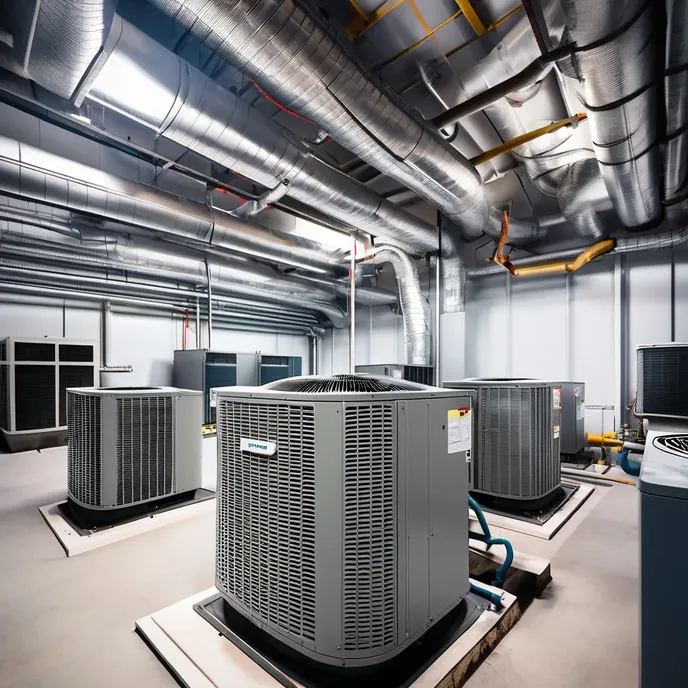
Different Types of HVAC Systems banner
Live Online Class Basic

Different Types of HVAC Systems

4(69)
1 enrolled
1348 views
Trainers Rating
4(69)
Course type
Instructor led live training
Duration
2 hrs
Start
Oct 20, 2024 · 6:01 AM
Language
English
Views
1348
  • 7-day money-back guarantee
  • Session recordings included
COMPLETED

Oct 20, 2024

Tell us and we’ll notify you when the next batch is scheduled.

Yogesh Kulkarni
Yogesh Kulkarni

Why enroll

Expanding your knowledge of different types of HVAC systems can catapult your career to new heights. By understanding the intricacies of various HVAC configurations, you'll become a sought-after expert in the field, capable of designing, installing, and maintaining complex systems. This expertise can lead to advanced roles like Senior HVAC Technician, Systems Designer, or Project Manager, with opportunities to work on large-scale commercial and industrial projects. Additionally, your comprehensive understanding of HVAC systems can also pave the way for entrepreneurial ventures, such as starting your own HVAC consulting firm or contracting business. Unlock your full potential and take your HVAC career to the next level.

Course details

Course suitable for

Is this course for you?

Perfect for

  • You work in HVAC
  • You're a Mechanical Engineering professional
  • You prefer live, instructor-led training with Q&A

Before you enrol

  • No prior experience needed for this course
  • Live online sessions, 2 hours per day — join on the scheduled dates

Training details

This is a live course that has a scheduled start date.

Live session

Started

Sun, Oct 20, 2024 Ended

6:01 AM UTC· your timezone

Duration

2 hours per day

Opportunities that await you!

Career opportunities

Frequently asked questions

A: Governing principle: At part load, airflow control dominates energy use and comfort, not coil capacity. Here, excessive VAV minimums force reheat even when sensible load is low, so energy is burned to fix a self-created problem; lowering minimums while protecting ventilation breaks the loop. Option B traps engineers who know about low-ΔT but misapply a waterside fix to an airside control error.

A: Governing principle: Safeguards mitigate specific consequences, not every failure mode in the system. Leak detection and ventilation reduce occupant exposure and escalation, but they don't address oil management, which is a piping velocity and geometry problem. Option D catches people who blur mitigation with root-cause prevention.

A: Governing principle: Processes with continuous operation and humidity sensitivity favor stable central plants with controllable coils. Chilled water allows precise dewpoint control and N+1 strategies aligned with GMP expectations. Option C attracts engineers focused on efficiency who overlook refrigerant-in-space and control stability issues.

A: Governing principle: Energy codes target annual energy, not peak design. Economizers capture free cooling during the many hours below design conditions. Option B trips engineers who associate economizers with ventilation rather than energy reduction.

COMPLETED

$36

Oct 20, 2024 · 6:01 AM

What learners say about this course

Industry-aligned courses, expert training, hands-on learning, recognized certifications, and job opportunities-all in a flexible and supportive environment.

Put no limit on your engineering passion.

We would love to hear from you.

Engineers collaborating around a laptop