
Skip to main contentEngineering Courses, Mentoring & Jobs | EveryEng
Engineering Excellence: Smart Approaches to Three‑Phase Separator Sizing banner
Live Online Class Beginner

Engineering Excellence: Smart Approaches to Three‑Phase Separator Sizing

4(287)
2 enrolled
1454 views
Trainers Rating
4(287)
Course type
Instructor led live training
Duration
2 hrs
Start
Apr 18, 2026 · 7:00 AM
Language
English
Views
1454
  • 7-day money-back guarantee
  • Session recordings included
  • Foundational Learning
  • Access to Study Materials
COMPLETED

Apr 18, 2026

Tell us and we’ll notify you when the next batch is scheduled.

Sanjay Chakraborty
Sanjay Chakraborty

Why enroll

1. Build Strong Expertise in Separator Sizing

2. Learn Practical, Real‑World Methods

3. Avoid Common Design and Operational Pitfalls

4. Increase Confidence in Design Decisions

5. Stay Updated with Industry Standards and Best Practices

6. Improve Production Efficiency and Reliability

7. Enhance Career Growth & Professional Credibility

Course details

To provide engineers and designers with a deep understanding of advanced principles, smart methodologies, and practical tools for accurately sizing three‑phase separators—ensuring optimized separation efficiency, enhanced operability, and improved production system performance across varying field conditions.

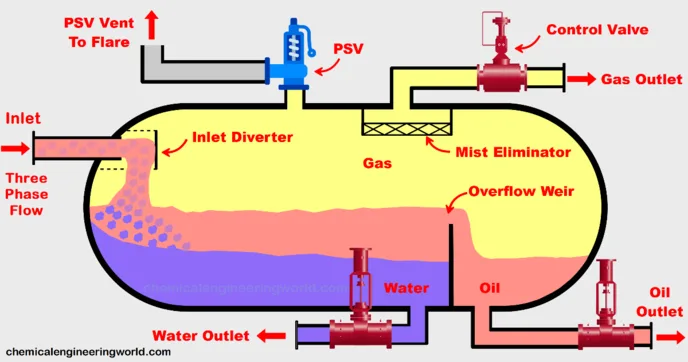
This presentation explores modern, engineering‑driven approaches to designing and sizing three‑phase separators used in oil‑gas‑water separation systems. It covers the fundamental principles of phase behavior, fluid characterization, and separation mechanisms, followed by practical sizing techniques, industry standards, and optimization strategies. Participants will gain insight into critical design considerations such as residence times, droplet settling, emulsion handling, internals selection, and control schemes. The session also highlights common design pitfalls, operational challenges, and best practices to ensure reliable equipment performance, safety, and cost‑effective facility operation

Course suitable for

Is this course for you?

Perfect for

  • You work in Pharmaceutical & Healthcare or Energy & Utilities
  • You're a Chemical & Process / Petroleum Technology professional
  • You want to build skills in Engineering & Design, Value Engineering
  • You prefer live, instructor-led training with Q&A

Before you enrol

  • No prior experience needed for this course
  • Live online sessions, 2 hours per day — join on the scheduled dates

Key topics covered

1. Introduction to Three‑Phase Separation

2. Fluid Characterization and Phase Behavior

3. Separator Types and Configurations

4. Key Design Principles

5. Sizing Methodology

6. Separator Internals – Selection & Impact

7. Design Standards and Industry References

8. Common Design Pitfalls

9. Operational Considerations

10. Optimization Techniques

11. Case Studies & Practical Examples

Course attachments

Three-Phase-Separator-Sizing.png

Training details

This is a live course that has a scheduled start date.

Live session

Started

Sat, Apr 18, 2026 Ended

7:00 AM UTC· your timezone

Duration

2 hours per day

Opportunities that await you!

Career opportunities

Frequently asked questions

A: Acting on the wrong assumption here leads to mis-layered safeguards and a false sense of pressure protection, which shows up as a failed HAZOP closeout or worse during start-up. The HHLS only limits liquid level; it can't relieve pressure. Overpressure is addressed by PSV or BDV, not level shutdown. The other outcomes are direct consequences of losing level control and are exactly what HHLS is meant to prevent.

A: Pick the wrong diameter and you’ll either choke gas capacity or overspend steel, both of which show up during performance testing. The gas flow must be converted to actual volumetric flow before velocity is checked against K·√((ρL−ρG)/ρG). Option B does that cleanly. The other paths each embed a real mistake seen on EPC jobs — wrong basis, wrong service K, or a geometry slip.

A: Doing this out of order leads to failed SATs and schedule churn when the valve hunts or saturates. Local calibration against the actual installation comes first; otherwise every downstream check is suspect. Once zero/span are right, the loop check through the PLC confirms wiring, scaling, and final element response without putting the vessel at risk.

A: Responding incorrectly here sends water into oil export and fails BS&W specs, often discovered only after tank contamination. Higher water cut expands the water layer and drives the interface upward. Increasing water draw maintains the interface band. The other instincts either worsen carryover or invent pressure effects that don’t exist at constant flow.

COMPLETED

Apr 18, 2026 · 7:00 AM

What learners say about this course

Industry-aligned courses, expert training, hands-on learning, recognized certifications, and job opportunities-all in a flexible and supportive environment.

Put no limit on your engineering passion.

We would love to hear from you.

Engineers collaborating around a laptop