
Skip to main contentEngineering Courses, Mentoring & Jobs | EveryEng
Hazard Identification and Risk Assessment banner
Live Online Class Basic

Hazard Identification and Risk Assessment

4(1)
2190 views
Trainers Rating
4(1)
Course type
Instructor led live training
Duration
-
Start
Next month
Views
2190
  • 7-day money-back guarantee
  • Session recordings included
COMPLETED

Tell us and we’ll notify you when the next batch is scheduled.

Pradeep Bhalla
Pradeep BhallaPrincipal Consultant and Lead Trainer

Why enroll

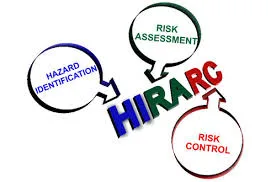
A risk assessment can help you identify potential hazards in the workplace. It also allows you to better assess the severity of the risks these hazard pose to your workers. A thorough risk assessment is essential for implementing a risk management strategy to eliminate or minimize the likelihood of these risks causing harm to your workers.

Is this course for you?

Perfect for

  • You work in Oil & Gas Upstream or Aerospace
  • You're a Chemical & Process / Civil & Structural professional
  • You prefer live, instructor-led training with Q&A

Before you enrol

  • No prior experience needed for this course
  • Live online sessions — join on the scheduled dates

Training details

This is a live course that has a scheduled start date.

Opportunities that await you!

Career opportunities

Frequently asked questions

A: A looks mundane but it ties the whole chain together: fouled internals change hydraulics, the controller runs out of authority, and real liquid carryover appears. B feels comfortable because bad transmitters cause alarms, but it doesn't explain downstream carryover confirmed by ops. C explains high level, yet the trend shows no step change in inlet conditions from test separators. D matches controller saturation, but stiction usually gives cycling, not a slow relentless rise.

A: A is dull but safe: loss of fuel pressure is a classic flame instability precursor and the trip exists for that reason. B sounds intuitive to an operations mindset, yet more air with less fuel pushes lean blowout. C reflects schedule pressure, but disabling protection under inspection is indefensible. D risks starving downstream users and still can't fix an upstream pressure collapse.

A: A is painful under schedule pressure, but conflicting safety intent documents are a hard stop. B feels procedural, yet finishing tests on an undefined fail state can mask a latent hazard. C relies on document hierarchy, but fail action is a safety function, not a drafting preference. D gives misleading comfort; partial movement under power doesn't prove loss-of-utility behavior.

A: A fits the environment: wet H2S plus stress is the textbook trigger, even at moderate temperatures. B tempts because CO2 is common, but the service is sour-dominated and SSC governs material limits. C sounds scary, yet 60°C is far below HTHA regimes. D borrows from stainless steel failures; carbon steel behaves differently here.

COMPLETED

$286

Coming in Next Month

What learners say about this course

Industry-aligned courses, expert training, hands-on learning, recognized certifications, and job opportunities-all in a flexible and supportive environment.

Put no limit on your engineering passion.

We would love to hear from you.

Engineers collaborating around a laptop