
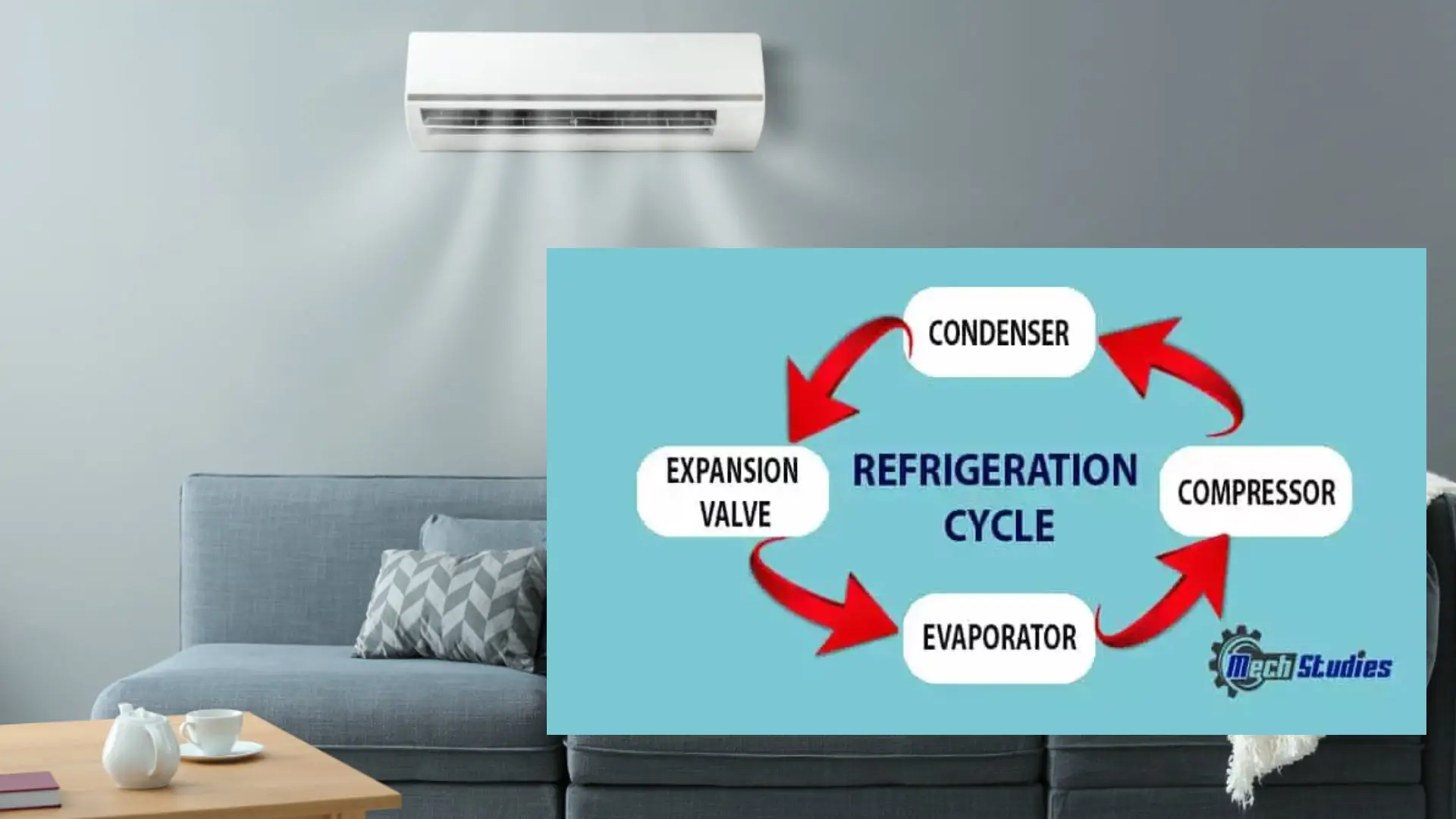
HVAC System - Understanding Basic Concept of Refrigeration Cycle
HVAC System - Understanding Basic Concept of Refrigeration Cycle
Tell us and we’ll notify you when the next batch is scheduled.

- Session recordings included
- Certificate of completion
Why enroll
What enrolled engineers say
This course turned out to be more technical than I anticipated. The walk‑through of the refrigeration cycle went past the usual textbook sketch and actually explained how the compressor, expansion valve, and evaporator interact under real operating conditions. From an HVACR standpoint, the discussion on pressure–temperature relationships and basic superheat logic helped close a gap I’ve had since moving from design support into site troubleshooting. One challenge was keeping track of the cycle states when the instructor shifted between ideal diagrams and what you actually see on gauges in the field. It took a bit of rewinding to align the theory with real readings, especially around throttling and why temperature drops without work. Still, that struggle paid off. A practical takeaway was learning to mentally trace the cycle when an AC unit is underperforming, instead of jumping straight to parts replacement. This is already useful on a current energy utilities project where we’re reviewing HVAC loads and power draw in a commercial building. Understanding how COP degrades with poor heat rejection made those discussions more concrete. Overall, it felt grounded in real engineering practice.
At first glance, the topics looked familiar, but the depth surprised me. The breakdown of the refrigeration cycle went beyond textbook definitions and actually connected the evaporator, compressor, condenser, and expansion valve in a way that maps to real HVACR jobs. Concepts like superheating and subcooling finally clicked, which helped close a knowledge gap from past site work where readings were taken but not fully understood. One challenge was keeping up with the thermodynamic explanations, especially when pressure–temperature relationships were introduced without many worked examples. Had to pause and replay a few sections to line that up with what’s seen on gauges in the field. What stood out was how energy efficiency was tied back to the cycle. That link to energy utilities and power consumption is useful when discussing operating costs with clients or coordinating with facility teams. A practical takeaway was learning how small issues in the refrigeration cycle can cascade into higher energy draw and poor cooling, something already applied on a recent rooftop unit inspection. This course fits well with ongoing HVACR maintenance and retrofit projects, and I can see this being useful in long-term project work.
At first glance, the topics looked familiar, but the depth surprised me. The course walked through the refrigeration cycle in a way that connected theory to what actually shows up on HVACR sites, especially around compressors, expansion devices, and heat rejection. The discussion on evaporator and condenser behavior under varying loads felt closer to real systems than textbook diagrams, which was refreshing. One challenge was that the cycle is mostly explained under ideal conditions. In practice, edge cases like high ambient temperatures, poor oil return, or part‑load operation can completely change system performance. That gap required some mental translation, particularly for those used to troubleshooting packaged units or chillers tied into energy utilities infrastructure. Still, the fundamentals were solid enough to bridge that gap. A practical takeaway was revisiting the pressure‑enthalpy relationship and using it as a diagnostic tool rather than just a learning graphic. That’s something often overlooked in the field. Compared to oil & gas compression systems, the tolerances are tighter, but the thermodynamic logic is similar. System‑level implications, like how inefficiencies ripple into power consumption and utility demand, were hinted at and worth expanding. The content felt aligned with practical engineering demands.
Is this course for you?
You should take this if
- You work in HVAC
- You're a Mechanical Engineering professional
- You prefer live, instructor-led training with Q&A
You should skip if
- You need a different specialisation outside Mechanical Engineering
- You need fully self-paced, on-demand content
Course details
Course suitable for
Key topics covered
Opportunities that await you!
Career opportunities
Training details
This is a live course that has a scheduled start date.
Live session
Starts
Sat, Mar 16, 2024
Duration
1 hour per day
Why people choose EveryEng
Industry-aligned courses, expert training, hands-on learning, recognized certifications, and job opportunities-all in a flexible and supportive environment.
What learners say about this course

the Manual J load calc walkthrough in Chapter 4, especially the 1,800‑sq‑ft townhouse example with infiltration assumptions, it's mapped hvacr theory to an arch decision path I actually use. It mostly held up, though I wasn't sold on the duct sizing section skipping field variance; wished there was more on obs and commissioning beyond design.

Needed material that would survive a tough PR, not just classroom math. The section on the HAP Zone Loads screen—where you reconcile ventilation latent loads against the Manual J worksheet—stuck, because it mirrors how we justify arch decisions before prod. it's mostly practical, mapping hvacr assumptions to checkable inputs like schedules and envelopes; I wasn't sold on the brief detour into reports formatting and wished there was more on code edge cases, but I've already dropped the repo link in team Slack.

The HAP infiltration calc walkthrough in the 'Office Building Example', where you toggle ASHRAE 62.1 vs crack method and watch sensible/latent shift—felt like real hvacr work, not slides. As an engineer, the beginner/advanced mix works, though I wasn't sold on the software install preamble and wished for more on part-load profiles and coil sizing assumptions.

Felt like someone had already smacked into the same walls we’re heading for, which helps when you’re steering a team and watching costs. The walkthrough of Step 4 on infiltration—specifically the ACH vs crack method comparison in HAP and the load summary check right after—stuck with me, since it mirrors what we argue about in PRs. it's mostly there, though I wasn't sold on how light the sizing rationale was for mixed-use hvacr zones. I've got a clear list of service assumptions to revisit before this hits prod.


 Aug 29, 2026
