<link href="https://fonts.googleapis.com/css2?family=Caveat:wght@500;700&family=JetBrains+Mono:wght@400;500;600&display=swap" rel="stylesheet" /> Skip to main contentEngineering Courses, Mentoring & Jobs | EveryEng
Introduction to Artifical Lift - Oil and Gas Wells banner

Introduction to Artifical Lift - Oil and Gas Wells

Introduction to Artifical Lift - Oil and Gas Wells banner
Live online Beginner

Introduction to Artifical Lift - Oil and Gas Wells

4(69)
1 enrolled
1172 views
₹ 499
1 hrs
Next month
English
1172 views
Team OG
Team OGUpstream Oil & Gas Technical Professional
  • 7-day money-back guarantee
  • Session recordings included
  • Certificate of completion
Volume pricing for groups of 5+

Why enroll

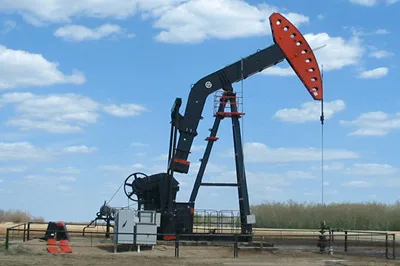
The course will give an overview of the main categories and types of Artificial Lift employed in the oil and gas industry, which is used across a large percentage of oil or gas wells.

Is this course for you?

You should take this if

  • You work in Oil & Gas Upstream
  • You're a Petroleum Technology / Mechanical Engineering professional
  • You prefer live, instructor-led training with Q&A

You should skip if

  • You need a different specialisation outside Petroleum Technology
  • You need fully self-paced, on-demand content

Course details

This course gives an overview of the different types of Artifical Lift, which is a method to increase the production of oil and gas. Artifical Lift is needed when the natural downhole pressure within the reservoir is insufficient to force the hydrocarbons to the surface. This could be the case since the beginning of the well life or due to pressure depletion over time.

Course suitable for

Key topics covered

  • The reason for using Artificial Lift method to produce oil and gas

  • Main categories of Artificial Lift systems

  • Different forms of Artificial lift

Opportunities that await you!

Career opportunities

Training details

This is a live course that has a scheduled start date.

₹499

₹0 Early bird

Coming in Next Month

Questions and Answers

A: Running through gas interference cooks thrust bearings and drives amps into the red, and the vibration trend is telling you the pump is unhappy. Stepping back protects the motor and lets you re-establish submergence above bubble point so the pump curve makes sense again. Opening the choke first can worsen gas breakout at the intake, and pushing speed higher often deepens the gas lock rather than clearing it. Chemistry won't fix a pressure problem at the intake.

A: Starting without confirming mechanical travel can bend rods or tag the pump, and that's a fast path to fishing. Hand-turning through a full cycle exposes interference and incorrect stroke before energy is applied, and setting stroke first avoids overtravel. Instrument checks are necessary but won't save hardware if the geometry is wrong, and jumping to design SPM loads the string before you know it can move freely.

A: Accepting a dummy where a live valve is assumed breaks unloading sequence and can stall the well, burning rig time later. The control and pressure monitoring only make sense if the valve type is consistent across documents, so that mismatch has to be resolved. Transmitter placement debates are secondary, and hand-waving depth tolerance ignores a functional difference that the logic relies on.

A: Swelling and blistering can shred a stator and drop production to zero in days. HNBR formulations handle elevated temperature and CO2 permeation better without sacrificing mechanical integrity. Plain NBR struggles with heat and gas, FKM brings other mechanical tradeoffs in PCP duty, and inhibitors don't stop elastomer gas diffusion.