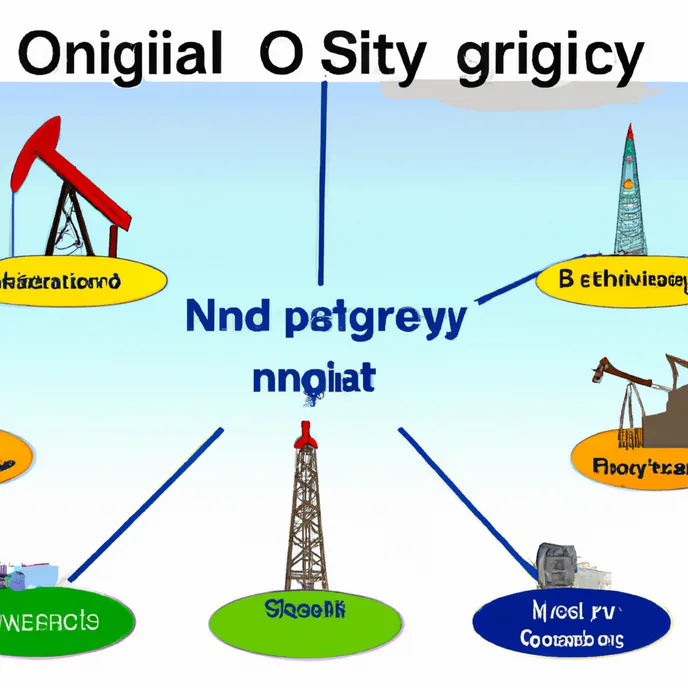
Introduction to Upstream Oil and Gas Industry
Introduction to Upstream Oil and Gas Industry
- Lifetime access
- Certificate of completion
- Foundational Learning
- Access to Study Materials
Why enroll
What enrolled engineers say
At first glance, the topics looked familiar, but the depth surprised me. Coming from a utilities-facing role, upstream always felt like a black box before gas reaches the power plants. This course finally connected the dots across the upstream lifecycle, especially around drilling operations, reservoir fundamentals, and how production systems are designed to sustain flow over time. The sections on well completion and basic reservoir drive mechanisms were particularly useful. Those concepts helped explain why some gas supply forecasts from operators fluctuate more than expected, which is something that directly impacts energy utilities planning. A real challenge was keeping up with the volume of new terminology and acronyms early on, especially without a subsurface background, but the explanations were grounded enough to work through with a bit of note-taking. One practical takeaway was being able to read upstream reports and feasibility notes with more confidence, especially when they reference decline curves or artificial lift decisions. That has already helped during coordination calls with upstream partners on a recent fuel supply project. The course didn’t oversimplify, which I appreciated, and it filled a clear knowledge gap between field operations and downstream energy use. It definitely strengthened my technical clarity.
This course turned out to be more technical than I anticipated. The sections on drilling operations and reservoir behavior went beyond a high-level overview and actually helped connect subsurface geology to surface production systems. Coming from a utilities-adjacent role, the explanation of how upstream natural gas supply feeds into power generation planning filled a real knowledge gap for me, especially around production decline and its impact on energy demand forecasts. One challenge was the amount of new terminology early on—things like well completion types and artificial lift methods came fast, and it took a bit of rewinding to line them up with real field examples. That said, the way the course walked through the full upstream lifecycle, from exploration to production optimization, made it easier to see how decisions upstream affect midstream constraints and downstream energy utilities. A practical takeaway was learning how to frame discussions around reserves versus production capacity. That’s already been useful on a current project where gas supply assumptions were being treated too optimistically. The content felt grounded in how projects actually run, not just theory. I can see this being useful in long-term project work.
At first glance, the topics looked familiar, but the depth surprised me. Coming from a utilities-facing role, upstream always felt like a black box before gas reaches the power plants. This course finally connected the dots across the upstream lifecycle, especially around drilling operations, reservoir fundamentals, and how production systems are designed to sustain flow over time. The sections on well completion and basic reservoir drive mechanisms were particularly useful. Those concepts helped explain why some gas supply forecasts from operators fluctuate more than expected, which is something that directly impacts energy utilities planning. A real challenge was keeping up with the volume of new terminology and acronyms early on, especially without a subsurface background, but the explanations were grounded enough to work through with a bit of note-taking. One practical takeaway was being able to read upstream reports and feasibility notes with more confidence, especially when they reference decline curves or artificial lift decisions. That has already helped during coordination calls with upstream partners on a recent fuel supply project. The course didn’t oversimplify, which I appreciated, and it filled a clear knowledge gap between field operations and downstream energy use. It definitely strengthened my technical clarity.
Your instructor
Team OG
Oil & Gas Domain
Upstream Oil & Gas Technical Professional
Is this course for you?
You should take this if
- You work in Oil & Gas Upstream
- You're a Petroleum Technology / Geoscience professional
- You prefer self-paced learning you can revisit
You should skip if
- You need a different specialisation outside Petroleum Technology
- You need live interaction with an instructor
Course details
Course suitable for
Key topics covered
Course content
The course is readily available, allowing learners to start and complete it at their own pace.
- Introduction to Upstream Oil and Gas Industry22 min
Opportunities that await you!
Career opportunities
Why people choose EveryEng
Industry-aligned courses, expert training, hands-on learning, recognized certifications, and job opportunities-all in a flexible and supportive environment.


 Aug 29, 2026