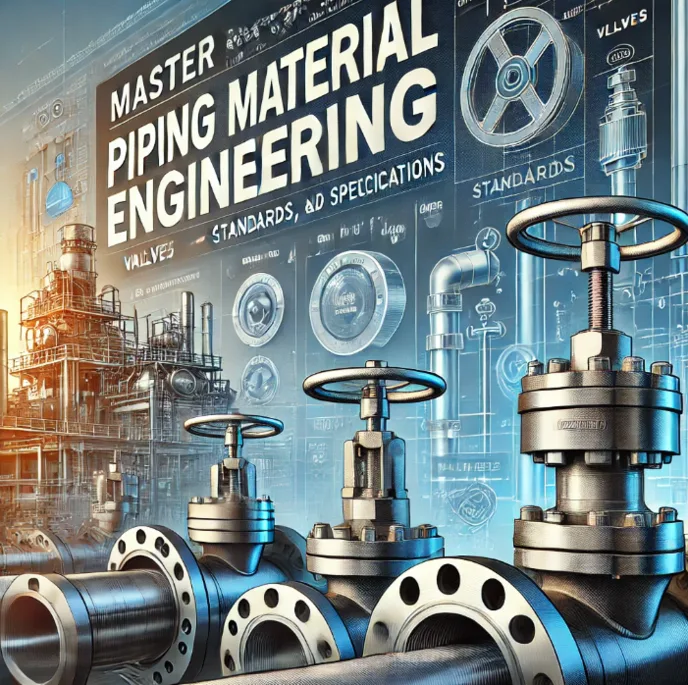
Piping Material Engineering_JAN 25 BATCH
Piping Material Engineering_JAN 25 BATCH
Tell us and we’ll notify you when the next batch is scheduled.

- 7-day money-back guarantee
- Session recordings included
- Certificate of completion
Why enroll
What enrolled engineers say
Initially, I wasn’t sure what to expect from this course, especially given how broad piping material engineering can get at an advanced level. The sessions on wall thickness calculations and material specifications stood out, particularly when linked back to ASME B31 practices I’ve seen in oil & gas projects. Valve selection discussions were also grounded in reality, including edge cases like sour service and high-temperature utility lines that don’t always fit textbook assumptions. One challenge was the pace during the jacketed piping section. The concepts were solid, but following the detailed procedures alongside enquiry documentation took some effort, especially when comparing chemical/pharmaceutical requirements versus energy utilities, where documentation depth and material traceability expectations differ. That contrast was useful, though it highlighted how easily design intent can get lost between disciplines. A practical takeaway was the structured approach to building and reviewing piping line lists. This mirrors how mature EPCs manage system-level consistency and reduces late-stage rework. The course also did a decent job of showing where industry practice deviates from codes due to operability or maintenance constraints, something not often discussed openly. Overall, the content felt aligned with practical engineering demands.
Coming into this course, I had some prior exposure to the subject, mostly from oil & gas brownfield projects, but a lot of my understanding around piping material specs was fragmented. The sessions on valve selection and wall thickness calculations helped connect design intent with code compliance, especially when referencing ASME standards used across energy and utilities projects. Coverage of jacketed piping was particularly useful since that’s an area I hadn’t worked on directly in chemical and pharmaceutical facilities. One challenge was keeping up with the volume of standards and material classifications discussed in a short time. The pace was demanding, and some self-study was needed after sessions to fully digest the logic behind material selection versus process conditions. That said, the practical walkthrough of piping line lists and the enquiry process stood out. Seeing how data flows from design to procurement filled a real gap in my day-to-day work. A key takeaway was a clearer method to review MTOs and vendor documents without relying entirely on senior review. That’s already helping on an ongoing revamp job. Overall, the course sharpened how I approach piping material decisions rather than treating them as checklist items. It definitely strengthened my technical clarity.
Your instructor
Team Piping Engineering
Sr Engineer
Founder Team Piping Engineering
Is this course for you?
You should take this if
- You work in Oil & Gas Upstream or Pharmaceutical & Healthcare
- You're a Piping & Layout Engineering / Mechanical Engineering professional
- You have 3+ years of hands-on experience in this field
- You prefer live, instructor-led training with Q&A
You should skip if
- You're new to this field with no prior experience
- You need a different specialisation outside Piping & Layout Engineering
- You need fully self-paced, on-demand content
Course details
Course suitable for
Key topics covered
Opportunities that await you!
Career opportunities
Training details
This is a live course that has a scheduled start date.
Live session
Starts
Sat, Feb 15, 2025
Duration
1 hour per day
Why people choose EveryEng
Industry-aligned courses, expert training, hands-on learning, recognized certifications, and job opportunities-all in a flexible and supportive environment.


 Aug 29, 2026