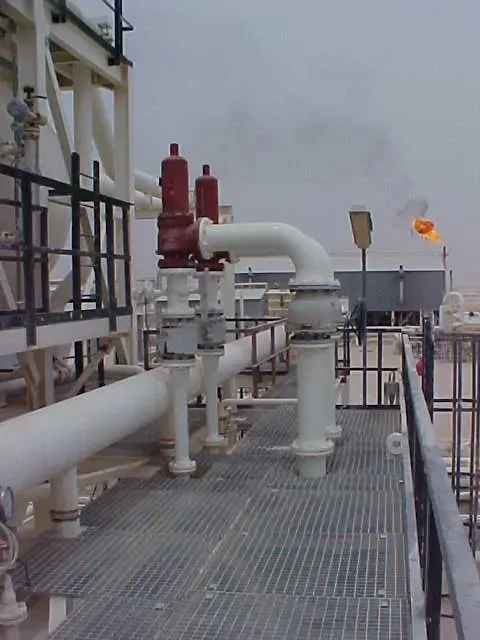
Pressure Relief Valve Piping (PSV Piping) Stress Analysis using Caesar II
- 7-day money-back guarantee
- Lifetime access
- Certificate of completion
Why enroll
What enrolled engineers say
Content’s tight and fairly jargon-light, but module 2 labs assume Caesar II is already licensed and the units prefs are set; lost a few minutes hunting menus. After that, it clicks. The walkthrough on PSV tailpipe loads in Chapter 3 stuck with me, especially setting the occasional case for relief thrust and why the nozzle restraint matters more than extra guides. Clear explanation of sustained vs occasional without overteaching. As a freelancer, I care about getting an answer into prod quickly, and this stayed focused on decisions that affect stress checks, not tool trivia. oilgas context felt natural without drifting. I’ve already applied the mental framing to a different arch review, and it holds up regardless of the exact Caesar II screens.
One gripe first: the labs assume Caesar II is already licensed and configured; a quick note on version quirks would’ve saved time. After that, the material stays grounded in real-world constraints instead of toy problems. The walkthrough in the section on PSV discharge piping, especially the moment where you set up the occasional load case for relief and see how the sustained vs occasional combo shifts stresses, stuck with me. It maps cleanly to what I’ve seen on oilgas projects in prod. Explanations are terse, engineer-to-engineer. No fluff. I’ve already pulled a couple ideas into our arch notes for infra reviews. Module pacing was fine, though one example ran a bit long. Planning to point a few folks on my team at it.
Feels closer to a mentor walking a screen than a canned class, which helped bridge legacy piping habits to modern Caesar II workflows. The bit that stuck was the PSV thrust load case setup—watching the switch to W+P+T and the nozzle load check at the pump discharge clarified why some prod PR lines fail stress even when arch looks fine; don’t overthink the GUI. It's beginner-friendly, though I wasn't sold on the light treatment of API 521 tie-backs and wished there was more on boundary conditions for infra tie-ins. gets stronger a few modules in as the examples stack.
Your instructor
Anup Kumar Dey
Senior Piping Engineer
Owner of https://whatispiping.com/
Is this course for you?
You should take this if
- You work in Oil & Gas Upstream or Pharmaceutical & Healthcare
- You're a Piping & Layout Engineering / Mechanical Engineering professional
- You prefer self-paced learning you can revisit
You should skip if
- You need a different specialisation outside Piping & Layout Engineering
- You need live interaction with an instructor
Course details
Course suitable for
Key topics covered
Course content
The course is readily available, allowing learners to start and complete it at their own pace.
- Introduction to PSV piping system stress analysis15 min
- Reaction force calculation7 min
- Applying reaction force in the software7 min
- Practical Case Study32 min
- Analysis Best Practices7 min
- Bonus Lecture: How does a Pressure Relief Valve Work6 min
- Bonus: What is the Difference between Pressure Safety Valve-PSV and Pressure Relief Valve-PRV (PSV Vs. PRV)4 min
Opportunities that await you!
Skills & tools you'll gain
Career opportunities
Why people choose EveryEng
Industry-aligned courses, expert training, hands-on learning, recognized certifications, and job opportunities-all in a flexible and supportive environment.
What learners say about this course
.
The WRC 537 nozzle-on-shell example—the 8-in nozzle on a 36-in shell in the Caesar II walkthrough—made the hand calc to software mapping click; it's practical for oilgas work in prod. track fills gaps fast, though I wasn't sold on the skim of WRC 297 fatigue cycles and wished for more obs before pushing a PR.
Useful for juniors; the Chapter 3 tailpipe thermal expansion example in CAESAR II stuck—it's basic arch, wasn't sold on sustained load coverage.
Good walkthrough for a beginner; the section where you build the PSV tailpipe and set W+P+T load cases in CAESAR II stuck, especially the expansion loop tweak before running statics. it's useful for day-one energyutilities work, though I wasn't sold on the nozzle load checks—wished there was more on API 520/521 tie-ins.