<link href="https://fonts.googleapis.com/css2?family=Caveat:wght@500;700&family=JetBrains+Mono:wght@400;500;600&family=Plus+Jakarta+Sans:wght@600;700;800&display=swap" rel="stylesheet" /> Skip to main contentEngineering Courses, Mentoring & Jobs | EveryEng
Pressure Safety Valves: Fundamentals and Applications for Instrumentation Engineers banner

Pressure Safety Valves: Fundamentals and Applications for Instrumentation Engineers

Pressure Safety Valves: Fundamentals and Applications for Instrumentation Engineers banner
Self-paced Beginner

Pressure Safety Valves: Fundamentals and Applications for Instrumentation Engineers

4(34)
1369 views
₹ 999
96 min
Anytime
English
1369 views
Sawrabh Raj
Sawrabh RajSr Instrumentation Design Engineer, Global Trainer- Instrumentation Design
  • 7-day money-back guarantee
  • Lifetime access
  • Certificate of completion
Volume pricing for groups of 5+

Why enroll

Participants join this course to gain a solid understanding of pressure safety and relief valves, clarify any technical doubts, and learn their practical applications in instrumentation engineering. It also helps them build confidence and knowledge needed to perform effectively in real-world scenarios and prepares them thoroughly for technical interviews in the field.

Is this course for you?

You should take this if

  • You work in Oil & Gas Upstream
  • You're a Instrumentation Engineering professional
  • You prefer self-paced learning you can revisit

You should skip if

  • You need a different specialisation outside Instrumentation Engineering
  • You need live interaction with an instructor

Course details

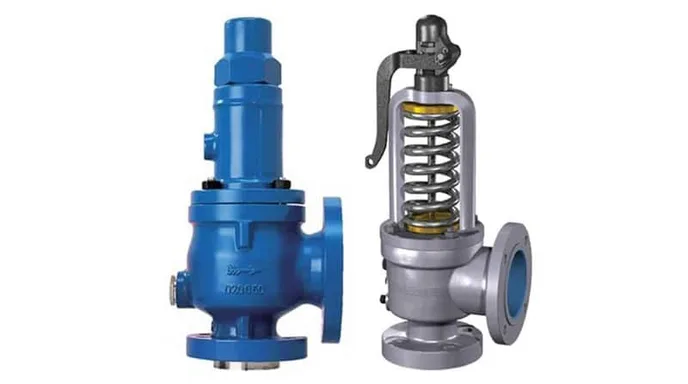
This online course is designed for instrumentation engineering professionals who want to gain a deep understanding of Pressure Safety Valves (PSVs). Participants will learn what a PSV is and how it differs from a Pressure Relief Valve (PRV). The course explains common causes of over-pressurized vessels and guides on selecting the right PSV for different applications. It covers key terms, types of PSVs, and applicable industry standards. You will explore conventional, balanced bellows, and pilot-operated PSVs in detail. The course also teaches how to read specifications and datasheets, perform sizing calculations, and conduct testing of PSVs. By the end, participants will have practical knowledge to safely design, select, and maintain PSVs in industrial systems.

Course suitable for

Key topics covered

  • What is a Pressure Safety Valve? (PSV)

  • What is the difference in a Pressure Safety Valve (PSV) and a Pressure Relief Valve (PRV)?

  • What causes an over-pressurized vessel?

  • What Factors Should I Consider When Selecting a Pressure Safety Valve?

  • Different Terms of PSV

  • Different types of PSV

  • Applicable Standards

  • Conventional PSV

  • Balance Bellow PSV

  • Pilot operated PSV

  • Specification and Datasheet for PSV

  • Sizing Calculation of PSV

  • Testing of PSV

Course content

The course is readily available, allowing learners to start and complete it at their own pace.

7 lectures1 hr 36 min
  1. Pressure Safety Valves for Instrumentation Engineers
    43 min
  2. Bonus Video 1: What is a Pressure Safety Valve
    2 min
  3. Bonus Video 2: Differences between PSV and PRV
    13 min
  4. Bonus Video 3: Working of Pressure Relief Valve
    4 min
  5. Bonus Video 4: PSV Sizing
    7 min
  6. Bonus Video 5: Pressure Relief Valve Sizing in HYSYS
    22 min
  7. Bonus Video 6: What's Superimposed and Built-up Back Pressure?
    5 min

Opportunities that await you!

Career opportunities

₹999

Access anytime

Questions and Answers

A: The right call focuses attention on a time-dependent cracking mechanism that doesn't need uniform metal loss to cause a PSV to fail shut. General corrosion would be slow and visible and doesn't explain sudden loss of function. Hydrogen embrittlement needs a hydrogen charging source that isn't present here. Sulfide stress cracking assumes H2S exposure that the service description explicitly doesn't support.

A: The safe outcome is stopping acceptance based on a test that masks a loss of mass flow margin under superheat. Assuming higher temperature gives you free capacity ignores the density term baked into the sizing equations. Tweaking rings under schedule pressure risks unstable operation and voids shop settings. Changing set pressure on a certified PSV creates a compliance problem without fixing the capacity trend.

A: The target area satisfies the mass flow at relieving conditions using the compressible flow correlation. Basing it on normal cubic meters drops density and under-sizes the valve. Adding accumulation as an area factor double-counts safety already embedded in the equation. Treating a dry gas as liquid choked flow applies the wrong physics.

A: Catching this avoids a configuration that can physically defeat overpressure protection. Changing the downstream valve status doesn't address the loss of inlet flow path. Relying on normal blind position ignores human error during maintenance. Assuming the index is optional breaks document hierarchy and audit trails.