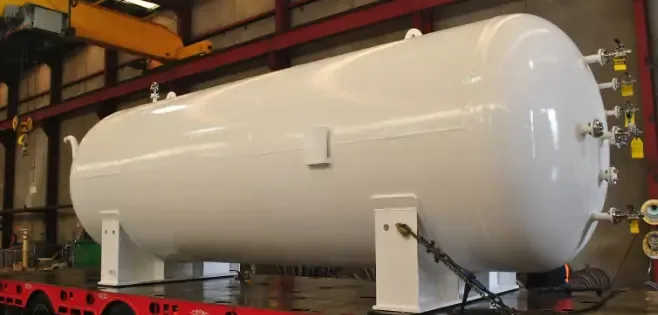
Pressure Vessel Codes & Standards: Scope & Limits
Tell us and we’ll notify you when the next batch is scheduled.
- 7-day money-back guarantee
- Session recordings included
- Certificate of completion
What enrolled engineers say
Initially, I wasn’t sure what to expect from this course. Coming from hands-on work in oil & gas and some exposure to chemical/pharmaceutical plants, pressure vessels were familiar but the code logic behind them wasn’t always clear. This course helped close that gap, especially around why ASME Section VIII Div 1 is structured the way it is and where its limitations really sit. One area that stood out was the discussion on thin cylinder stress derivations and how those assumptions show up later in MAWP calculations. That’s directly relevant to separators and knock-out drums used in oil & gas, and also to reactors and storage vessels in chemical/pharma facilities. The walkthrough of definitions and terminology was more useful than expected, since misreading a term in the code can easily lead to design mistakes. A challenge was keeping track of scope boundaries—understanding when Div 1 is acceptable and when energy utilities-style equipment like boilers push you toward other sections or codes. The practical takeaway for me was a clearer checklist for code applicability before starting any sizing or thickness calculations. That alone saves time on real projects. I can see this being useful in long-term project work.
Initially, I wasn’t sure what to expect from this course. Having worked on oil & gas skids and a couple of energy utilities projects, pressure vessels were always there, but the code logic behind them was mostly treated as a black box. The biggest value came from how ASME Section VIII Div 1 was broken down—especially the structure, definitions, and where the code actually applies versus where it doesn’t. The thin cylinder stress derivation helped close a long-standing gap from my chemical/pharmaceutical project days, where vendor calcs were accepted without fully questioning assumptions. Seeing how those equations tie back to code limits made things clearer. One challenge was keeping up with the terminology early on. ASME language can be dense, and it took some effort to align clause wording with real design situations. However, practical examples helped anchor it. A key takeaway was understanding the limitations of Div 1 and when alternative approaches or divisions are required. That’s immediately useful when reviewing vendor drawings or responding to client queries. The content felt aligned with practical engineering demands.
Your instructor
Team EveryEng
Engineer
Mechanical Engineering
Is this course for you?
You should take this if
- You work in Oil & Gas Downstream or Pharmaceutical & Healthcare
- You're a Mechanical Engineering / Piping & Layout Engineering professional
- You prefer live, instructor-led training with Q&A
You should skip if
- You need a different specialisation outside Mechanical Engineering
- You need fully self-paced, on-demand content
Course details
Course suitable for
Key topics covered
Opportunities that await you!
Career opportunities
Training details
This is a live course that has a scheduled start date.