<link href="https://fonts.googleapis.com/css2?family=Caveat:wght@500;700&family=JetBrains+Mono:wght@400;500;600&display=swap" rel="stylesheet" /> Skip to main contentEngineering Courses, Mentoring & Jobs | EveryEng
Sand Management Systems - Oil and Gas Well Completions banner

Sand Management Systems - Oil and Gas Well Completions

Sand Management Systems - Oil and Gas Well Completions banner
Live online Beginner

Sand Management Systems - Oil and Gas Well Completions

4(69)
1 enrolled
2152 views
₹ 499
1 hrs
Next month
English
2152 views
Team OG
Team OGUpstream Oil & Gas Technical Professional
  • 7-day money-back guarantee
  • Session recordings included
  • Certificate of completion
Volume pricing for groups of 5+

Why enroll

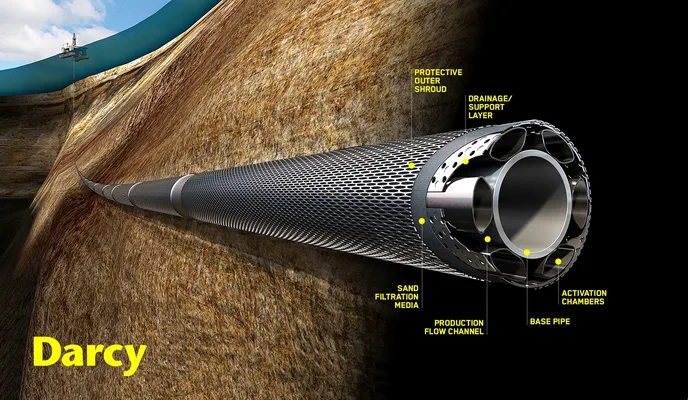
The participants will gain knowledge of the Sand Management Systems, their main components and categorization. They will get a good understanding of the complexities associated with producing oil and gas while controlling or eliminating the undesirable production of reservoir sand and the substantial benefits provided by sand control tools and screens.

Is this course for you?

You should take this if

  • You work in Oil & Gas Upstream
  • You're a Petroleum Technology / Mechanical Engineering professional
  • You prefer live, instructor-led training with Q&A

You should skip if

  • You need a different specialisation outside Petroleum Technology
  • You need fully self-paced, on-demand content

Course details

90% of hydrocarbon wells are in sandstone reservoirs. Around 30% of these sandstones may be weak enough to produce sand. Unexpectedly produced sand can lead to erosion, loss of integrity and potential loss to enviornment and life. This course will introduce the audience to the importance of sand control systems and the different components used for managing sand production, along with maximizing production of oil and gas, from the reservoir.

Course suitable for

Key topics covered

  • Sand control requirement

  • Types of sand control systems

  • Packers and Liners

  • Screens

  • Gravel Pack

Opportunities that await you!

Career opportunities

Training details

This is a live course that has a scheduled start date.

₹499

₹0 Early bird

Coming in Next Month

Questions and Answers

A: A: MAWP logic doesn't transfer; the screen isn't a pressure vessel. B: The test basis assumes controlled temperature, and steel strength drops with heat. C: Screens don't follow ASME pressure containment philosophy. D: Axial load matters during run-in, not when differential pressure builds across the screen.

A: A: The whole point of the device is erosion control. B: That's handled by PSV sizing and blockage scenarios. C: Solids carryover hurts separation, agreed. D: Anything happening downhole isn't protected by a surface desander.

A: A: High gas velocity strips fines straight through. B: Conventional gravel packs struggle with gas placement. C: Expandables help ID but don't address fines stability. D: Resin adds cohesion where drawdown margin is tight.

A: A: Tag lists usually come from I/O mapping and procurement. B: Discrete alarms would need different wiring. C: Control philosophy changes with sensor type. D: Symbols are often generic and lag vendor selection.