Skip to main contentEngineering Courses, Mentoring & Jobs | EveryEng
Shell and Tube Heat Exchangers Design, Operation banner
Live Online Class Advanced

Shell and Tube Heat Exchangers Design, Operation

4(14)
138 views
Trainers Rating
4(14)
Course type
Instructor led live training
Duration
12 hrs
Start
Next month
Language
English
Views
138
  • 7-day money-back guarantee
  • Session recordings included
  • Anytime Learning
  • Learn from Industry Expert
$ 200
Enggenious (SAN Techno Mentors)

Why enroll

Participants join this course to develop practical knowledge of shell and tube heat exchanger design and operation used in process industries. It helps engineers and maintenance professionals understand performance issues, fouling, pressure drop, leakage, and troubleshooting methods. The course also supports professionals involved in equipment selection, process design, operation, inspection, and maintenance. It provides useful knowledge for improving heat exchanger reliability, efficiency, and operational performance.

Course details

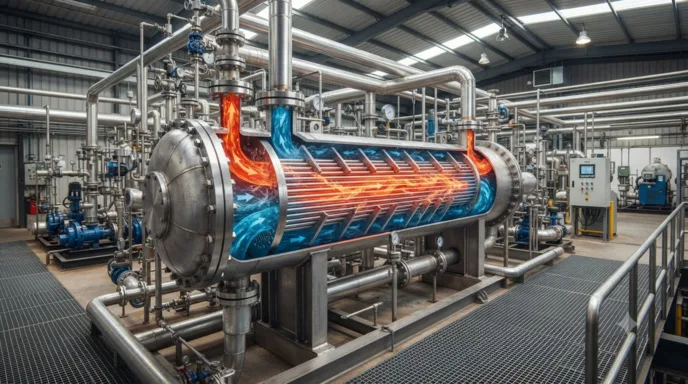
Shell and Tube Heat Exchangers Design, Operation is designed to provide a practical understanding of the design, construction, operation, and maintenance of shell and tube heat exchangers used in process and industrial applications. The course covers heat transfer fundamentals and the working principles of different heat exchanger configurations. Participants learn about major components such as shells, tubes, tube sheets, baffles, channels, and nozzles. It explains the selection of suitable materials based on temperature, pressure, corrosion, and process conditions. The course introduces thermal design considerations, heat-transfer area calculations, and basic sizing concepts. Participants also learn about pressure drop, fluid flow arrangements, and performance evaluation. Practical aspects of exchanger operation, startup, shutdown, and monitoring are discussed. Common operating problems such as fouling, scaling, vibration, leakage, and reduced heat-transfer performance are covered. The course also addresses inspection, cleaning, maintenance, and troubleshooting techniques. By completing the course, participants gain practical knowledge to support heat exchanger design, operation, performance improvement, and maintenance activities.

Course suitable for

Is this course for you?

Perfect for

  • You work in Oil & Gas Downstream or Pharmaceutical & Healthcare
  • You're a Mechanical Engineering / Chemical & Process professional
  • You have 3+ years of hands-on experience in this field
  • You prefer live, instructor-led training with Q&A

Before you enrol

  • Advanced level — assumes working knowledge of Mechanical Engineering
  • Live online sessions — join on the scheduled dates
New to Mechanical Engineering? Browse beginner courses →

Key topics covered

  • Heat Exchanger Fundamentals and Heat Transfer Principles

  • Shell and Tube Heat Exchanger Types and Configurations

  • Main Components and Construction

  • Thermal Design and Heat Transfer Area

  • Tube, Shell and Baffle Selection

  • Fluid Flow Arrangements and Pressure Drop

  • Material Selection and Design Considerations

  • Heat Exchanger Operation and Performance Monitoring

  • Fouling, Scaling, Corrosion and Vibration

  • Leakage Detection and Troubleshooting

  • Cleaning and Maintenance Methods

  • Inspection and Performance Evaluation

  • Startup, Shutdown and Operating Procedures

  • Common Failures and Corrective Actions

  • Heat Exchanger Efficiency and Performance Improvement

Training details

This is a live course that has a scheduled start date.

Opportunities that await you!

Career opportunities

Frequently asked questions

Empty state icon

No questions yet - Be the first one to ask!

$200

Coming in Next Month

What learners say about this course

Industry-aligned courses, expert training, hands-on learning, recognized certifications, and job opportunities-all in a flexible and supportive environment.

Put no limit on your engineering passion.

We would love to hear from you.

Engineers collaborating around a laptop