<link href="https://fonts.googleapis.com/css2?family=Caveat:wght@500;700&family=JetBrains+Mono:wght@400;500;600&family=Plus+Jakarta+Sans:wght@600;700;800&display=swap" rel="stylesheet" /> Skip to main contentEngineering Courses, Mentoring & Jobs | EveryEng
WELL INTERVENTION  TECHNIQUES banner

WELL INTERVENTION TECHNIQUES

WELL INTERVENTION  TECHNIQUES banner
Live online Advanced

WELL INTERVENTION TECHNIQUES

4(11)
1 enrolled
849 views
COMPLETED

Tell us and we’ll notify you when the next batch is scheduled.

10 hrs
-
English
849 views
Mohammad Al Jawhar
Mohammad Al JawharAsset Integrity/ Sr Petroleum Engineer
  • 7-day money-back guarantee
  • Session recordings included
  • Certificate of completion
Volume pricing for groups of 5+

Why enroll

1) Intervention methods

2) The importance of preserving well productivity during and after well interventions

3) Best practice during well interventions

4) How your job can impact on well productivity

5) Where you can make a difference


Is this course for you?

You should take this if

  • You work in Oil & Gas Upstream
  • You're a Petroleum Technology / Production Engineering professional
  • You have 3+ years of hands-on experience in this field
  • You prefer live, instructor-led training with Q&A

You should skip if

  • You're new to this field with no prior experience
  • You need a different specialisation outside Petroleum Technology
  • You need fully self-paced, on-demand content

Course details

Well intervention techniques are operations carried out on oil and gas wells to maintain, repair, or enhance production without drilling a new well. These techniques are essential throughout the life of a well to ensure optimal performance, extend its lifespan, and address issues such as declining production, blockages, or mechanical failures. Well interventions can be broadly classified into light, medium, and heavy interventions depending on the complexity and equipment required. Common methods include wireline operations for logging and minor repairs, coiled tubing for cleanouts and chemical treatments, and workover operations using rigs for major repairs or equipment replacement. Techniques such as acidizing, hydraulic fracturing, and scale removal are used to improve flow and restore productivity. Modern well intervention also involves advanced technologies like real-time monitoring and remotely operated tools, allowing safer and more efficient operations.

Course suitable for

Key topics covered

A. Reservoir Properties and formation damage

1) Types of Completion

  • · Reservoir completions

  • · Completion architecture

  • · Sand control completions

  • · Artificial lift

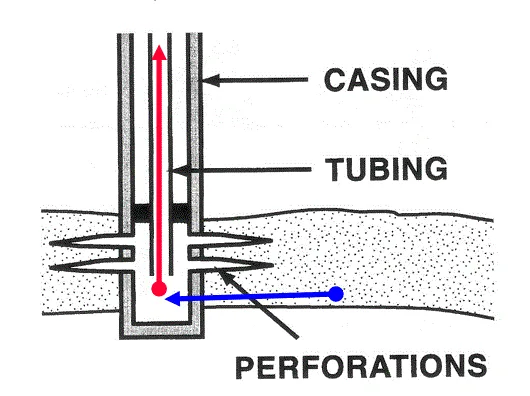
  • · Cased and perforated – perforating.

2) Completion architecture

3) Completion equipment – Intervention requirements. Reliability, maintenance and repair of the completion. 

4) Wireline.

  • · Slickline

  • · E-line

  • · Wireline fishing.

5) Coil tubing equipment and operations.

6) Hydraulic workover

7) Rig based interventions and workover.

8) Risk management for interventions.

9) Intervention fluids – brine and filtration.

10) Production related problems.

  • · Wax, scale, asphaltines, hydrates, reservoir souring, water production.

11) Water and gas shut-off techniques.

12) Remedial cementing

13) Stimulation

  • · Propped fracs and acid fracs.

14) Production start up following interventions and workover.

  • · HPHT intervention considerations.

  • · Sub-sea interventions


Opportunities that await you!

Career opportunities

Training details

This is a live course that has a scheduled start date.

COMPLETED

-

Questions and Answers

A: That's the most common mistake — grabbing the headline strength from a vendor table and forgetting how the design factor is actually applied. The metallic area of a 0.108 in line is small, and once you divide yield by 1.6 you're in the 1.5 kip range. Using UTS or skipping the factor looks fine on paper but doesn't survive a jar impact review under COMAH scrutiny.

A: That's the most common mistake — assuming pressure numbers float free of temperature. API 6A ratings move fast once you're off the reference temperature, and under inspection the stamped condition wins. If intervention fluid heats the string, the effective MAWP could be lower than assumed, and HSE will go straight to that nameplate.

A: That's the most common mistake — leaning on one barrier and calling it redundancy. Sour service and that pressure mean you need a verified shear/seal capability and active sealing around the line. The other options work in lower-risk envelopes but won't survive a barrier diagram challenge this week.

A: That's the most common mistake — more gas feels safer, but it accelerates slugging when slip dominates. Backing off the N₂ rate lets the column settle and gives you time to re-balance. The other moves usually deepen the drawdown and make the pressure trace noisier, not safer.