
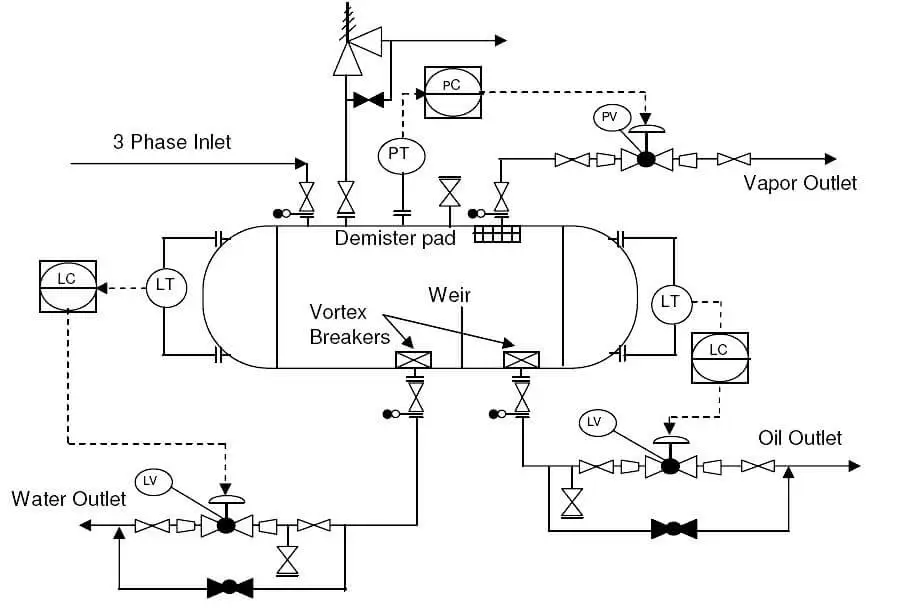
What is a P&ID and How to Read it?
What is a P&ID and How to Read it?

- 7-day money-back guarantee
- Lifetime access
- Certificate of completion
Why enroll
What enrolled engineers say
Initially, I wasn’t sure what to expect from this course. P&IDs show up everywhere on projects, but the assumption is usually that you already know how to read them. Coming from oil & gas and energy utilities work, that gap had started to slow reviews and HAZOP discussions. The course did a solid job breaking down valves, piping specs, and instrumentation tags without overcomplicating things. The section on control loops and how transmitters, control valves, and signal lines tie together was especially useful. A real challenge was unlearning the habit of expecting layout or elevations on a P&ID, and the explanation of what is not included (vs a PFD or GA drawing) helped clear that up. One practical takeaway was a repeatable way to trace a line end‑to‑end and sanity‑check isolation valves and tie‑ins before maintenance work. That’s already been applied on a small chemical processing skid review where misreading a bypass line could have caused rework. This course filled a basic but important knowledge gap that often gets skipped in the field. The content felt aligned with practical engineering demands.
Initially, I wasn’t sure what to expect from this course, since P&IDs are something most of us in oil & gas or chemical/pharmaceutical projects are exposed to early on. That said, it filled a real gap around *why* things are shown (and not shown) on a P&ID, which is often glossed over on the job. The sections on valve symbols, instrumentation tags, and control loops were especially relevant. On a recent brownfield modification project in a chemical plant, misreading an instrument tie-in versus a process line caused back-and-forth with operations, so revisiting standard P&ID conventions was useful. One challenge was that some examples moved quickly, and I had to pause and cross-check symbols against ISA standards to fully absorb them. A practical takeaway was learning to clearly differentiate between what belongs on a P&ID versus what should be left to layouts or datasheets. That alone helps avoid overloading drawings. The course also helped connect how P&IDs are used across energy utilities and downstream units, not just during design but also for maintenance and HAZOP reviews. Overall, it’s not flashy, but it’s grounded in real engineering work. I can see this being useful in long-term project work.
Initially, I wasn’t sure what to expect from this course. P&IDs are something used regularly on oil & gas and chemical/pharmaceutical projects, but most of that knowledge was picked up informally on the job. This course helped close that gap by clearly explaining what information actually belongs on a P&ID versus what doesn’t, which is something that caused confusion during design reviews. One challenge was retraining myself not to assume layout or physical routing from the drawing. The section on “what is not in a P&ID” was especially useful, since that mistake has caused coordination issues with piping and utilities teams in the past, particularly on energy utilities tie-ins. The practical walkthrough of valves, line numbering, and instrument tags stood out. Being able to trace a simple control loop and understand how instruments, control valves, and safety elements interact is immediately applicable. That skill has already helped during a maintenance discussion on a brownfield skid modification where the P&ID was the only reliable reference. Overall, the course stayed grounded in real use cases and avoided overcomplicating things. It definitely strengthened my technical clarity.
Your instructor
Anup Kumar Dey
Senior Piping Engineer
Owner of https://whatispiping.com/
Is this course for you?
You should take this if
- You work in Oil & Gas Upstream or Energy & Utilities
- You're a Chemical & Process / Piping & Layout Engineering professional
- You prefer self-paced learning you can revisit
You should skip if
- You need a different specialisation outside Chemical & Process
- You need live interaction with an instructor
Course details
Course suitable for
Key topics covered
Course content
The course is readily available, allowing learners to start and complete it at their own pace.
- Definition of a P&ID, Its applications and benefits25 min
- What is included in a P&ID12 min
- P&IDs-What Not10 min
- P&ID symbols for various types of Valves and Related Items17 min
- P&ID Symbols for Piping, Mechanical, and Instrumentation Items9 min
- Reading a P&ID with Example20 min
- Bonus Lecture: Introduction to P&ID5 min
- Bonus Lecture: Data as per PFD vs P&ID5 min
- Bonus Lecture: Role of P&IDs with Project Work-flow5 min
- Bonus Lecture: Anatomy of a P&ID4 min
- Bonus Lecture: Main Equipment Data8 min
- Bonus Lecture: Main Piping Data4 min
- Bonus Lecture: Showing Fittings on P&ID8 min
- Bonus Lecture: Scope & Battery Limits3 min
- Bonus Lecture: Introduction to Control and Shutdowns3 min
- Bonus Lecture: Performance Indication with Instruments4 min
- Bonus Lecture: Control and Shut Down Systems6 min
- Bonus Lecture: Final Elements Control valves shutdown5 min
- Bonus Lecture: Pressure Safety Valve and relief system6 min
- Bonus Lecture: Plant Maintenance and Isolation6 min
- Bonus Lecture: Process Safety and Expected Hazards3 min
- Bonus Lecture: Purpose of HAZOP and SIL studies on a P&ID4 min
- Bonus Lecture: Tips for P&ID preparation for a pump12 min