<link href="https://fonts.googleapis.com/css2?family=Caveat:wght@500;700&family=JetBrains+Mono:wght@400;500;600&display=swap" rel="stylesheet" /> Skip to main contentEngineering Courses, Mentoring & Jobs | EveryEng
Pressure Relief Valve Piping (PSV Piping) Stress Analysis using Caesar II banner
Preview this course

Pressure Relief Valve Piping (PSV Piping) Stress Analysis using Caesar II

Pressure Relief Valve Piping (PSV Piping) Stress Analysis using Caesar II banner
Preview this course
Self-paced Beginner

Pressure Relief Valve Piping (PSV Piping) Stress Analysis using Caesar II

4(408)
6 enrolled
9663 views
₹ 799
78 min
Anytime
English
9663 views
Anup Kumar Dey
Anup Kumar DeyOwner of https://whatispiping.com/
  • 7-day money-back guarantee
  • Lifetime access
  • Certificate of completion
Volume pricing for groups of 5+

Why enroll

Joining the PSV (Pressure Safety Valve)/PRV piping stress analysis course is essential for engineers and professionals involved in the design and maintenance of piping systems, especially in industries like oil and gas, chemical processing, and power generation. This specialized course equips participants with the knowledge and skills to accurately assess and mitigate the stresses and forces acting on piping systems due to PSV operations. By mastering these techniques, professionals can ensure the integrity and safety of critical infrastructure, prevent costly failures, and comply with industry standards and regulations. Furthermore, the course enhances one's expertise in a niche field, increasing career opportunities and the potential for advancement in the engineering sector.


Is this course for you?

You should take this if

  • You work in Oil & Gas Upstream or Pharmaceutical & Healthcare
  • You're a Chemical & Process / Mechanical Engineering professional
  • You prefer self-paced learning you can revisit

You should skip if

  • You need a different specialisation outside Chemical & Process
  • You need live interaction with an instructor

Course details

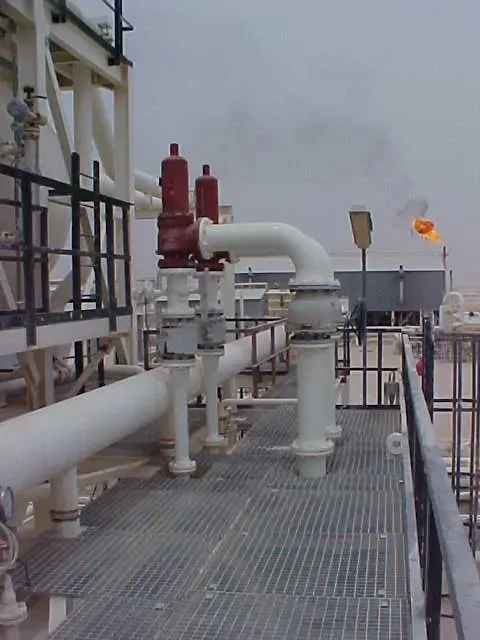
PSV or pressure safety valves (pressure relief valves) are a type of valve and are very common in any process industry. To protect any equipment from overpressure PSV systems are used in lines. When the pressure inside the system/equipment exceeds a pre-determined level (normally Set Pressure), they are activated automatically and release the pressure by popping up and bringing the equipment pressure to a safe operating level.

Two types of PSVs are extensively used in process industries:

Open discharge PSV

Closed discharge PSV

Due to an uncertain event if the pressure of any equipment becomes higher than the set pressure of the installed PSVs then they pop up and reduce the system pressure. During popping-up activity, the PSVs exert a huge reaction force over the system. During the analysis of PSV-connected stress systems, we have to consider this reaction force. This is the main reason that PSV-connected systems become stress-critical. The following course will explain the methods used during the analysis of such systems using Caesar II with a proper case study. So, what are you waiting for? Join us on this exhilarating journey towards becoming a Pressure Safety Valve Stress Analysis expert. Don't miss out on the opportunity to enhance your engineering prowess and advance your career.

Course suitable for

Key topics covered

  • Brief about Pressure Safety Valve Systems

  • PSV Reaction Force Calculation

  • Application of PRV Reaction Force in Stress System

  • Case Study of Stress Analysis of PSV System using Caesar II Software

  • Best Practices for PSV Piping Stress Analysis

At the same time, the course will be suitable for

  • Piping Stress Engineers

  • Piping Engineers

  • Piping Leads

  • Piping Stress Analysis Reviewer


Course content

The course is readily available, allowing learners to start and complete it at their own pace.

7 lectures1 hr 18 min
  1. Introduction to PSV piping system stress analysis
    15 min
  2. Reaction force calculation
    7 min
  3. Applying reaction force in the software
    7 min
  4. Practical Case Study
    32 min
  5. Analysis Best Practices
    7 min
  6. Bonus Lecture: How does a Pressure Relief Valve Work
    6 min
  7. Bonus: What is the Difference between Pressure Safety Valve-PSV and Pressure Relief Valve-PRV (PSV Vs. PRV)
    4 min

Opportunities that await you!

Skills & tools you'll gain

Caesar II

Career opportunities

₹799

Access anytime

Questions and Answers

A: A is where the API 521 approach actually lands once you use relieving density and sonic velocity at the outlet — it feels high, but that's typical for DN150 at these conditions. B is tempting because engineers reach for operating cases, but momentum thrust is a relieving phenomenon; using normal density undercuts the force badly. C sounds conservative, and some clients do apply load factors, but they belong in the Caesar load case definition, not baked into the physics. D treats thrust like a pressure end cap load, which ignores velocity entirely and misses why elbows see such violent loads during relief.

A: A aligns with ASME B31.3 intent for occasional loads like PSV thrust, recognising rarity and short duration. B sounds safe, but it erases the code distinction between sustained and occasional cases and usually forces unnecessary steel. C mixes thermal expansion logic into a momentum-driven event; the governing check is not displacement-controlled. D is a trap from mechanical design thinking — piping codes never allow you to run up to yield just because the event is brief.

A: A fits the temperature and chemistry — sulfidation rates climb fast above 260 °C and thinning shows up as scale. B is a classic sour-service worry, but SSC needs liquid water and usually lower temperatures. C explains corrosion in cool, wet systems; at 350 °C you don't have stable carbonic acid. D shows up in austenitic stainless steels, not carbon steel, and needs a different temperature window.

A: A ties the symptoms together: high Mach number gas, short events, and failures concentrated on small-bore attachments. B can break things, but you'd expect large supports or elbows to show distress too. C happens over long cycles and usually produces broader cracking patterns. D is always blamed first, yet good welds still crack when excitation frequencies line up with acoustic energy.