44 enrolled
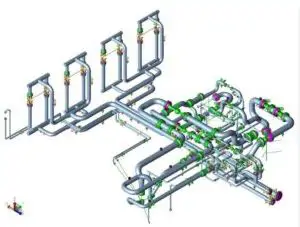
Advanced Pipe Stress Analysis Training with Caesar II | For Beginners & Engineering Professionals
- 7-day money-back guarantee
- Lifetime access
- Certificate of completion
Why enroll
Is this course for you?
You should take this if
- You work in Oil & Gas or Energy & Utilities
- You're a Piping & Layout / Mechanical professional
- You have 3+ years of hands-on experience in this field
- You prefer self-paced learning you can revisit
You should skip if
- You're new to this field with no prior experience
- You need a different specialisation outside Piping & Layout
- You need live interaction with an instructor
Course details
Course suitable for
Key topics covered
Course content
The course is readily available, allowing learners to start and complete it at their own pace.
Opportunities that await you!
Skills & tools you'll gain
Career opportunities
Our Alumni Work At
Why people choose EveryEng
Industry-aligned courses, expert training, hands-on learning, recognized certifications, and job opportunities-all in a flexible and supportive environment.
What learners say about this course
The course is well structured and very informative. This is my first course at EveryEng and was insightful. Thank you Anup Kumar Dey
Initially, I wasn’t sure what to expect from this course. HDPE piping was always treated as “low risk” on a few oil & gas water injection and energy utilities projects I’ve worked on, so formal stress analysis rarely came up. This course filled that gap pretty directly. The sections on viscoelastic behavior and creep really stood out, especially when tied to thermal expansion and long-term loading. Those topics aren’t handled the same way as carbon steel, and that difference is where past designs went wrong. One challenge was getting comfortable with the time‑dependent material properties in the software models—it took a bit of trial and error to understand how temperature cycles actually affect stress over years, not just startup cases. What helped was the focus on practical items like support spacing, anchoring philosophy, and how internal pressure interacts with flexibility. That translated well to an ongoing utilities project involving above-ground HDPE lines near pump stations, where expansion and restraint are real issues. The biggest takeaway was having a structured way to justify design decisions instead of relying on rules of thumb. I can see this being useful in long-term project work.
Coming into this course, I had some prior exposure to the subject, mostly from oil & gas gathering lines and water utility projects where HDPE was treated as “simple” piping. This course pushed back on that assumption in a useful way. The treatment of viscoelastic behavior, creep, and temperature-dependent modulus was closer to reality than what’s typically done in industry, where metallic piping rules still get copy‑pasted. One challenge was adjusting the analysis mindset away from sustained vs occasional stress checks used in steel systems. Getting the time-dependent inputs right in the software, especially for long-term pressure and thermal expansion cases, took effort and a few iterations. Edge cases like soil restraint, rapid temperature swings near pump stations, and pressure transients in energy utilities were discussed more honestly than expected. From a system-level view, the impact of support spacing and anchoring strategy on connected equipment loads was a good reminder, particularly for buried-to-aboveground transitions. Compared to common oil & gas practices, the course was more conservative on creep rupture but more realistic overall. A practical takeaway was how to justify flexible routing and anchor locations using actual material behavior instead of rules of thumb. It definitely strengthened my technical clarity.
Coming into this course, I had some prior exposure to the subject from water and produced-water lines in oil & gas and a few energy utilities projects, but HDPE was usually treated as “low risk.” The course does a decent job of challenging that assumption, especially around viscoelastic behavior and long-term creep under sustained pressure. One area that stood out was how thermal expansion and support spacing are handled differently compared to carbon steel systems commonly used in oil & gas. In utilities work, we often rely on rules of thumb; here, the discussion showed where those shortcuts break down, particularly at pump stations and buried–to–aboveground transitions. Edge cases like rapid temperature cycling and pressure transients were addressed better than expected. A real challenge was wrapping my head around time-dependent material properties in the stress software. Coming from metallic piping analysis, the modeling assumptions take some adjustment, and a few iterations were needed before results made sense. The most practical takeaway was a clearer approach to anchoring philosophy and restraint layout that considers system-level behavior, not just local stresses. I can see this being useful in long-term project work.