Skip to main contentEngineering Courses, Mentoring & Jobs | EveryEng
Control Valves for an Instrumentation Engineering Professional banner

Control Valves for an Instrumentation Engineering Professional

1 enrolled

Control Valves for an Instrumentation Engineering Professional banner
Self-paced Beginner

Control Valves for an Instrumentation Engineering Professional

1 enrolled
1481 views
₹ 1999
134 min
Anytime
English

Sawrabh Raj
Sawrabh RajSr Instrumentation Design Engineer, Global Trainer- Instrumentation Design
  • 7-day money-back guarantee
  • Lifetime access
  • Certificate of completion
Volume pricing for groups of 5+

Why enroll

Participants join this course to gain hands-on knowledge of control valves and motor-operated valves, which are essential in process control systems. They will learn to select, specify, and troubleshoot valves effectively, reducing operational issues. The course also helps improve design and decision-making skills for instrumentation projects. Additionally, it prepares professionals to confidently handle interviews and real-world engineering challenges.

Is this course for you?

You should take this if

  • You work in Oil & Gas
  • You're a Instrumentation professional
  • You prefer self-paced learning you can revisit

You should skip if

  • You need a different specialisation outside Instrumentation
  • You need live interaction with an instructor

Course details

This course is designed for instrumentation design professionals who want to develop practical skills with control valves and motor-operated valves (MOVs). It starts with a clear explanation of what a control valve is and its key applications in process control. You will learn the different types of control valves and how their major components work together. The course covers classification, common failure modes, and the essential characteristics that define a control valve’s performance. Participants will gain knowledge on specifying valves correctly and understanding the various categories available. Detailed insights into the components of control valves and common industry terms will be provided. The course also explores important phenomena such as cavitation, flashing, and choked flow. Techniques to reduce control valve noise will be explained practically. You will learn about motor-operated valves and their operation. Key differences between control valves and on/off MOVs will be highlighted. Real-world examples and application tips will make the concepts easier to understand. Finally, the course prepares participants for interviews with commonly asked questions on these topics.

Course suitable for

Key topics covered

  • What is Control Valve?

  • Application of CONTROL VALVE

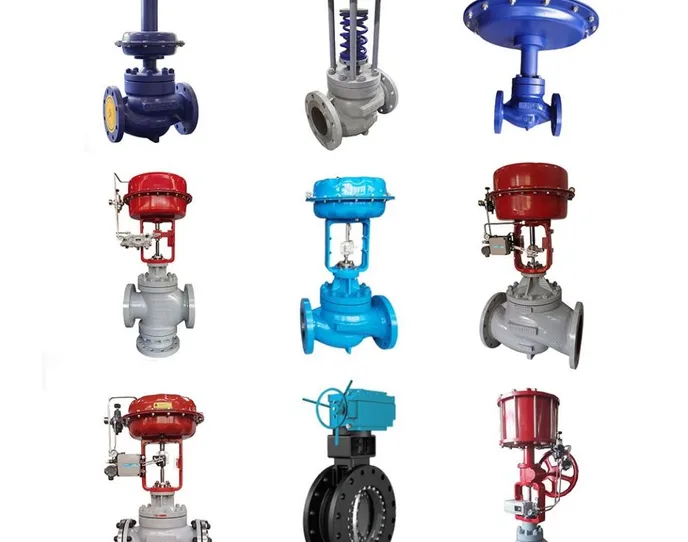
  • Types of Control Valves

  • Relationship of Major Components of a Control Valve

  • Classification

  • Failure Modes

  • Characteristics of Control Valves

  • Specification

  • Category of Valves

  • Components of Control Valves

  • Common Terms associated with Control Valves

  • Cavitation, Flashing, Choked Flow

  • How to Reduce the Control Valve Noise?

  • Motor Operated Valve

  • Key differences between control valves and motor operated on/off valves

  • Interview Questions

Course content

The course is readily available, allowing learners to start and complete it at their own pace.

10 lectures2 hr 14 min

Opportunities that await you!

Career opportunities

₹1999

Access anytime

Questions and Answers

Q: You're sizing a control valve for a level control loop on a horizontal 3-phase separator. The service is clean produced water, downstream to an open drain header. While searching "control valve type for level control separator outlet" you have to pick the valve body and trim philosophy that best fits stable control with minimal maintenance risk.

A: Governing principle: liquid level control needs stable valve gain near the normal operating point. Here the valve spends most of its life partially open, discharging to atmospheric pressure, so linear trim in a globe body gives controllable stroke-to-flow behavior and predictable tuning. The V-port ball valve option traps engineers who know about characterized trims but forget how poor low-opening resolution and seat wear show up on level loops.