
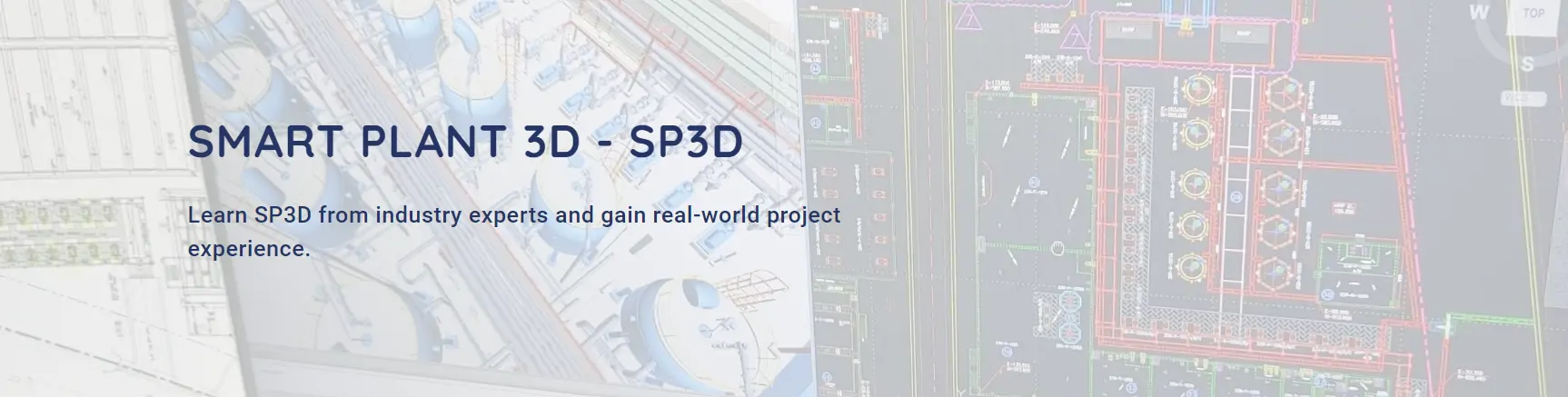
SP3D
SP3D
Tell us and we’ll notify you when the next batch is scheduled.

- 7-day money-back guarantee
- Session recordings included
- Certificate of completion
What enrolled engineers say
The Chapter 4 piping specs walkthrough—editing a valve catalog then watching the model update, stuck; seeing clashes resolve in the 3D view felt like real plant arch work. It's mostly practical, but I wasn't sold on the admin setup bits; wished there was more on managing spec drift between dev/prod and fewer clicks called out.
The Piping Spec Manager walkthrough and Nozzle Orientation lab stuck; seeing spec rules propagate through the model mirrored oilgas prod pressure. mostly practical, though I wasn't sold on the reporting chapter and wished there was more on model review before handoff; it's useful jumping into a live SP3D model.
Your instructor
Team Piping Engineering
Sr Engineer
Founder Team Piping Engineering
Is this course for you?
You should take this if
- You work in Oil & Gas Upstream or Pharmaceutical & Healthcare
- You're a Chemical & Process / Health, Safety & Environmental professional
- You prefer live, instructor-led training with Q&A
You should skip if
- You need a different specialisation outside Chemical & Process
- You need fully self-paced, on-demand content
Course details
Course suitable for
Key topics covered
Opportunities that await you!
Career opportunities
Training details
This is a live course that has a scheduled start date.
Live session
Starts
Sat, Feb 22, 2025
Duration
1 hour per day
Why people choose EveryEng
Industry-aligned courses, expert training, hands-on learning, recognized certifications, and job opportunities-all in a flexible and supportive environment.
What learners say about this course

Fast, practical run-through that filled gaps between CAD clicks and field logic; the pump suction routing section with the NPSH sketch and valve clearance callouts stuck. Mostly works, but I wasn't sold on the brief pipe rack expansion calc—wanted one more worked example tied to oilgas layouts.

The course maps a path through a messy subject without drowning you, which helped connect specs to day‑to‑day decisions. The moment that stuck was Module 4’s pump suction layout example where NPSH, nozzle orientation, and access clearances were traded off with a sketch, not just rules. As someone used to arch diagrams and PRs, the way constraints were reasoned felt familiar, though I wasn't sold on the brief treatment of stress loops near vertical vessels. It's closed a bunch of piping questions I’d been parking since my first energyutilities project.

Grabbed this over a weekend thinking I’d skim a few modules, then kept going and closed it out faster than planned. It’s practical in the way freelancers care about: fewer slides, more “here’s what breaks in prod when clearance is tight,” which maps well to oilgas work I’ve touched. The moment that stuck was the pump suction layout checklist in the piping around E‑101 example, especially the callout on minimum straight run before the nozzle; I’ve seen that exact miss show up late in a PR and blow schedules. wasn't sold on the early CAD basics section, and I wished there was a bit more on tie‑ins during brownfield revamps. Past the midpoint, though, the stress loops and rack spacing tradeoffs get real and the pacing tightens. By the final stretch, it’s less theory and more decision-making under constraints, which is where this stops being academic and starts being useful between meetings.

Needed a pragmatic guide for piping layout decisions, and this mostly landed—especially for day‑to‑day tradeoffs a lead has to arbitrate. The section on pump suction piping clearances and NPSH checks, particularly the worked example in Week 3, stuck because it mirrors oilgas revamps I see. It helped align arch intent with site infra and prod tie‑ins, cutting rework before IFC. Wasn't sold on the brief stress‑analysis handoff; wished there was more on supports near exchangers, but I'm leaving with a better handle on optimization.


 Aug 29, 2026

