Skip to main contentEngineering Courses, Mentoring & Jobs | EveryEng
Oil Well Completions Concepts and Calculations Part 1 banner
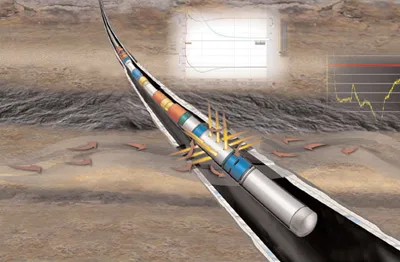
Oil Well Completions Concepts and Calculations Part 1

3 enrolled

Oil Well Completions Concepts and Calculations Part 1 banner
Self-paced Intermediate

Oil Well Completions Concepts and Calculations Part 1

4(12)
3 enrolled
1500 views
FREE
26 min
Anytime
English
Team OG
Team OGUpstream Oil & Gas Technical Professional
  • Lifetime access
  • Certificate of completion
  • Interactive Video Lessons
  • Completion Certificate
Volume pricing for groups of 5+

Why enroll

Completing "Oil Well Completions_Concepts and Calculations_Part 1" accelerates career advancement in the oil and gas industry by equipping professionals with fundamental knowledge and practical skills in well completion engineering. Upon completion, individuals can progress into roles like Completion Engineer, Drilling and Completions Supervisor, or Petroleum Engineer, or enhance their career prospects in well intervention, production optimization, and reservoir engineering.

With a strong foundation in well completion concepts and calculations, professionals can expect improved job prospects, increased earning potential, and new opportunities for leadership and innovation in the oil and gas sector.

Is this course for you?

You should take this if

  • You work in Oil & Gas or Energy & Utilities
  • You're a Geoscience / Mechanical professional
  • You have some foundational knowledge in the subject
  • You prefer self-paced learning you can revisit

You should skip if

  • You're looking for an introductory overview course
  • You need a different specialisation outside Geoscience
  • You need live interaction with an instructor

Course details

This comprehensive course provides a foundational understanding of oil well completions, covering key concepts, calculations, and practical applications. Part 1 of this two-part series focuses on the fundamental principles of well completions, including:

- Well completion objectives and strategies

- Casing and tubing design

- Perforating and perforation techniques

- Completion fluid selection and design

- Sand control methods and screens

- Basic completion calculations (e.g., fluid gradients, hydrostatic pressure)

Through a combination of lectures, case studies, and interactive exercises, participants will gain a solid understanding of the concepts and calculations essential for successful well completions.

Course suitable for

Key topics covered

Concepts of typical pressures and loading conditions on downhole Oilwell completion tools

Course content

The course is readily available, allowing learners to start and complete it at their own pace.

1 lectures26 min

Opportunities that await you!

Career opportunities

Our Alumni Work At

Aristi Projects wood/Bharath Engineering CollegeExpertise MaryMount California UniversityKBR/IRTTGenser Energy Ghana LtdAeroDef Nexus LLPInventor Engineering solutionsC&M Engineering SAEx-Tata Steel , Precision Engineering Division , West Bengal universityAssystem StupEEProCAD tech solutonsATKINSREALISMangalam college of EngineeringSearching for jobGulf Engineering & Consultant Gazprom International LimitedNaAir ProductsJohn R Harris & PartnersSPES Consultancy Tecnimont Spa Abu DhabiNIT SilcharJabalpur Engineering College Wex Technologies Pvt.LtdGARGI MEMORIAL INSTITUTE OF TECHNOLOGYADCETSlimane DridiabdWhatispiping.comHoly Angel UniversityCYIENTSelf EmployedEnergoprojektifluids engineeringairswiftIITBSusoptLIVANCE DISTRIBUTORSDESIGN AID ENGINEERINGURC Construction pvt.ltdCONSERVE SOLUTIONSGismic LLCIIT GuwahatiAditya engineering college Advanced Piping SolutionsIndorama Automotive MNCSPIE Oil and GasCollegiate collegemeChittagong University Of Engineering And technology XYZENGGENIOUS - (SAN Techno Mentors Private Limited)CAE Solutions Pvt.LtdBTPJamia Millia Islamia New delhiJOHN DEEREApplied Technology Solutions

Why people choose EveryEng

Industry-aligned courses, expert training, hands-on learning, recognized certifications, and job opportunities-all in a flexible and supportive environment.

What learners say about this course

Ali Taqi
Ali Taqi
Mar 15, 2026

it

Vishal Kokate
Vishal Kokate Mechanical Engineer (B.Tech, MS), Engineering Team Lead & Project Manager (PMP)
Feb 26, 2026

This course turned out to be more technical than I anticipated. Coming from a drilling operations role, the sections on wellbore trajectory planning and dogleg severity finally connected a few dots that were missing on recent oil and gas projects. The walkthroughs on BHA selection and how mud motors influence build rates felt grounded in how things actually behave on the rig, not just theory. MWD/LWD basics were also useful, especially understanding survey spacing and how it impacts anti-collision risk in crowded fields. One challenge was keeping up with the math behind directional surveys and toolface orientation. That part took a couple of replays and some note-taking, but it was worth pushing through. A practical takeaway was being able to sanity-check a proposed directional plan and flag unrealistic build/turn expectations before it hits execution. That’s already helped during a well review with the drilling contractor. The course filled a clear knowledge gap between vertical drilling experience and deviated well planning, which is becoming standard across energy utilities and upstream work. It definitely strengthened my technical clarity.

Dr Surekha Prabhu
Dr Surekha Prabhu R & D | Drilling & Completion Fluid I Catalysis I Analytical Chemistry I Material Science I LLM Trainer
Feb 26, 2026

At first glance, the topics looked familiar, but the depth surprised me. The sections on wellbore trajectory planning and dogleg severity went beyond the usual surface-level treatment and tied directly into how torque and drag show up during execution. Coverage of MWD/LWD fundamentals was solid, especially where it contrasted slide vs. rotary steerable behavior, which aligns with current oil & gas field practice rather than textbook assumptions. One challenge was the pacing around survey calculations and coordinate systems. Without recent hands-on exposure, the math-to-operations connection took effort to follow, particularly when thinking about edge cases like high-angle build sections near casing shoes. Still, those scenarios are realistic and forced some rethinking of how small planning choices ripple through drilling performance and NPT risk. A practical takeaway was the emphasis on planning for uncertainty—toolface tolerance, formation variability, and anti-collision margins—rather than assuming ideal conditions. That mindset mirrors what’s needed when coordinating with geosteering, mud programs, and energy utilities on shared pads. Compared to typical onboarding material, this course leaned more toward system-level implications than rote procedures. I can see this being useful in long-term project work.

sarath Selvaraj
sarath Selvaraj Piping Engineer
Feb 26, 2026

Coming into this course, I had some prior exposure to the subject through field coordination work, but directional drilling always felt like a black box once the well went off vertical. The modules on well trajectory planning and bottom hole assembly design helped close that gap. Concepts like dogleg severity, toolface orientation, and how mud motors actually influence build and turn rates were explained in a way that tied back to real oil and gas operations, not just theory. Coverage of MWD/LWD surveys and basic anti-collision principles was also useful, especially for understanding why certain drilling decisions get made on the rig. One challenge was wrapping my head around translating survey data into a mental picture of the wellbore, especially when dealing with multiple sections and targets. It took a bit of rewatching and sketching on my own to get comfortable with that. A practical takeaway was learning how kickoff points and planned build rates impact later well control and casing runs. That’s already helping in conversations with drilling and subsurface teams. I can see this being useful in long-term project work.

FREE

Access anytime

Questions and Answers

Q: You're reviewing a tubing tally and GA during pre-commissioning and you google: "tubing tally mismatch measured depth vs true vertical depth completion". The drawing shows a packer set at 8,500 ft MD, while the well schematic notes 7,900 ft TVD. The well has a 35° inclination below 6,000 ft. What’s the most defensible conclusion before signing off the tally?

A: Governing principle: Hardware placement is executed in MD, but reservoir targets and zonal isolation intent are defined in TVD. Applied here: At 35° inclination, MD–TVD divergence is material; a quick cosine check validates whether 8,500 ft MD reasonably maps to ~7,900 ft TVD before accepting the tally. Distractor trap: Option A catches engineers who know MD drives running depth but forget the TVD objective can still be missed.