
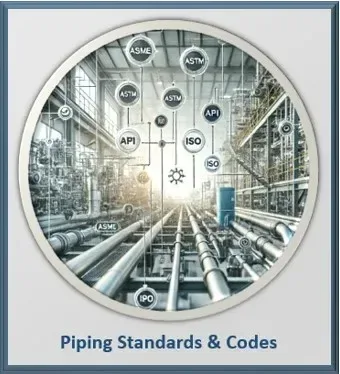
Piping Codes and Standards used in Process Plants
Piping Codes and Standards used in Process Plants

- Lifetime access
- Certificate of completion
- Foundational Learning
- Access to Study Materials
Why enroll
Is this course for you?
You should take this if
- You work in Energy & Utilities or Oil & Gas
- You're a Chemical & Process / Piping & Layout professional
- You want to build skills in Engineering & Design
- You prefer self-paced learning you can revisit
You should skip if
- You need a different specialisation outside Chemical & Process
- You need live interaction with an instructor
Course details
Course suitable for
Key topics covered
Course content
The course is readily available, allowing learners to start and complete it at their own pace.
Opportunities that await you!
Skills & tools you'll gain
Career opportunities
Our Alumni Work At













































Why people choose EveryEng
Industry-aligned courses, expert training, hands-on learning, recognized certifications, and job opportunities-all in a flexible and supportive environment.
What learners say about this course

.

Thanks everyeng

The course is well structured and very informative. This is my first course at EveryEng and was insightful. Thank you Anup Kumar Dey

This course turned out to be more technical than I anticipated. Coming from oil & gas and energy utilities projects, HDPE lines were often treated as “low risk,” especially for utility water and chemical transfer, so the deeper dive into viscoelastic behavior and long-term creep was overdue. The sections on thermal expansion, support spacing, and anchoring were especially relevant to a district cooling network job where HDPE headers were seeing unexpected movement. One real challenge was adjusting my thinking away from metallic piping assumptions. Load cases that work fine for carbon steel don’t translate cleanly to HDPE, and the time-dependent material behavior took some effort to model correctly in the software. There’s a bit of a learning curve there, particularly when combining pressure, temperature, and installation effects. A practical takeaway was a clearer method for checking allowable stresses over time and setting anchor locations to control growth without over-restraining the line. That’s already been applied on a small revamp at a utilities plant. The course filled a gap that normal pipe stress training doesn’t cover well, and I can see this being useful in long-term project work.
