


Article details
Heat transfer is the movement of thermal energy due to a temperature difference. In engineering systems, heat moves through three primary modes—conduction, convection, and radiation—often acting together during thermodynamic processes. Understanding how heat transfers in different processes is essential for designing engines, boilers, heat exchangers, refrigeration systems, and insulation.
Modes of Heat Transfer
Conduction – Heat transfer through a solid or stationary fluid due to molecular interaction.
Convection – Heat transfer between a surface and a moving fluid.
Radiation – Heat transfer by electromagnetic waves without any medium.
Heat Transfer During Common Thermodynamic Processes
1. Isothermal Process (Constant Temperature)
Temperature remains constant.
Internal energy change for an ideal gas is zero.
Heat supplied equals work done.
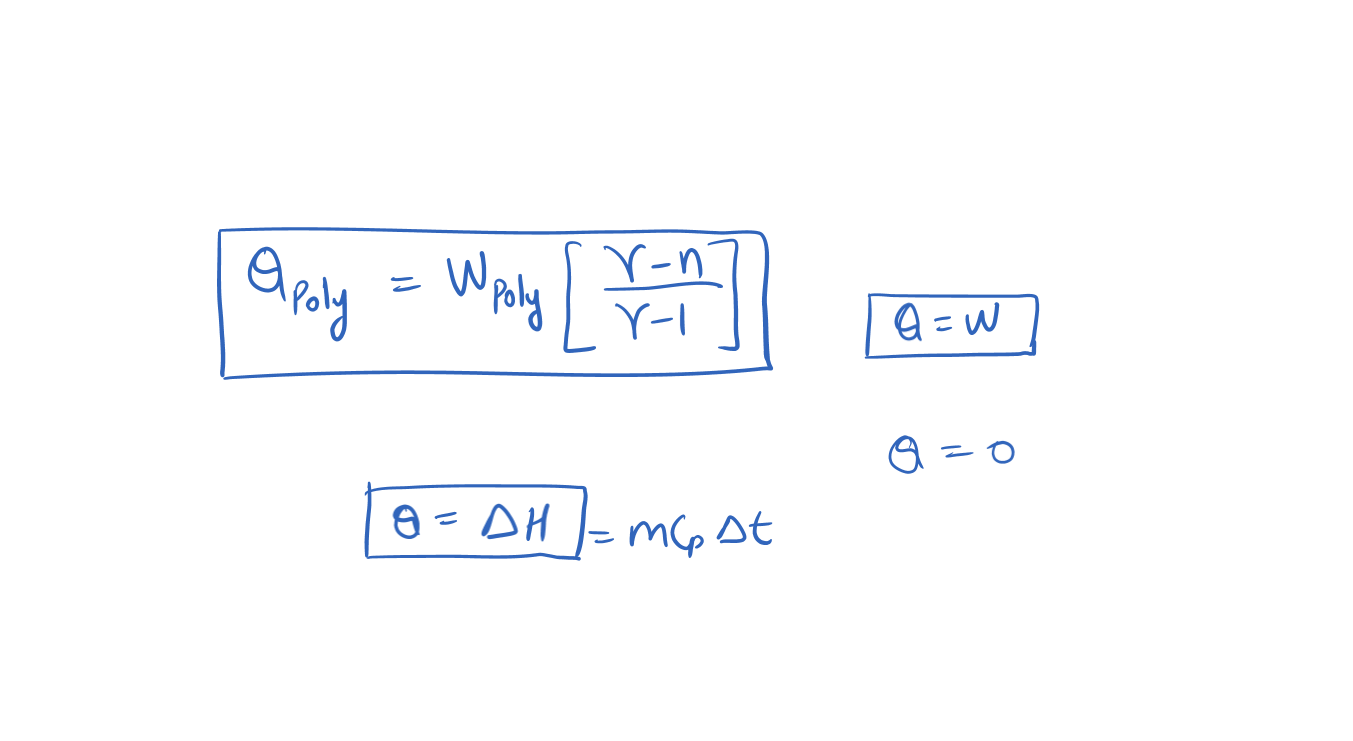
Q = W
Heat Transfer Nature: Continuous heat transfer is required to maintain constant temperature while the system does work.
Example: Slow expansion of gas in a cylinder placed in a water bath.
2. Adiabatic Process (No Heat Transfer)
No heat exchange with surroundings.
Temperature changes due to work interaction.
Q = 0
Heat Transfer Nature: Perfect insulation; heat transfer is absent.
Example: Rapid compression in diesel engines.
3. Isochoric Process (Constant Volume)
Volume remains constant.
No boundary work done.
Q = \Delta U
Heat Transfer Nature: Entire heat supplied increases internal energy and temperature.
Example: Heating gas in a rigid tank.
4. Isobaric Process (Constant Pressure)
Pressure remains constant.
Heat transfer changes both internal energy and does boundary work.
Q = \Delta U + P\Delta V
Heat Transfer Nature: Heat increases temperature and causes expansion.
Example: Heating water in an open vessel.
5. Polytropic Process
A general process represented by:
PV^n = C
Heat Transfer Nature: Depends on the value of ( n ). It may involve partial heat transfer.
Example: Practical compression and expansion in compressors.
6. Cyclic Process
System returns to initial state.
Net internal energy change is zero.
Q = W
Heat Transfer Nature: Heat is added in one part of the cycle and rejected in another.
Example: Rankine cycle, refrigeration cycle.
Heat Transfer in Phase Change Processes
Melting and Solidification
Heat transfer occurs at constant temperature.
Known as latent heat transfer.
Boiling and Condensation
Large heat transfer due to latent heat.
Widely used in boilers and condensers.
Combined Modes of Heat Transfer in Practice
In real systems, heat transfer rarely occurs in a single mode:
System | Conduction | Convection | Radiation |
|---|---|---|---|
Boiler tubes | ✓ | ✓ | ✓ |
Heat exchangers | ✓ | ✓ | ✗ |
Furnace | ✓ | ✓ | ✓ |
Insulated walls | ✓ | ✗ | ✓ |
Engineering Applications
Boilers: Radiation + Convection + Conduction
Heat exchangers: Conduction + Convection
Refrigerators: Convection and phase change
Engines: Heat transfer during combustion and expansion
Insulation design: Minimizing conduction and radiation losses


 Aug 29, 2026


