<link href="https://fonts.googleapis.com/css2?family=Caveat:wght@500;700&family=JetBrains+Mono:wght@400;500;600&family=Plus+Jakarta+Sans:wght@600;700;800&display=swap" rel="stylesheet" /> Skip to main contentEngineering Courses, Mentoring & Jobs | EveryEng
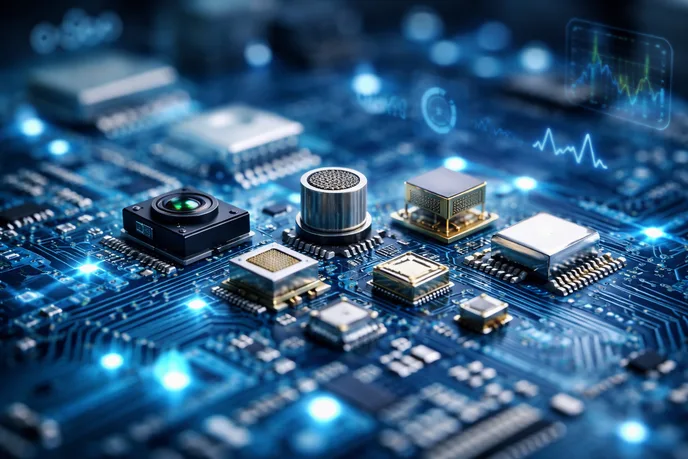
A brief introduction of Micro - Sensors banner
Preview this course

A brief introduction of Micro - Sensors

A brief introduction of Micro - Sensors banner
Preview this course
Self-paced Advanced

A brief introduction of Micro - Sensors

3(115)
278 views
FREE
724 min
Anytime
English
278 views
Engineering Academy
Engineering AcademyLearn Without Limits: Free Engineering Courses
  • Lifetime access
  • Certificate of completion
  • Anytime Learning
  • Learn from Industry Expert
Volume pricing for groups of 5+

Why enroll

This course helps students gain essential knowledge of MEMS and NEMS, which are key technologies in modern engineering.It is ideal for those interested in sensors, miniaturized systems, and advanced device design.The course prepares learners for higher studies, research, and industry roles in micro and nano engineering.

Is this course for you?

You should take this if

  • You work in Automotive
  • You're a Electrical Engineering professional
  • You have 3+ years of hands-on experience in this field
  • You want to build skills in Engineering & Design, Project Management

You should skip if

  • You're new to this field with no prior experience
  • You need a different specialisation outside Electrical Engineering
  • You need live interaction with an instructor

Course details

This course introduces students to the exciting world of micro- and nano-scale devices that are widely used in modern technology. It explains the basic concepts of Micro-Electro-Mechanical Systems (MEMS) and Nano-Electro-Mechanical Systems (NEMS) in a clear and simple way. Students will learn how tiny sensors and devices are designed to sense, measure, and control physical quantities. The course covers the working principles of common micro and nano devices used in areas such as electronics, healthcare, automotive systems, and industrial applications. Learners will also understand how these devices are analyzed for performance, reliability, and efficiency. Basic techniques used to characterize micro and nano systems are discussed, along with an introduction to standard MEMS fabrication processes like lithography, etching, and deposition. Real-world examples are included to help connect theory with practical applications. By the end of the course, students will have a clear understanding of how micro and nano devices are created and used, and they will gain a strong foundation for advanced studies and research in micro and nano technologies.

Source: NPTEL - NOC IITM

Course suitable for

Key topics covered

  • A brief introduction of Micro-Sensors – Introduction

  • Introduction to Microscale Sensors or MEMS

  • Scaling effect

  • Some Simple Mechanics

  • Basic Mechanics – Part 01

  • Basic Mechanics – Part 02

  • Basic Mechanics – Part 03

  • Electrostatics

  • Electrostatic force

  • Coupled electromechanics

  • Stiction

  • Si crystal structure

  • Si etching

  • KOH etching

  • TMAH etching

  • Deposition and Lithography

  • Lithography

  • Pressure sensor types, membrane, Piezoelectric sensing, capacitive sensing

  • Pressure Sensor – II

  • Pressure Sensor – III

  • Accelerometer – I

  • Accelerometer – II

  • Assignment 2

  • Assignment 1

Course content

The course is readily available, allowing learners to start and complete it at their own pace.

24 lectures12 hr 4 min
  1. A brief introduction of Micro-Sensors - Introduction
    4 min
  2. Introduction to Microscale Sensors or MEMS
    17 min
  3. Scaling effect
    23 min
  4. Some Simple Mechanics
    38 min
  5. Basic Mechanics - Part 01
    26 min
  6. Basic Mechanics - Part 02
    35 min
  7. Basic Mechanics - Part 03
    21 min
  8. Electrostatics
    28 min
  9. Electrostatic force
    38 min
  10. Coupled electromechanics
    46 min
  11. Stiction
    45 min
  12. Si crystal structure
    19 min
  13. Si etching
    30 min
  14. KOH etching
    27 min
  15. TMAH etching
    19 min
  16. Deposition and Lithography
    61 min
  17. Lithography
    17 min
  18. Pressure sensor types, membrane, Piezoelectric sensing, capacitive sensing
    26 min
  19. Pressure Sensor - II
    38 min
  20. Pressure Sensor - III
    45 min
  21. Accelerometer - I
    28 min
  22. Accelerometer - II
    25 min
  23. Assignment 2
    38 min
  24. Assignment 1
    30 min

Opportunities that await you!

Skills & tools you'll gain

Engineering & DesignProject ManagementResearch & Developmnet

Career opportunities

FREE

Access anytime

Questions and Answers

A: 0.5° maps to sin(0.5°) ≈ 0.0087, or 0.87%. That boundary is what makes this tight. A stated 2% cross-axis means something else is in play, and the drawing stays silent on it.

A: 125 °C with bias and intermittent electrolyte sets the boundary. That combination accelerates ionic transport, and the field failures show dendritic growth rather than pure mechanical cracking.

A: 10 ms response with ±1 °C is the line. Duty-cycled silicon sensors hit that without the self-heating penalty that sinks the others in dense packs.

A: 180 A is the hard limit. Any requirement beyond that invalidates the assumed safe operating area used in the safety case.