Skip to main contentEngineering Courses, Mentoring & Jobs | EveryEng
Downhole Valves : Oil and Gas Well Completions banner

Downhole Valves : Oil and Gas Well Completions

Downhole Valves : Oil and Gas Well Completions banner
Live online Intermediate

Downhole Valves : Oil and Gas Well Completions

4(69)
1 enrolled
1457 views
COMPLETED

Tell us and we’ll notify you when the next batch is scheduled.
2 hrs
-
English
1457 views
Team OG
Team OGUpstream Oil & Gas Technical Professional
  • 7-day money-back guarantee
  • Session recordings included
  • Certificate of completion

Why enroll

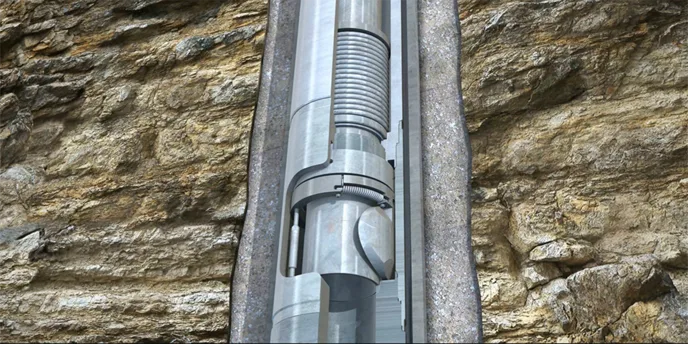
The participants will understand the different types of oil and gas well (downhole) valves and their vital roles in the safe, controlled and efficient production of oil and gas.

What enrolled engineers say

2 verified reviews
  • May 3, 2026

    Grabbed it over a weekend and didn’t expect to finish, but the pacing kept it moving. The section on surface-controlled subsurface safety valves stuck, especially the cutaway comparing flapper vs ball and the example walking through closure pressure vs setting depth in a gas well. It’s helped me explain arch tradeoffs in prod reviews instead of hand-waving, and I’ve been quicker in client calls. wasn’t sold on the brief nod to failure diagnostics; more on field obs would’ve helped.

    Manish P. Verified
  • May 3, 2026

    Bridges legacy completion arch with modern prod constraints; the sliding sleeve vs packer tradeoff in Chapter 3, especially the erosion calc at ~5k RPS, felt grounded in oilgas reality. Mostly worked for me, though I wasn't sold on the brief nod to smart valves and wished for more failure obs.

    sarath S. · Offshore Construction Engineer Verified

Is this course for you?

You should take this if

  • You work in Oil & Gas Upstream
  • You're a Petroleum Technology / Mechanical Engineering professional
  • You have some foundational knowledge in the subject
  • You prefer live, instructor-led training with Q&A

You should skip if

  • You're looking for an introductory overview course
  • You need a different specialisation outside Petroleum Technology
  • You need fully self-paced, on-demand content

Course details

Oil and Gas Well (downhole) valves are primarily used for either safety, isolation or flow control. This course provides knowledge on the different types of downhole valves which are vital to the safe, controlled and efficient production of hydrocarbons, by serving specific purposes and functions, ie., Safety, Flow Control and Isolation.

Course suitable for

Key topics covered

  • Reasons for using downhole valves

  • Specific Valves for different purposes and functions:

  • Flow Isolation Valves

  • Surface-controlled Subsurface Safety Valves (SSSV/SCSSV)

  • Remote Open and Close Valves (ROC)

  • Inflow Control Devices (ICD and AICD)

  • Internal Control Valves (ICV) 

Opportunities that await you!

Career opportunities

Training details

This is a live course that has a scheduled start date.

Why people choose EveryEng

Industry-aligned courses, expert training, hands-on learning, recognized certifications, and job opportunities-all in a flexible and supportive environment.

What learners say about this course

Ali Taqi
Ali Taqi
Mar 15, 2026

it

Slimane Dridi
Slimane Dridi Well Services Field Technician
Feb 10, 2026

yes

sarath Selvaraj
sarath Selvaraj Offshore Construction Engineer
May 3, 2026

Started this to sanity-check how our team approaches completions against current practice, bridging some legacy heuristics with newer field habits. The section on plug-and-perf sequencing, especially the cluster efficiency example comparing 120-ft vs 150-ft stage spacing, stuck because it maps cleanly to how we reason about arch and infra tradeoffs in prod. It's mostly beginner-level and I wasn't sold on the light treatment of proppant transport, wished there was more on obs from real frac hits. Still, I've already tweaked how I'll frame my next PR.

sarath Selvaraj
sarath Selvaraj Offshore Construction Engineer
May 3, 2026

This course nudged how I think about legacy choices, kind of like refactoring old arch without breaking prod. It frames sand control as tradeoffs instead of rules, which clicked for me coming from software and infra, especially when you’re juggling constraints that look a lot like CI gates and RPS limits. The micro-detail that stuck was the screen sizing example in the “Gravel Pack vs Frac Pack” section, where they walk through median grain size and then show how one assumption cascades into cost and ops risk—felt like reading a PR where one default sneaks into prod. I wasn’t sold on every analogy to modern completions; the k8s-style modularity pitch was mostly helpful but a bit hand-wavy in spots. Still, the beginner pacing worked, and the oilgas context mapped cleanly to how we think about legacy systems in energyutilities. I’ve already got a note to tweak some of our internal logic after this, mostly around how we document assumptions before they fossilize in the repo.

COMPLETED

-

Questions and Answers

A: 0.5–2 psi/minute equalization is the tell. That rate aligns with erosion or seat wear, not a control line failure that would drive the valve open immediately, and not thermal expansion which plateaus once temperature stabilizes.

A: 300 psi is often close to the operating margin between open and fail-safe close. Any action that increases drawdown or cycles the valve risks an unplanned shut-in that could exceed MAWP on restart.

A: ±1% gauge accuracy at 1,500 psi is already ±15 psi. A 220 psi delta screams instrumentation or setup error before touching factory-set internals that are usually locked and MOC-controlled.

A: Fire case assumes loss of control pressure and unstable upstream conditions. Any leakage defeats the entire safety function, regardless of how small it looks during steady-state testing.