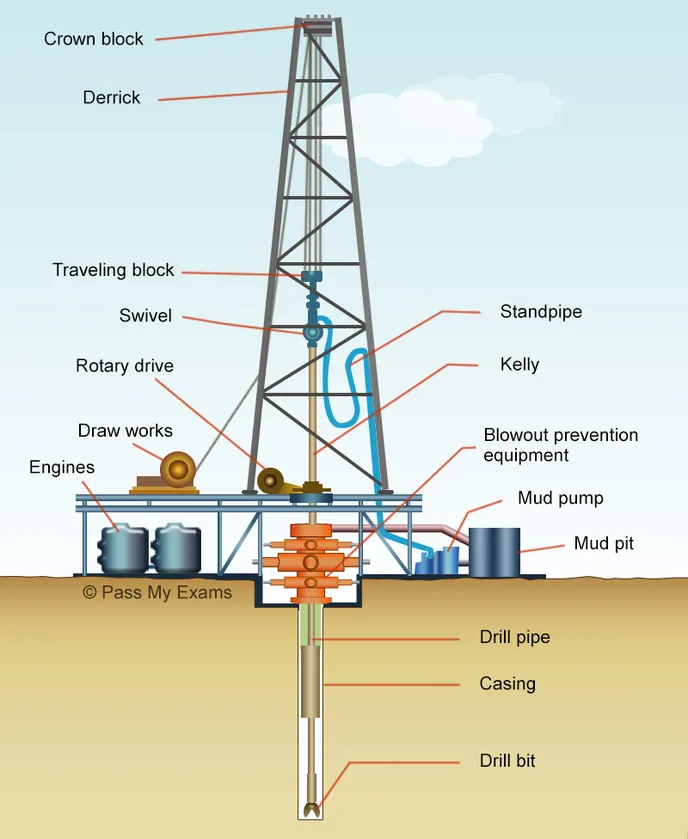
Drilling Rig Components
- Lifetime access
- Certificate of completion
- Foundational Learning
- Access to Study Materials
What enrolled engineers say
The scenarios felt closer to prod than slideware, which helped keep it grounded. In Section 2, the BOP stack walkthrough stuck—at ~9:30 when they flip the cutaway and call out annular vs ram preventers, it finally clicked. As a bootcamp grad crossing into oilgas, it filled gaps fast without hand-waving, and I could map components to failure modes I’ve seen discussed. mostly wished there was a bit more on maintenance logs, but it’s a careful, no-skips walk through a messy topic.
The blowout preventer walkthrough in Chapter 3, the annular vs ram cutaway, made the names stick; the torque vs RPS bit works—it's memorable. For a beginner it mostly fits, but I wasn't sold on the skim of mud pumps, wished there was a checklist tying parts to obs/infra impacts in prod drilling ops.
Helped me picture the flow of materials and control signals across a rig in a way that maps cleanly to how I think about data paths in prod. The BOP stack walkthrough in the “Pressure Control Basics” section stuck, especially the callout on annular vs ram behavior and how failure modes propagate; that’s the first time it clicked without hand-waving. Coming from modern arch and infra, the contrasts between legacy mechanical interlocks and newer monitoring felt familiar, like bridging an old repo to CI without breaking ops. I wasn't sold on the pacing in the mud circulation chapter—could’ve used one more diagram tying pumps to RPS equivalents—but the beginner framing mostly worked. Short asides comparing sensors to obs helped, even if the k8s analogy was stretched once. Finished with notes that looked suspiciously like a refactor plan for how I explain this stuff internally, PRs already queued in my head.
Your instructor
Muhammad Enjari
Trainer
Petroleum Engineer with more than 15 years of experience in Oil and Gas industry
Is this course for you?
You should take this if
- You work in Oil & Gas Upstream
- You're a Petroleum Technology / Mechanical Engineering professional
- You prefer self-paced learning you can revisit
You should skip if
- You need a different specialisation outside Petroleum Technology
- You need live interaction with an instructor
Course details
Course suitable for
Key topics covered
Course content
The course is readily available, allowing learners to start and complete it at their own pace.
- lecture one33 min
- lecture 216 min
Opportunities that await you!
Career opportunities
Why people choose EveryEng
Industry-aligned courses, expert training, hands-on learning, recognized certifications, and job opportunities-all in a flexible and supportive environment.
What learners say about this course
The scenarios felt closer to prod than slideware, which helped keep it grounded. In Section 2, the BOP stack walkthrough stuck—at ~9:30 when they flip the cutaway and call out annular vs ram preventers, it finally clicked. As a bootcamp grad crossing into oilgas, it filled gaps fast without hand-waving, and I could map components to failure modes I’ve seen discussed. mostly wished there was a bit more on maintenance logs, but it’s a careful, no-skips walk through a messy topic.
Helped me picture the flow of materials and control signals across a rig in a way that maps cleanly to how I think about data paths in prod. The BOP stack walkthrough in the “Pressure Control Basics” section stuck, especially the callout on annular vs ram behavior and how failure modes propagate; that’s the first time it clicked without hand-waving. Coming from modern arch and infra, the contrasts between legacy mechanical interlocks and newer monitoring felt familiar, like bridging an old repo to CI without breaking ops. I wasn't sold on the pacing in the mud circulation chapter—could’ve used one more diagram tying pumps to RPS equivalents—but the beginner framing mostly worked. Short asides comparing sensors to obs helped, even if the k8s analogy was stretched once. Finished with notes that looked suspiciously like a refactor plan for how I explain this stuff internally, PRs already queued in my head.
It read like a hands-on walk through a rig rather than a skim of parts, which helped as a beginner mapping hardware to system behavior. The section on the BOP stack, especially the short animation showing annular vs ram sequence, stuck with me because it framed failure modes the way we talk about guardrails in prod. I kept translating bits to software arch in my head: mud pumps as throughput limits (RPS), the derrick load path as infra constraints, and how obs shows up when sensors lag. I wasn’t sold on the brief treatment of top drive vs kelly; a table comparing maintenance tradeoffs would’ve helped. Still, the way components were named and wired together felt like browsing a clean repo before a PR, not chasing folklore. It’s oilgas-specific, sure, but the mental model has already nudged how I think about CI checks, k8s rollouts, and keeping my dev workflow less messy between meetings.
This showed up while I was skimming courses that talk about scaling systems, and the framing translated well to drilling gear. The beginner pace worked; it maps components to how rigs scale from land to offshore without drowning you, which felt closer to how infra diagrams get explained in a repo README. The section on the BOP stack, specifically the cutaway where they walk through annular vs ram preventers and tie it to failure modes, stuck with me because it mirrors how we reason about prod safeguards. Also liked the top drive vs kelly example with torque limits and maintenance notes; that’s the kind of thing I’d flag in a PR comment. Wasn't sold on the mud pumps chapter, mostly slides and not enough numbers around RPS or wear rates. still, for oilgas context, it connects fast and doesn’t waste cycles. Time spent here converts quickly into usable context for conversations.