Skip to main contentEngineering Courses, Mentoring & Jobs | EveryEng
Introduction to Heat Exchangers banner

Introduction to Heat Exchangers

Introduction to Heat Exchangers banner
Live online Beginner

Introduction to Heat Exchangers

4(400)
168 enrolled
3577 views
COMPLETED

Tell us and we’ll notify you when the next batch is scheduled.
2 hrs
-
English , Hindi
3577 views
Process Engineering World
  • Session recordings included
  • Certificate of completion
  • Foundational Learning
  • Access to Study Materials

Why enroll

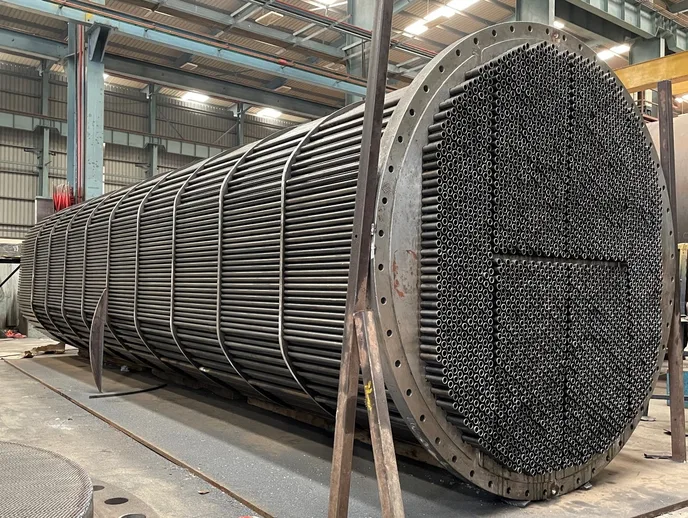
We will see live examples where we shall calculate LMTD and understand its importance with following


Images of tube side fouling


Images of shell side fouling

What enrolled engineers say

12 verified reviews
  • May 3, 2026

    Module 4 dragged a bit, and the homework assumes you’re already fluent in Excel Solver. That aside, the selection logic is what pulled me in: the decision trees for choosing shell-and-tube vs plate in Chapter 2, especially the LMTD vs ε‑NTU fork with the fouling factor example at minute ~18. As someone who thinks in arch diagrams and failure modes, mapping thermal constraints the way we map infra tradeoffs clicked. The counterflow vs parallel-flow section tied pressure drop back to maintenance in a way I’ve actually seen in chemicalpharmaceutical plants. it wasn’t fluffy, and it didn’t pretend everyone’s starting from zero. I’ve already bookmarked the pinch-temperature walkthrough for quick reference between meetings.

    Sachin G. Verified
  • May 3, 2026

    Needed material that wouldn’t fall apart under a PR-level sanity check, and this mostly held. The LMTD vs ε-NTU section, especially the shell-and-tube example where fouling factors changed sizing, stuck with me and maps well to how I think about legacy arch versus modern constraints. It connects old plant math to how I reason about infra tradeoffs in prod, even if the plate exchanger coverage felt light. still, it trimmed a lot of mental tech debt I’d been carrying from chemicalpharmaceutical work.

    vijay C. Verified
  • May 3, 2026

    Section 3's shell-and-tube LMTD worked example (120→80°C, 2-pass) stuck; the step where fouling factor bumps area made the math click, it's easy to map to a prod calc. Mostly helpful, but I wasn't sold on the brief NTU coverage—wished there was more obs on sizing tradeoffs for chemicalpharmaceutical service.

    om J. Verified

Is this course for you?

You should take this if

  • You work in Pharmaceutical & Healthcare or Energy & Utilities
  • You're a Chemical & Process / Mechanical Engineering professional
  • You prefer live, instructor-led training with Q&A

You should skip if

  • You need a different specialisation outside Chemical & Process
  • You need fully self-paced, on-demand content

Course details

As a chemical engineer, understand the operating principles of heat exchangers and how to tackle on site problems in plants

Course suitable for

Opportunities that await you!

Career opportunities

Certifications

Others

Training details

This is a live course that has a scheduled start date.

Why people choose EveryEng

Industry-aligned courses, expert training, hands-on learning, recognized certifications, and job opportunities-all in a flexible and supportive environment.

What learners say about this course

Avatar icon
Manish Kumar
Jan 8, 2026

Great

Avatar icon
Hafijur Rahman
May 3, 2026

The scenarios felt close to real shop-floor calls, not toy problems, which helped bridge classroom math to prod constraints. Chapter 3’s LMTD vs ε‑NTU walk-through, especially the fouling factor table for a shell‑and‑tube case, stuck with me; it’s the kind of calc I’ve already sanity-checked in a PR comment for a chemicalpharmaceutical design note. mostly worked for beginner/intermediate, though I wasn’t sold on how lightly startup transients were treated. Good enough that I’ve gone back twice to re-read those sections.

Kavar Rahul
Kavar Rahul Engineer
May 3, 2026

Minor gripe first: Module 4 on LMTD vs ε-NTU dragged, and the labs assume you’ve already got MATLAB wired, which slowed my team’s juniors. Past that, the course felt like it was mapped by someone who’s already hit the walls my team’s about to hit in prod. The section on shell-and-tube fouling, especially the example where RPS drops after six months due to scaling, stuck. Clear tie-back to ops, not just equations. I liked how it framed arch tradeoffs alongside maintenance cost, which matters when infra budgets are tight. Good crosswalk from classroom calc to PR reviews and CI checks. even the brief nod to failure modes—tube vibration vs thermal stress—changed how I review designs before sign-off.

Amit Amit
Amit Amit test
May 3, 2026

Grabbed this to sharpen system design instincts around pump selection and ops across plant infra. The NPSH margin walkthrough in the cavitation chapter—especially the chemical plant cooling-loop example where the pump curve gets overlaid—stuck more than expected. As a TeamLead watching capex, I liked the tradeoffs on series vs parallel, though I wasn't sold on how briefly variable speed drives were handled for brownfield retrofits. It's helped tighten arch calls where the grey bits usually slow reviews and prod fixes.

COMPLETED

-

Questions and Answers

A: The hard boundary here is the log term. ΔT_hot-in/cold-out is 160−55 = 105°C, while ΔT_hot-out/cold-in is 90−30 = 60°C. LMTD = (105−60)/ln(105/60) ≈ 71°C. Arithmetic averaging ignores the logarithmic temperature driving force, and the correction factor comes later, not inside the base LMTD.

A: The number that bites is the duty scale. Q ≈ 50,000/3600×2,200×80 ≈ 2.4 MW. Area ≈ 2.4×10⁶ /(250×30) ≈ 320 m², so a few hundred square metres fits. Dropping the hour-to-second conversion or misusing the sensible rise as LMTD skews the estimate by an order.

A: The non-negotiable limit is end-of-run performance. API 660 assumes refinery services foul unpredictably, and the exchanger still has to meet duty before turnaround. ASME VIII governs pressure integrity, not heat transfer, and TEMA class affects mechanical robustness, not mandatory fouling allowances.

A: The threshold here is chloride plus oxygen at moderate temperature. Austenitic SS fails by SCC under tensile stress long before uniform wall loss appears. Sulfidation and naphthenic acid attack need sulfur species or much higher metal temperatures.