<link href="https://fonts.googleapis.com/css2?family=Caveat:wght@500;700&family=JetBrains+Mono:wght@400;500;600&family=Plus+Jakarta+Sans:wght@600;700;800&display=swap" rel="stylesheet" /> Skip to main contentEngineering Courses, Mentoring & Jobs | EveryEng
FAHU Design banner

FAHU Design

FAHU Design banner
Self-paced Beginner

FAHU Design

4(8)
2 enrolled
489 views
FREE
60 min
Anytime
English
489 views
Nagarajan Thanumoorthy
Nagarajan ThanumoorthySenior Mechanical Engineer
  • Lifetime access
  • Certificate of completion
  • Foundational Learning
  • Access to Study Materials
Volume pricing for groups of 5+

Why enroll

Students enroll to build a strong foundation in HVAC design, while working professionals take the course to enhance their project capabilities, improve system efficiency, and comply with standards used in commercial buildings, hospitals, and clean rooms. It is especially useful for those involved in MEP design, facility management, and building services engineering.

Is this course for you?

You should take this if

  • You work in HVAC
  • You're a Mechanical Engineering professional
  • You prefer self-paced learning you can revisit

You should skip if

  • You need a different specialisation outside Mechanical Engineering
  • You need live interaction with an instructor

Course details

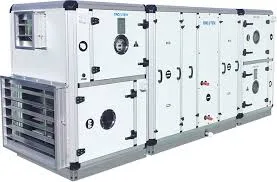
FAHU (Fresh Air Handling Unit) design involves the planning and sizing of HVAC systems that supply 100% fresh, conditioned air to buildings. It is commonly used in commercial buildings, hospitals, clean rooms, and industrial facilities where ventilation and indoor air quality are critical.

An FAHU is a type of Air Handling Unit that conditions outside air (cooling, heating, filtering, dehumidifying) before supplying it into indoor spaces, without recirculating return air.

FAHU design is a critical part of HVAC engineering, ensuring proper ventilation, thermal comfort, and air quality. A well-designed FAHU system enhances occupant health, meets regulatory standards, and improves overall building performance.

Course suitable for

Key topics covered

✔️ Air Balancing Techniques
✔️ Positive & Negative Ventilation Concepts
✔️ Fresh Air Flow Calculation for High-Rise Buildings
✔️ Occupancy Rate Calculation using ASHRAE Standards


Course content

The course is readily available, allowing learners to start and complete it at their own pace.

1 lectures1 hr
  1. FAHU Design
    60 min

Opportunities that await you!

Career opportunities

Where this fits — what comes before, what comes next

FREE

Access anytime

Questions and Answers

A: The 35C ambient is the breakpoint. At that condition, latent capacity margin is thin, so increasing coil control authority is the move that actually restores sensible capacity without pushing the coil into a wetter operating line that spikes RH.

A: The upstream location is the trigger. That geometry lets return air bypass the mixing section, so economiser logic can't maintain a stable mixed air condition no matter how good the controls are.

A: The 95 kW over 8.5 m3/s sets the answer. Using 1.2 kg/m3 and 1.02 kJ/kg·K lands you just under a 10.5 K drop, which puts leaving air near 19.5C.

A: The RH rise shows you're at the coil knee. A small SAT trim increases latent pickup without a big energy hit, whereas the other moves either add moisture or remove your only humidity control lever.