Skip to main contentEngineering Courses, Mentoring & Jobs | EveryEng
Fundamentals of LPG Bottling Plant Operations: Machinery and Sequence banner
Preview this course

Fundamentals of LPG Bottling Plant Operations: Machinery and Sequence

Fundamentals of LPG Bottling Plant Operations: Machinery and Sequence banner
Preview this course
Self-paced Beginner

Fundamentals of LPG Bottling Plant Operations: Machinery and Sequence

4(57)
3 enrolled
2506 views
FREE
70 min
Anytime
English
2506 views
Ashok Khopkar
Ashok KhopkarConsultant
  • Lifetime access
  • Certificate of completion
  • Foundational Learning
  • Access to Study Materials

Why enroll

Take the first step towards a rewarding career in the energy sector with our introductory course on LPG Bottling Plant Operation Sequence and Machinery Used. This foundational knowledge will equip you with a comprehensive understanding of the equipment, processes, and safety protocols involved in LPG bottling plant operations. As you progress in your career, you'll be well-positioned to take on roles such as Plant Operator, Maintenance Supervisor, or Quality Control Specialist, with opportunities for advancement to senior leadership positions. With this course, you'll gain a competitive edge in the industry and be poised for long-term success in this dynamic and in-demand field.

What enrolled engineers say

4 verified reviews
  • May 3, 2026

    Good bridge from legacy shop-floor ops to modern infra thinking; the Chapter 3 walk-through on the carousel filler interlocks and vapor return check stuck. It's mostly beginner-friendly, though I wasn't sold on the skim over emergency shutdown logic and wished there was more obs on RPS during peak prod in energyutilities.

    Pradip B. Verified
  • May 3, 2026

    Clear walkthrough of the bottling sequence, especially Chapter 4’s rotary carousel cut-off timing example and the water-bath leak test dwell times. As a grad entering oilgas ops, it mapped theory to the prod floor, though I wasn't sold on the brief treatment of emergency shutdown interlocks—wished there was more on failure modes.

    Krishna K. Verified
  • May 3, 2026

    Picked this up to sharpen system design thinking, but framed in an LPG bottling context rather than software. The walkthrough of the end to end sequence helped align ops, safety, and infra concerns, which matters when changes hit prod. One concrete bit that stuck was the section on the Filling Carousel Interlocks, especially the moment where the purge-to-fill handoff is shown with valve states and sensor latches. I've sat in PRs arguing about obs gaps, and for energy utilities the leak test reject logic example mapped cleanly to how teams reason about failure modes. Mostly clear for beginner to intermediate, though I wasn't sold on the maintenance chapter; wished there was more on calibration drift and what operators actually do during changeovers. It doesn’t pretend everything is happy-path, and the way it calls out edge cases like stuck checkweighers or ESD trips is where it helps a team make fewer bad calls.

    Kiran K. Verified

Is this course for you?

You should take this if

  • You work in Oil & Gas Downstream
  • You're a Petroleum Technology / Mechanical Engineering professional
  • You prefer self-paced learning you can revisit

You should skip if

  • You need a different specialisation outside Petroleum Technology
  • You need live interaction with an instructor

Course details

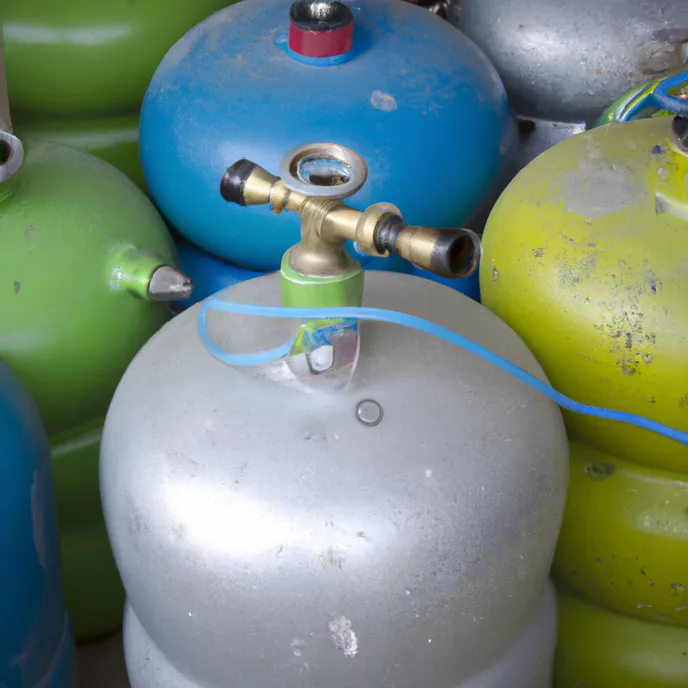
Objective: To explain the "Filling by weight" principle used for LPG cylinder filling (Bottling) process, the operations carried out , the sequence and the machinery used for that. It is a long line of machines, performing a particular function, essential for safe filling operation and subsequent storage of  cylinders; and at end user's place.

Subject description: As domestic fuel, LPG is  efficient, clean and convenient.  Millions of household have a cylinder in their house. Thousands of cylinders are filled every hour, 24x7. As such, LPG bottling operations are truly mass production process.

LPG is a gas, liquefied by pressuring, for storage, filling and transportation. It is highly inflammable, needing only 1.8% concentration in mixture with air, to make it ignitable. It changes from liquid state to gaseous state if pressure is reduced.  This phenomenon creates serious problems throughout the filling  process.

Filling process involves filling precise quantity of LPG liquid into cylinder. Underfilling is not permitted legally whereas  Overfilling is hazardous.  The tolerance band is narrow. It is interesting to see 'How it is managed, how it is checked, how leakages are detected'.

This introductory course is an attempt to answer these questions. For those who are associated with bottling plants and those wish to work in that field, it is essential to understand the complete sequence of processes. A wide spectrum of machinery --manual to fully automatic -- is used in these plants. Each involves setting changes to fill various capacities of cylinders.

Remember, it's matter of safety of millions of houses,  which cannot be jeopardised because of lack of knowledge. Basic Knowledge of complete process, machinery used and operation will help in enhancing safety,  taking higher responsibility; leading to higher position in organisation / higher remuneration and progress.

It is essential to have sufficient knowledge about LPG also. So it is advisable to acquire that along with knowledge of bottling process.

Who must attend this course and other courses?

1. Professionals already working with LPG bottling industry, and related industry

2. LPG cylinder distributors, and other service providers

3.  Professionals looking for working in highly complex,  exciting and ever expanding engineering field

4. Newcomers in LPG industry

5.. Job seekers having aptitude for technical jobs, with school level education, engineering diploma or degree, engineering college students

Course suitable for

Key topics covered

1. Why filling by weight,

2. How much gas to fill --- filling density concept

3. Commonly used terminology

4. Operation sequence

5. Machinery used for various operations

Course content

The course is readily available, allowing learners to start and complete it at their own pace.

4 lectures1 hr 10 min
  1. Introduction of LPG Bottling
    18 min
  2. LPG Terminology
    13 min
  3. Why LPG weight basis?
    18 min
  4. Plant Capacity & Operations
    21 min

Opportunities that await you!

Career opportunities

Why people choose EveryEng

Industry-aligned courses, expert training, hands-on learning, recognized certifications, and job opportunities-all in a flexible and supportive environment.

FREE

Access anytime

Questions and Answers

A: A lines up volume × fill fraction × liquid density. 33 × 0.85 × 0.54 gives the number. B ignores vapour space, that's how overfills happen. C confuses water capacity with LPG mass. D flips phase and drags in gas density that never applies during filling.

A: A fits low-temperature wet H2S service; hardness and stress matter. B needs carbonic acid and continuous water, which isn't the case. C needs hot chlorides and austenitic stainless, not carbon steel LPG lines. D needs hundreds of degrees C; nothing like a bottling plant.

A: A addresses the real hazard: one failure shouldn't overfill a cylinder. B is commercial, not safety. C misunderstands expansion; check weighing doesn't correct temperature. D is unrelated to code intent for overpressure prevention.

A: A gives scatter: some valves close late, some early. B would shift all fills consistently. C trends underfill but won't spike overweight cylinders. D drifts one way; it doesn't randomly overshoot.