Skip to main contentEngineering Courses, Mentoring & Jobs | EveryEng
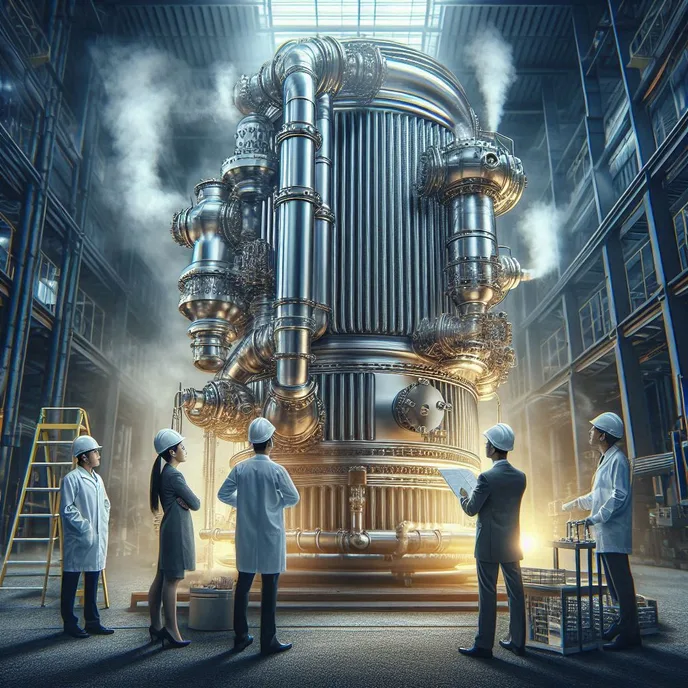
Heat Exchanger Fundamentals: Theory and Applications banner
Preview this course

Heat Exchanger Fundamentals: Theory and Applications

Heat Exchanger Fundamentals: Theory and Applications banner
Preview this course
Self-paced Beginner

Heat Exchanger Fundamentals: Theory and Applications

4(144)
51 enrolled
1239 views
FREE
259 min
Anytime
Hindi
Saurabh Kumar Gupta
Saurabh Kumar GuptaMechanical Engineer
  • Lifetime access
  • Certificate of completion
  • Foundational Learning
  • Access to Study Materials
Volume pricing for groups of 5+

Why enroll

People enroll in the course “Heat Exchanger Fundamentals: Theory and Applications” to gain a clear understanding of how heat exchangers work and how to design, select, and operate them efficiently in real-world systems. The course helps learners build strong fundamentals in heat transfer principles while also covering practical applications across industries such as power plants, oil & gas, and HVAC. It is especially valuable for engineers and technicians looking to improve system performance, troubleshoot operational issues, and enhance energy efficiency in thermal systems.

Is this course for you?

You should take this if

  • You work in Oil & Gas Upstream or Aerospace
  • You're a Chemical & Process / Mechanical Engineering professional
  • You prefer self-paced learning you can revisit

You should skip if

  • You need a different specialisation outside Chemical & Process
  • You need live interaction with an instructor

Course details

A heat exchanger is a device designed to efficiently transfer heat energy from one fluid to another, either through direct contact or indirect contact via a separating wall. Heat exchangers are widely used in various industries, including power generation, chemical processing, HVAC, and refrigeration, to recover heat energy, cool or heat fluids, and optimize system performance. There are several types of heat exchangers, including shell-and-tube, plate, finned-tube, and regenerative heat exchangers, each with its own unique design characteristics and applications. Heat exchangers can be designed to operate in various flow configurations, such as parallel flow, counterflow, or crossflow, and can be optimized for specific performance requirements, including heat transfer rate, pressure drop, and fluid flow rates. By selecting and designing the appropriate heat exchanger, engineers can improve the efficiency, reliability, and cost-effectiveness of thermal systems, and reduce energy consumption and emissions. Effective heat exchanger design and operation are critical in many industrial and commercial applications.

Course suitable for

Key topics covered

Introduction Of Heat Exchanger
Overall Heat Transfer Coefficient | Fouling Factor
Logarithmic Mean Temperature Difference For Heat Exchanger
Previous Year Numerical Based On LMTD Method
Multipass And Crossflow Heat Exchanger | Correction Factor
The Effectiveness--The NTU Method
Numerical NTU Method Part-2

Course content

The course is readily available, allowing learners to start and complete it at their own pace.

7 lectures4 hr 19 min

Opportunities that await you!

Career opportunities

FREE

Access anytime

Questions and Answers