Skip to main contentEngineering Courses, Mentoring & Jobs | EveryEng
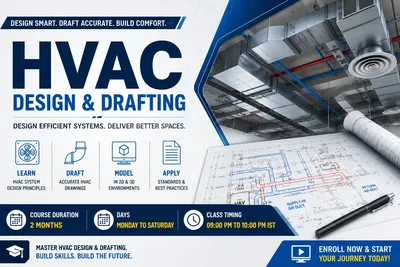
HVAC Design for Oil and Gas Facilities banner
Preview this course

HVAC Design for Oil and Gas Facilities

HVAC Design for Oil and Gas Facilities banner
Preview this course
Self-paced Intermediate

HVAC Design for Oil and Gas Facilities

4(161)
1039 views
₹ 6999
654 min
Anytime
English
1039 views
Sajjad Ansari
Sajjad Ansari
  • 7-day money-back guarantee
  • Lifetime access
  • Certificate of completion

Why enroll

Participants enroll in this course to gain specialized HVAC design expertise required for one of the most demanding engineering sectors — the oil and gas industry. Unlike conventional commercial or residential HVAC systems, oil and gas facilities involve complex safety, reliability, and environmental challenges that require advanced design understanding and practical application skills.

Is this course for you?

You should take this if

  • You work in HVAC or Oil & Gas Upstream
  • You're a Mechanical Engineering / Chemical & Process professional
  • You have some foundational knowledge in the subject
  • You want to build skills in Engineering & Design, Project Management

You should skip if

  • You're looking for an introductory overview course
  • You need a different specialisation outside Mechanical Engineering
  • You need live interaction with an instructor

Course details

The objective of this course is to equip learners with the specialized knowledge and practical skills required to design, analyze, and implement efficient HVAC systems for oil and gas facilities. The course focuses on understanding the unique environmental, safety, and operational challenges associated with the oil and gas industry and developing reliable HVAC solutions that meet international codes, standards, and hazardous area requirements.

The HVAC Design for Oil and Gas Facilities course provides a comprehensive understanding of heating, ventilation, and air conditioning systems specifically tailored for upstream, midstream, and downstream oil and gas applications.

Students will learn how to perform load calculations, equipment selection, air distribution design, and pressurization control in environments where safety, explosion protection, and reliability are critical.

Course suitable for

Key topics covered

  1. Introduction to HVAC Systems in Oil & Gas Industry

    • Overview of HVAC applications in upstream, midstream, and downstream facilities

    • Differences between commercial and industrial HVAC systems

    • Environmental and safety challenges in oil & gas facilities

  2. Hazardous Area Classification and HVAC Implications

    • Zone classification (Zone 0, 1, 2) and HVAC design considerations

    • Explosion-proof and intrinsically safe equipment

    • Airflow direction and pressure zoning for hazardous areas

  3. Ventilation and Pressurization System Design

    • Design of positive and negative pressurization systems

    • HVAC design for control rooms, electrical substations, and analyzer shelters

    • Pressurization and purge air systems for safe area maintenance

  4. HVAC Load Calculation and Equipment Selection

    • Heat load calculation methods for industrial environments

    • Selection of air handling units, exhaust fans, and package units

    • Redundancy and reliability considerations for critical spaces

  5. Filtration, Air Quality, and Corrosion Control

    • Air filtration levels and filter selection for harsh environments

    • Dehumidification, chemical filters, and corrosion prevention techniques

  6. Ductwork and Air Distribution Design

    • Material selection for corrosive and explosive atmospheres

    • Design of ventilation ducts, louvers, and diffusers

    • Fire dampers and gas-tight dampers

  7. HVAC Design for Offshore and Desert Conditions

    • System design challenges for offshore platforms and coastal environments

    • HVAC solutions for desert and high-temperature regions

  8. Control Systems and Integration

    • HVAC automation and monitoring in process facilities

    • Interface with fire and gas detection systems

    • Fail-safe and emergency shutdown strategies

  9. Codes, Standards, and Best Practices

    • Application of ASHRAE, API, NFPA, ISO, and ISA standards

    • Client and project specification review process

    • Documentation requirements and quality control

Course content

The course is readily available, allowing learners to start and complete it at their own pace.

10 modules51 lectures10 hr 54 min
  1. 1.1 Overview of Oil & Gas Operations (Upstream, Midstream, Downstream)
    34 min
  2. 1.2 Importance of HVAC Systems in Hazardous Environments
    20 min
  3. 1.3 Regulatory & Safety Standards (ASHRAE, API, NFPA, NEC, OSHA)
    15 min
  1. 2.1 Understanding Psychrometric Chart
    13 min
  2. 2.2 Air Conditioning Processes on the Psychrometric Chart
    10 min
  3. 2.3 Application of Psychrometrics in HVAC Design
    6 min
  4. 2.4 How to use Psychrometric Software
    8 min
  1. 3.1 Steps for Heat Load Calculation in Oil & Gas Facilities
    10 min
  2. 3.2 HVAC System Types used in Oil & Gas
    39 min

Opportunities that await you!

Skills & tools you'll gain

Engineering & DesignProject Management

Career opportunities

Why people choose EveryEng

Industry-aligned courses, expert training, hands-on learning, recognized certifications, and job opportunities-all in a flexible and supportive environment.

What learners say about this course

Engineering Academy
Engineering Academy Engineer
Feb 25, 2026

This course turned out to be more technical than I anticipated. Coming in with field experience on HVACR projects, the deeper dive into ventilation rates, ASHRAE 62.1 interpretation, and duct sizing methods filled a real gap for me. The sections tying airflow calculations to fan energy and energy utilities costs were especially relevant, since utility penalties and peak demand are constant concerns on our commercial jobs.One challenge was keeping up with the psychrometrics portion. But this course is really helpful alot.

Suresh Mohan
Suresh Mohan Manager
May 3, 2026

Few classes spell out the tradeoffs without sugarcoating; this one mostly does, which matters when the deliverable is a building that has to behave in prod. The pacing fit how I work as a freelancer: skim the arch, grab the infra implications, move on, no fluff. The moment that stuck was the alarm management section where they walk through deadband math for a chilled water loop and show why a 0.5°C choice explodes obs noise at scale; I’ve seen that exact mess at 2am. There’s practical stuff too, like the BACnet scheduling vs local controller clocks comparison and how it affects maintenance windows. wasn't sold on the brief PLC aside, and I wished there was more on commissioning checklists and energyutilities handoff, but that’s minor. I’ve already shared notes in our repo and flagged it as prereading before we lock the next BMS platform.

PAVAN DHIMAN
PAVAN DHIMAN
May 3, 2026

The course doesn’t dodge the messy edges of HVAC drafting, which tracks with how this work actually shows up in prod. It felt less like a polished demo and more like reviewing a PR on someone else’s DWG, annotations off, layers half-right, and all. The bit in the duct sizing section where they walk through correcting a return air clash using XREFs and layer filters stuck with me; that’s a real Tuesday problem. I wasn’t sold on the AutoCAD setup chapter at first, but the layer naming convention tied back later when schedules started breaking, so fair enough. there’s a mild gap around handoff to BIM or how these drawings survive infra changes downstream; even a short aside would’ve helped. Still, it’s adjusted how I size effort and decide what to fix first instead of chasing every cosmetic issue.

Avatar icon
Premshankar Singh
May 3, 2026

Reads like margin notes from someone who’s been through late-night revisions and redlines, not a sales pitch. As a TeamLead, I’m thinking about how fast juniors can get useful in the repo, and this mostly helps; the habits map well to how we review PRs and keep arch decisions boring so prod doesn’t wobble. The bit that stuck was Chapter 6 on layer standards and blocks, especially the moment he fixes a return-air tag that breaks xrefs across sheets and shows why naming upfront saves hours later. I wasn’t sold on the short AutoCAD UI tour, and I wished there was a little more on coordinating with energyutilities constraints, but the tradeoffs were explained. mostly the pacing works, and I’ve already folded a few checks into our informal CI for drawings. It nudged me past a plateau I’d been circling without adding infra bloat or extra cost.

₹6999

Access anytime

Questions and Answers

A: 12 ACH on 420 m³ gives 5,040 m³/h. The leakage margin applies to delivered airflow, not to room volume, so you multiply the flow by 1.10 after the ACH conversion. Option A ignores the margin entirely. Option B feels tidy but shifts the margin to the wrong basis. Option D builds in extra ACH that was never specified and quietly over-designs fan and duct sizing.

A: The intent is loss-of-flow protection. When a fan trips or a filter loads up, dilution ventilation fails instantly, while pressure decay is slower and detectable. Option B sounds practical but noise is not the driver in the code logic. Option C overreaches; pressurization doesn't waive equipment certification by itself. Option D flips the zone logic and would trip up anyone importing IEC assumptions without checking NFPA language.

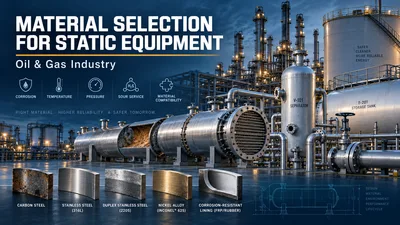
A: C5‑M exposure punishes carbon steel and dissimilar metals. GRP avoids under-film corrosion and doesn't rely on coating integrity for survival. Option B is tempting but aluminum suffers in chloride-rich marine air, especially at fasteners. Option A underestimates long-term coating breakdown. Option C assumes future maintenance that the access constraints explicitly remove.

A: Loss of power is a credible event offshore. If the damper fails closed, your positive pressure disappears exactly when you need it. Option B treats the drawing gap as cosmetic. Option C is a blanket rule that doesn't exist. Option D confuses interlocks with basic fail-safe philosophy.