Skip to main contentEngineering Courses, Mentoring & Jobs | EveryEng
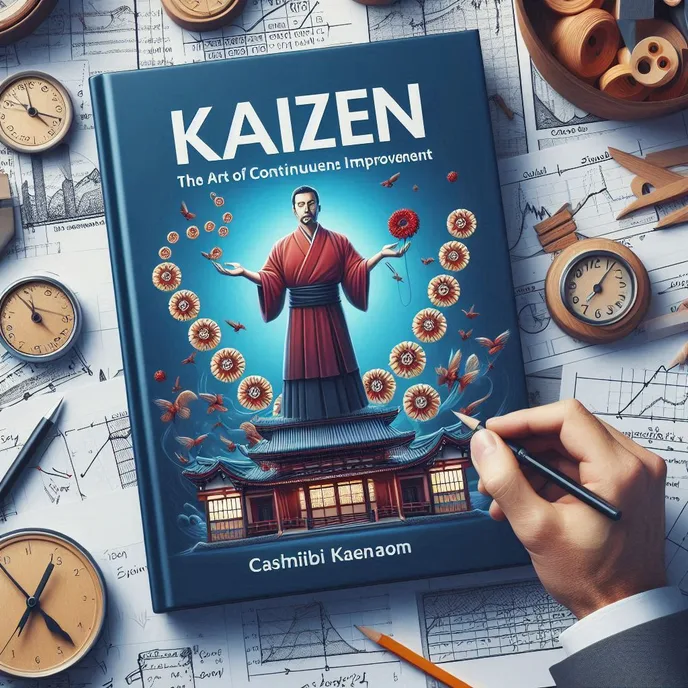
Kaizen: The Art of Continuous Improvement banner

Kaizen: The Art of Continuous Improvement

Kaizen: The Art of Continuous Improvement banner
Live online Beginner

Kaizen: The Art of Continuous Improvement

4(53)
965 views
COMPLETED

Tell us and we’ll notify you when the next batch is scheduled.

2 hrs
-
English
965 views
Chaitanya Purohit
Chaitanya PurohitConsultant
  • 7-day money-back guarantee
  • Session recordings included
  • Certificate of completion

Why enroll

Participants join this course to gain practical skills in continuous improvement and problem-solving using Kaizen principles. It helps them enhance productivity, reduce waste, and improve quality in their work processes. The course also builds a growth mindset and equips individuals to drive positive change in their teams and organizations.

Is this course for you?

You should take this if

  • You work in Manufacturing & Industrial
  • You're a Industrial Engineering / Quality & Management Standards professional
  • You prefer live, instructor-led training with Q&A

You should skip if

  • You need a different specialisation outside Industrial Engineering
  • You need fully self-paced, on-demand content

Course details

This course provides a comprehensive introduction to Kaizen, a Japanese philosophy centered on continuous improvement through small, incremental changes. Participants will explore the origins and core concepts of Kaizen and understand how it drives efficiency and quality in various industries. The program covers essential tools such as PDCA (Plan-Do-Check-Act), Root Cause Analysis, and Fishbone Diagrams to identify and solve problems effectively. Learners will gain practical knowledge on how to analyze processes and implement improvements in a structured manner. The course emphasizes the importance of teamwork, discipline, and consistency in achieving long-term success. Participants will also develop a growth mindset that encourages innovation and adaptability. Real-world examples and case studies will help bridge theory with practical application. The training highlights how Kaizen can enhance productivity, reduce waste, and improve overall performance. It also focuses on building a culture of continuous improvement within teams and organizations. By the end of the course, participants will be equipped to apply Kaizen principles in their personal and professional lives to drive sustainable improvement.

Course suitable for

Key topics covered

  • Introduction to Kaizen: 15 minutes

  • The 5 Principles of Kaizen: 20 minutes

  • Key Kaizen Tools: 20 minutes

  • Practical Applications of Kaizen: 20 minutes

  • How to Implement Kaizen: 20 minutes

  • Sustaining Continuous Improvement: 15 minutes

Opportunities that await you!

Career opportunities

Training details

This is a live course that has a scheduled start date.

Why people choose EveryEng

Industry-aligned courses, expert training, hands-on learning, recognized certifications, and job opportunities-all in a flexible and supportive environment.

What learners say about this course

Yogendra Sagar Mishra
May 3, 2026

Labs assume you’ve already got a note-taking setup; lost a few minutes wrangling that. After that, the exercises forced me to face some sloppy habits, especially jumping to solutions before framing the problem. The Constraint Ladder in Week 3 stuck with me; writing the first arch sketch, then deleting half of it, felt like a PR review in slow motion. Useful tie-ins to day job stuff—how this shows up in prod incidents, or when a CI failure sends you chasing noise. It’s beginner-level, but not fluffy. Short videos, lots of doing. I’ve already changed how I size tasks and decide what actually needs attention vs. what can wait.

Anoop V
Anoop V PIPING LEAD
May 3, 2026

This feels like the reference you open when the machine arch starts wobbling and prod alerts chirp, not a glossy intro. The Chapter 3 lab comparing time-domain plots to FFT windowing, especially the bearing outer-race fault example, stuck and maps cleanly to what I've seen on legacy rigs and newer sensors feeding obs dashboards. mostly it bridges old-school vibration math to modern infra without hype, though I wasn't sold on the brief treatment of automotive NVH and wished for one more failure case. The labs carried it, with data you can rerun from the repo.

Yogendra Sagar Mishra
May 3, 2026

Useful bridge from legacy status updates to modern PR writeups—the 'BLUF email' section, it's practical, though I wished more on async feedback in prod incidents.

anjali rana
anjali rana NA
May 3, 2026

The section on the SBI feedback model with the PR comment rewrite stuck; mapping Situation-Behavior-Impact to review comments made the point quickly. Useful for beginners, though I wasn't sold on the role-play videos and wished there was more on async comms in CI/k8s-heavy teams.

COMPLETED

-

Questions and Answers

A: Picking the wrong mechanism leads to the wrong mitigation and wall loss keeps accumulating until a pinhole leak trips the unit. In wet CO2 systems at moderate temperature, carbonic acid controls corrosion kinetics; oxygen worsens it but doesn’t change the governing mechanism. The other options rely on conditions that simply aren’t present or aren’t rate-controlling here.

A: Chasing a newer requirement without contractual backing can stall MC and trigger claims. In EPC work, the referenced edition is binding unless the contract states dynamic updating; precedence clauses are there to stop exactly this scope creep.

A: Undersizing liquid volume causes oil carryover and level instability that no control tuning fixes. Converting 18,000 bpd to 12.5 bbl/min and multiplying by 5 minutes gives the required holdup; the other paths all miss a unit or phase basis.

A: Missing this leads to brittle cracking and sudden leakage without much metal loss warning. 300-series stainless is vulnerable to chloride SCC in warm, stagnant conditions; the other mechanisms need different metallurgy or electrochemical drivers.