Skip to main contentEngineering Courses, Mentoring & Jobs | EveryEng
Mastering Modern Power Generation Boilers & Cogeneration Systems banner

Mastering Modern Power Generation Boilers & Cogeneration Systems

Mastering Modern Power Generation Boilers & Cogeneration Systems banner
Live online Beginner

Mastering Modern Power Generation Boilers & Cogeneration Systems

4(13)
81 views
₹ 1999
5 hrs
Next month
English
81 views
Bibek Roy
Bibek RoyConsultant
  • 7-day money-back guarantee
  • Session recordings included
  • Certificate of completion

Why enroll

Engineers often possess strong theoretical knowledge but lack exposure to real plant operations. This course bridges that gap by providing practical, industry-relevant insights into boilers, HRSG, and cogeneration systems that can be directly applied at work. Participants learn to improve plant efficiency, reduce fuel costs, and solve common operational challenges like performance losses and breakdowns. By strengthening technical understanding and problem-solving skills, the program enhances confidence and prepares professionals for higher roles in operations, maintenance, and energy management. Participants join not just to learn, but to improve performance, solve real problems, and accelerate their career growth.

Is this course for you?

You should take this if

  • You work in Energy & Utilities or Steam & Gas Turbines
  • You're a Power Plant Engineering / Mechanical Engineering professional
  • You want to build skills in Energy Management and Audit, Energy efficiency optimization
  • You prefer live, instructor-led training with Q&A

You should skip if

  • You need a different specialisation outside Power Plant Engineering
  • You need fully self-paced, on-demand content

Course details

In today’s industrial landscape, energy efficiency, reliability, and cost optimization are critical for sustaining competitive operations. Systems such as modern power generation boilers and cogeneration (Combined Heat & Power – CHP) systems form the backbone of energy-intensive industries including power plants, chemical and petrochemical units, and captive power facilities.

This course is designed to provide a clear, practical, and application-oriented understanding of these essential systems, enabling professionals to enhance operational performance, reduce energy losses, and improve overall plant efficiency.

  • Clearly understand modern boiler and cogeneration systems

  • Analyze and improve plant performance and efficiency

  • Identify and reduce energy losses

  • Handle operational challenges with confidence

  • Contribute to cost reduction and energy optimization in their organizations

Course suitable for

Key topics covered

1. Fundamentals of Modern Boilers

  • Types of boilers and their applications

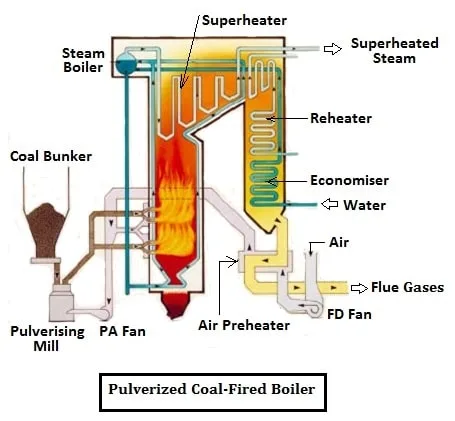
  • Key components and working principles

  • Steam generation process and circulation

👉 Focus on understanding how modern boilers operate in real plant conditions

2. Combustion & Heat Transfer

  • Fuel characteristics and combustion fundamentals

  • Air-fuel ratio, excess air, and flue gas behavior

  • Heat transfer mechanisms in boilers

👉 Enables participants to improve combustion efficiency and reduce fuel losses

3. Boiler Performance & Efficiency

  • Boiler efficiency concepts

  • Heat losses and energy balance

  • Methods to improve performance

👉 Helps in identifying energy-saving opportunities in plant operations

4. Cogeneration (CHP) Systems

  • Concept and advantages of cogeneration

  • Types of CHP systems

  • Power-to-heat ratio and system optimization

👉 Focus on maximizing energy utilization and cost savings

5. Operational Challenges & Troubleshooting

  • Common issues in boilers and CHP systems

  • Root cause identification

  • Practical solutions

👉 Improves reliability and reduces downtime

Opportunities that await you!

Skills & tools you'll gain

Energy Management and AuditEnergy efficiency optimizationPower Generation

Career opportunities

Training details

This is a live course that has a scheduled start date.

Why people choose EveryEng

Industry-aligned courses, expert training, hands-on learning, recognized certifications, and job opportunities-all in a flexible and supportive environment.

What learners say about this course

Tirth Patel
Tirth Patel Devloper
May 3, 2026

Several lightbulb moments around performance tuning showed up early, especially how small load changes ripple through plant efficiency. The section on heat rate vs load curves in the combined‑cycle chapter stuck, with a concrete example walking from sensor data to arch choices in the control infra. I've applied bits of that thinking on a current oilgas-adjacent gig, mostly around obs and alarms. pacing wasn't perfect and I wished there was a bit more on maintenance tradeoffs, but it doesn't talk down to you.

Avatar icon
Rishabh Mishra
May 3, 2026

Section 3.2 on combined-cycle heat rate walked a 500 MW plant calc from HRSG pinch to net MWh; it's where theory met real infra. The ops vs eng handoff notes on startup logs and basic obs helped, though I wasn't sold on the thin emissions controls coverage—wished more on SCR tuning.

Trinergy Engineering
Trinergy Engineering DIRECTOR
May 3, 2026

The biggest blocker for me was always the async handoff between plant ops and the grid, and this tackled that head-on without fluff. The section on ramp-rate limits vs cycling costs (the 20–60 minute window example with startup penalties) stuck, because it maps cleanly to how we think about backpressure in prod. It helped translate arch choices into outcomes clients actually feel, not just diagrams, and that’s useful when you’re juggling infra tradeoffs under time pressure. I liked the moment where they compared heat-rate degradation to noisy obs metrics; felt like reading a clean PR after weeks in a messy repo. Mostly worked, though I wasn’t sold on how briefly CCS was handled for oilgas, and I wished the grid interop chapter went a bit further. Still, it’s changed how I frame tech-debt talks with stakeholders, less hand-wavy and more grounded in constraints.

Himani Kotak
Himani Kotak 1
May 3, 2026

The opening modules lay down a clean technical base without fluff, enough to get bearings fast. The moment that stuck was Section 2.3’s kWh vs kVA example and the short calc on demand charges; I’ve already used that framing in a prod infra review. It connects well to day-to-day obs work and arch tradeoffs, especially if you touch hvacr in plants. Mostly works, though I wasn't sold on the light treatment of metering data quality—it's a pragmatic take on a topic people tend to over-complicate.

₹1999

₹0 Early bird

Coming in Next Month

Questions and Answers

A: High-temperature sulfidation would require a reducing sulfur-rich atmosphere and typically shows more uniform attack than observed, acid dew point corrosion needs metal temperatures well below 200°C to condense acids, graphitization is a microstructural embrittlement without the aggressive metal loss seen, active oxidation driven by KCl and NaCl deposits breaks down protective oxides and matches the rapid wastage at these temperatures.

A: A once-through design raises control and chemistry risk during starts without adding benefit at this scale, natural circulation drums struggle with fatigue and level swell during frequent cycling, fire-tube units can't handle the exhaust mass flow and temperatures from a GT, forced circulation decouples heat flux from flow and tolerates start-stop operation better.

A: Underestimated suction losses would show a clear correlation with low deaerator level and temperature swings, seal face damage usually increases leakage without the characteristic pressure oscillation, impeller imbalance raises vibration but doesn't create erratic head, gas binding introduces vapor pockets that collapse intermittently and fits the unstable pressure with adequate calculated NPSH.

A: Downstream users aren't the basis for boiler code pressure limits, control valve sizing isn't governed by safety valve lift criteria, thermal stress is a secondary benefit but not the driver, limiting accumulation ensures the pressure boundary never exceeds its design stress envelope.