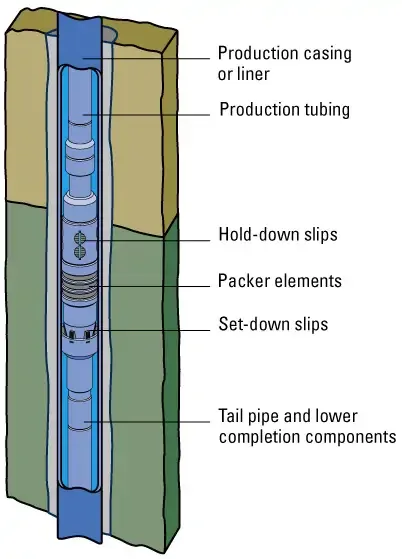
Production Packers - Oil and Gas Well Completions
Production Packers - Oil and Gas Well Completions
Tell us and we’ll notify you when the next batch is scheduled.
- Session recordings included
- Certificate of completion
- Foundational Learning
- Access to Study Materials
Why enroll
What enrolled engineers say
Bridges legacy completions to modern thinking better than expected; the Chapter 3 packer setting sequence with the tubing movement diagram stuck, mapping cleanly to how we reason about arch changes in prod. mostly good for beginners, though I wasn't sold on the thin coverage of retrieval failures—wished there was more on obs from field data.
Good walkthrough of packer selection; the Chapter 4 example calculating shear pins during setting depth stuck, especially the table tying tubing OD to pressure. As a freelancer touching oilgas ops, it helped sanity-check prod arch decisions, though I wasn't sold on the skimpy failure modes section and wished there was more on remedial workover scenarios.
A few pieces finally clicked around how packer choice affects performance under load. The worked example in the Setting Force vs Differential Pressure section, sizing a retrievable packer for 5.5" casing, was concrete enough to run the math twice. Mapped cleanly to how I think about arch and failure modes before prod; notes went straight into my repo. Wasn't sold on the skim of elastomer aging, wished there was more on temp cycling—still, it's mostly stayed with me longer than these usually do.
Your instructor
Team OG
Oil & Gas Domain
Upstream Oil & Gas Technical Professional
Is this course for you?
You should take this if
- You work in Oil & Gas Upstream
- You're a Mechanical Engineering / Petroleum Technology professional
- You prefer live, instructor-led training with Q&A
You should skip if
- You need a different specialisation outside Mechanical Engineering
- You need fully self-paced, on-demand content
Course details
Course suitable for
Key topics covered
Opportunities that await you!
Career opportunities
Training details
This is a live course that has a scheduled start date.
Live session
Starts
Sat, Mar 21, 2026
Duration
2 hours per day
Why people choose EveryEng
Industry-aligned courses, expert training, hands-on learning, recognized certifications, and job opportunities-all in a flexible and supportive environment.


 Aug 29, 2026